Follow Us on Google
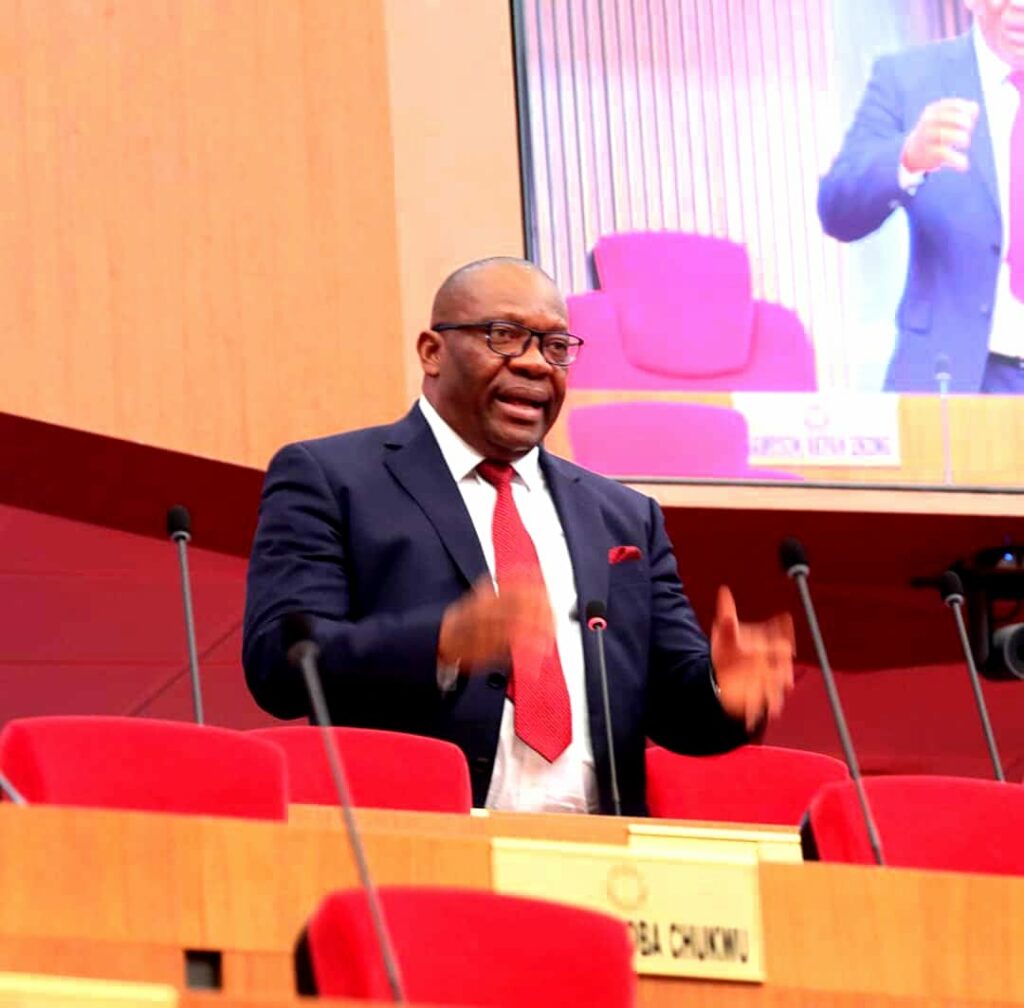
From Charity Nwakaudu, Abuja
The Chairman of the Senate Committee on Solid Minerals, Senator Ekong Sampson, has described the mining sector as a critical driver of Nigeria’s economic diversification.
Senator Sampson stated this at the ongoing 10th edition of the Nigeria Mining Week in Abuja.
He said Nigeria must fully tap into its vast mineral resources to boost economic growth, create jobs, and attract sustainable investment.
“The era of underutilising our natural endowments must end,” he declared.
The Chairman, Senate Committee on Solid Minerals, reaffirmed the National Assembly’s readiness to support President Bola Tinubu’s reform agenda through targeted legislation and oversight.
“We are determined to provide the legal and policy framework that ensures transparency, investor confidence, and shared prosperity.”
He stressed the need for synergy among government, industry operators, and host communities, noting that collaboration—not conflict—is key to unlocking the sector’s full value.
“Our goal is to position Nigeria as a globally competitive mining destination through enabling laws and strategic partnerships. I express confidence in the ongoing reforms led by the Ministry of Solid Minerals Development,” Sampson added.
In his goodwill message, the Executive Secretary of the Nigeria Extractive Industries Transparency Initiative (NEITI), Dr Orji Ogbonnaya Orji, emphasised that transparency and accountability must be at the heart of Nigeria’s mining sector reforms if the country is to attract meaningful investment and achieve long-term growth.
Dr Orji revealed that NEITI’s latest industry report highlights persistent challenges in the sector, including poor data management and weak coordination among regulatory agencies which hamper progress in the sector.
He reiterated NEITI’s commitment to supporting reforms that promote openness, inter-agency collaboration, and equitable benefits for all stakeholders.
According to Dr Orji, strengthening governance structures and data systems is essential to unlocking the sector’s full economic potential.
A representative from the Nigerian Association of Chambers of Commerce, Industry, Mines, and Agriculture (NACCIMA), Jani Ibrahim, has called for stronger public-private collaboration to tackle persistent challenges in Nigeria’s mining sector, including inadequate infrastructure, limited access to financing, and environmental concerns.
He stressed that while the sector holds immense potential, real progress requires a unified approach driven by shared responsibility among government, investors, and host communities.
Ibrahim noted that the private sector remains committed to supporting policies that create a stable, transparent, and investment-friendly environment, urging the government to prioritise reforms that address systemic bottlenecks and unlock the sector’s full value chain.
Earlier, in his remarks, the Event Director, Mr Samukelo Madlabane, who emphasised that the decade-long journey of the conference reflects sustained efforts in fostering collaboration, policy dialogue, and sectoral progress, encouraged participants to leverage the momentum to build transformative partnerships that will shape the next era of mining development.
“This anniversary is not just a celebration of the past but a commitment to a stronger, more inclusive future for Nigeria’s mining industry,” he said.
In his welcome address, one of the partners from PricewaterhouseCoopers, Cyril Azobu, said that sustained collaboration is key to unlocking Nigeria’s huge mineral wealth.