Follow Us on Google

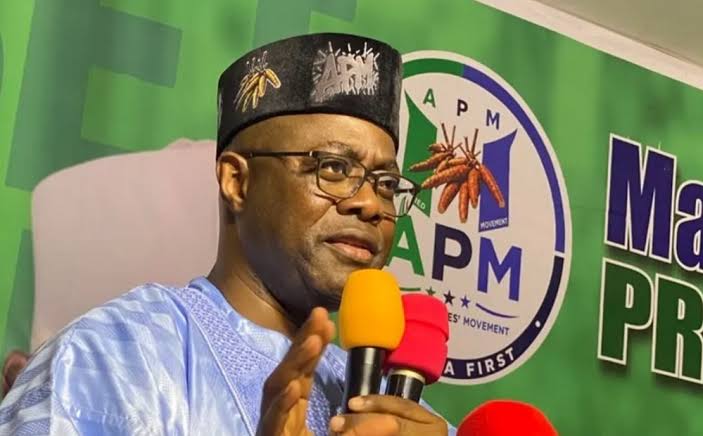
Presidential candidate of the Allied Peoples Movement (APM), Governor Seyi Makinde of Oyo State, has promised to give state governments and host communities, greater control over solid mineral resources in their territories, if elected president in the January 16, 2027 election.
The position was contained in a press statement issued by Richard Nnanna Ihediwa, Director of Strategic Communications, Makinde-Daura Presidential Campaign Organisation, under its Reset Nigeria series.
Makinde said his administration would pursue true fiscal federalism and resource control as part of a broader restructuring agenda.
According to him, this would allow states to play a greater role in decisions concerning mineral exploration, licensing and exploitation, while ensuring that host communities receive a fairer share of the economic benefits.
The proposed reforms, contained in the Makinde-Daura Reset Nigeria manifesto, are designed to address what the APM presidential candidate described as an imbalance in the country’s mining governance system,l.
Makinde stated that under the existing system, the Federal Government retains primary control over mineral licensing and other critical decisions, while states and communities bear much of the environmental, social and economic consequences of mining activities.
The manifesto noted that communities hosting mining operations frequently contend with environmental degradation, unsafe storage of hazardous materials, damaged roads, communal conflicts and the burden of responding to emergencies, despite having limited influence over decisions governing the exploitation of resources within their territories.
It also lamented that states and host communities do not adequately enjoy the direct economic benefits of mineral exploitation, despite bearing the consequences of activities in the sector.
To address the situation, Makinde pledged to initiate a national conversation on restructuring and resource control immediately after assuming office, with a view to transferring greater responsibility for natural resources to state governments and ensuring that host communities receive a more equitable share of the benefits.
According to the manifesto, the proposed exercise would not be another open-ended national conference, adding that his presidency would complete a Federal Responsibility Review within its first year in office.
The review, he explained, would identify government functions that should remain exclusively under federal control, those requiring national standards but state-level implementation, responsibilities that should principally belong to state or local governments, and functions requiring clearly defined and publicly available intergovernmental agreements.
The exercise is expected to produce specific proposals for constitutional amendments, new legislation, fiscal adjustments and transition arrangements to give practical effect to the restructuring agenda.
On mining administration, the APM candidate also promised to strengthen collaboration between federal and state regulatory authorities, establish publicly accessible registers of mining licences and beneficial ownership, and introduce clearer mechanisms for monitoring regulatory compliance.
The manifesto further identified illegal and dangerous mining activities as issues requiring urgent attention, promising a more coordinated regulatory framework to tackle abuses in the sector.
Under the proposed arrangement, the Federal Government would continue to issue mining licences within the existing constitutional framework, but state governments would be formally incorporated into the licensing process.
This would give states opportunities to review mining applications and raise concerns relating to land use, environmental protection, community interests and public safety before decisions are taken.
The proposed framework is intended to ensure that communities and state governments are no longer excluded from decisions that directly affect their territories, while preserving national regulatory standards and economic stability.
The campaign organisation said the reforms would also help address recurring problems associated with mining operations, including restrictions, youth restiveness, conflicts between governments and host communities, and disputes among neighbouring communities.