Follow Us on Google
From Fred Itua, Abuja
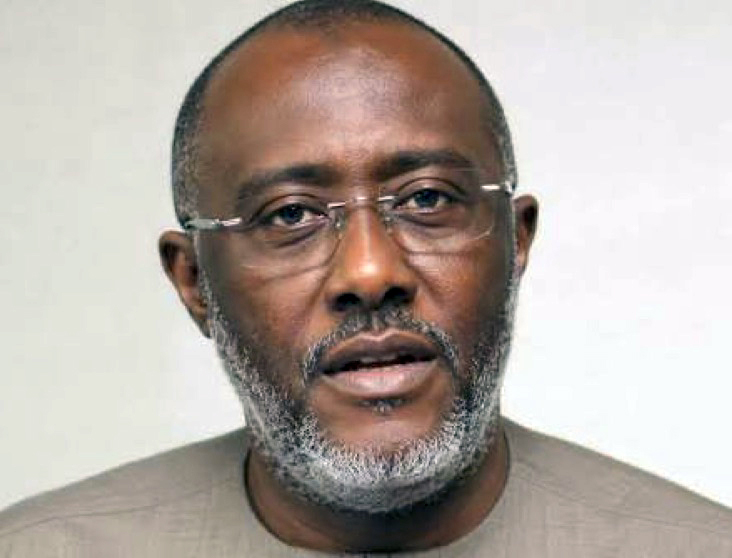
Chief Olisa Metuh, is the head of mobilisation for the Renewed Hope Support Group. In this interview with Daily Sun, he speaks about the structure behind Renewed Hope, the President’s reforms, his defection to the All Progressives Congress (APC), his corruption trial under the Muhammadu Buhari administration among others . Excerpts
You are the head of mobilisation for the Renewed Hope campaign of the incumbent administration. Are you comfortable with the political trajectory ahead of the next general election ?
The campaign has not started. What is going on now is preparation for the campaign, and people are moving ahead. We have held primaries in all the political parties in Nigeria. Some parties had problems with the nomination process, but they are handling it. That is normal. It is democracy, and it is politicking.
For us in Renewed Hope, I am happy with how the structure is set up. I believe that in the history of this country, there has never been a structure like Renewed Hope, one that connects the top with the people at the grassroots and delivers a clear message. It allows us to explain the achievements, policies and programmes of the incumbent President. What we usually see is an era where people simply organise rallies after rallies, things like Million man marches, that is normal for people. But this is a programme that goes right down to the grassroots, to the polling units. Are you aware that we have 4,201,000 polling unit canvassers?
The heads of these polling units include governors, ministers, captains of industry, and National Assembly members. I head the Renewed Hope polling unit in my own area, and there are 25 of us. So you can imagine, whenever I go home to Umuanuka, Otolo Nnewi, I keep telling my people about the policies of this government. We have 774 local government coordinators. We have 8,809 ward coordinators, every single ward in Nigeria has one. And we have 37 state coordinators.
Some of these state coordinators are former deputy governors, former ministers, and former senate leaders. Folarin heads the one in Oyo. In Taraba, it is headed by a senior senator. In Ebonyi State it is a former deputy governor, and the same in Zamfara. In Nasarawa, it is the incumbent Secretary to the State Government. In Lagos, it is a governor’s chief of staff. At the zonal level, we have Anyim Pius Anyim, a former Senate President and former Secretary to the Government of the Federation, heading the Southeast. The Northwest is headed by a former Speaker of the House of Representatives and former governor of Katsina. We have former governor Isa Yuguda heading the Northeast, and former Governor Al Makura heading the North Central. We have former Governor Okowa heading the South South, and a former minister, my immediate successor as spokesperson of one of the big political parties in Nigeria, Senator Adeyeye, a former Minister of Works, heading the Southwest.
And of course, our Director-General is the pragmatic chairman of the Progressive Governors’ Forum, His Excellency Governor Hope Uzodimma. His deputy is the Governor of Kaduna State. The secretary of the organisation is the Governor of Gombe State. We have never had this kind of structure before.
But it is surprising to hear you say this. You were in charge of publicity in the PDP, and at some point the PDP was also in charge of structures at the local level. Are you saying that what you have now is more effective than what the PDP did?
I have institutional memory. I understand these issues, I have seen it firsthand. When we were in the PDP, the support groups we had were built on a neighbour to neighbour model. It was more about building politics through neighbour to neighbour campaigns. I did not have any neighbour to neighbour person in my constituency, in my polling unit, or in my ward. We had them at the federal and national level, and they toured the states. Never in the history of this country have we had an organisation like the Renewed Hope Ambassadors. Look at any other structure, none of them have this: a network built down to the polling units. You cannot find it anywhere else. In the PDP, we had a political party. Remember, the Renewed Hope Organisation is different from the APC. The APC is a political party, but Renewed Hope is an organisation created to help spread the message of the president’s policies and programmes.
But some of the people you’ve just named, who head these Renewed Hope structures in different offices, are also people who many feel are out of touch with the masses. Doesn’t that run counter to the objective?
I am going to say something that may not be politically correct but the truth. I I always speak the truth. There is a disconnect between the political class and the people, and it is not restricted to any single political party or group. The masses believe their problems stem from the political class. Maybe there are one or two people the public still listens to, but overall, the people believe the political class is their problem. But are they right to believe so? That is a different question entirely.
Things are getting harder by the day. Are people wrong to feel that way, or do you not believe there’s hardship in the country?
I do believe there are challenges in the system and in the country. But let me ask you a question. Do you eat omelette? You need to break eggs to make an omelette. What is happening is that the president has introduced reforms, and reform does not work like a quick fix. He never promised he was a miracle worker, a native doctor, or a spiritual pastor who could make things disappear overnight. These reforms are necessary to move us to a different level, and he has taken the pain that comes with them. We have seen the pain, and we are now entering the phase of seeing the major benefits. We have been in that valley but we are coming out of it. And the same man leading us through this reform is the man who should lead us to the promised land he has envisioned for us. He has the boldness and the courage to undertake reforms that past leaders shied away from. When your malaria is serious, you need a chloroquine injection. The pain is part of that injection, and after a while, it works and you get better. People are crying from the pain of the injection and from the bitterness of the medication they have had to take. But they should hold on, because the healing process has started, and things will get better.
But if the healing process has truly started, people would probably have seen some signs of it by now….
It would be uncharitable for any Nigerian not to acknowledge the gains this government has made. I understand the pain people have been through. I move around on the street. I see people. I have people. But it would not be honest to deny the achievements, the progress, and the improvements we have made in the system. There was a time people bought goods from China, and by the time they sold them, the proceeds were not enough to replace the stock. Now there is stability, you can plan your business. There has been improvement in the education sector. In infrastructure development, even here in Abuja, there are changes. Whether you like Wike or not, you have to see what he is doing. He is working. Look at what the Interior Minister is doing. Look at the changes they have made in identity management, at the Nigeria Identity Management Commission, the changes to the laws.
Even the developed economies are taking note of the courage behind what we are doing. That comes from the president’s exposure and the reforms he has introduced. So yes, there are challenges. Yes, we are not there yet. But we are not where we used to be, not where we were five, four, six, eight or ten years ago in business in Nigeria. We are getting somewhere. There was a time Nigeria was on ghost mode, no movement at all. There was a time the Central Bank would simply wake up and change policies at whim. Right now, we have policies and programmes that are actually leading us somewhere.
The president’s promise to fix power supply has failed, we’re still struggling to reach 4,000 megawatts. There is also the issue of Insecurity- kidnapping and killings . So how can you say things are improving?
I have the boldness to tell you that the problem in the power sector began in 2007. When President Obasanjo carried out his power reform and brought in materials and equipment that would have transformed Nigeria’s power sector, people started sabotaging the project. Those materials were destroyed. Siemens and other major companies decided they would not return to Nigeria. We lost that opportunity. More than sixteen billion dollars was thrown down the drain, money that was meant to fix the sector, and it was never properly used. So we cannot simply wake up and blame this government as if it started the country’s problems. This president had the courage to begin reforms from day one. He did not wait to win re election before introducing them. When I was in the PDP, President Obasanjo, who governed from 2003 to 2007, waited until 2004 to begin his reforms. By the time he was leaving office, he wanted to continue them, that is why some people were calling for him to get an extended tenure, they wanted those reforms to continue, not stalled. But he left, and the reforms stalled.
Now, we have a president with the courage and boldness to start his reforms from day one. We have been at it for three years, going on four. By year five or six, we will get there. The power sector is not like flipping a switch. Plans are being made, and things are happening. I have complete confidence in the president, that he wants to restore power in Nigeria and that he is working on it.
The issue of insecurity has plagued us for a long time. People have their own theories about what is behind it. Some believe that from President Jonathan’s time, those in charge of security were not in a hurry to end insurgency, given the amount of money budgeted for that sector, so some were not eager to see it stop. There were states where special advisers to the governor allowed things to continue, whenever insecurity is about to end, they open a channel for one or two attacks, so the governor releases more funding for security. But the president has taken a bold step. He is initiating state police. That means that by the time state governors have their own police, in every part of the country, we will have persons from there in charge of policing there.
Other News
For instance, I am from Nnewi. When I go to Nwafor Orizu’s house, and he is in charge of security in Nnewi, I can ask him directly what is being done about a kidnapping or a theft. I know the police commissioner’s house. I know the village the ASP comes from. I can relate to him directly. It is not like now, where outsiders come into the community with no relationship to it, no stake in its stability or progress. So the president has identified the problem, and he is addressing it. Give him credit for that.
The concern with state police is how far it will go, since governors may abuse it, and some say the states don’t have the funds to run it properly. It could end up like the local government autonomy reform, which still hasn’t worked.
I would not say local government autonomy has not worked. I would rather say there has not been enough assertiveness or willingness on the part of some local government officials to be independent. The moment one or two people challenge the system, it will open up. It only takes one or two people who are not afraid of the consequences, who draw on the boldness Bola Ahmed Tinubu showed, and challenge that system in their state. It will open up in that state, and then nationally. What is holding it back is fear of the unknown, fear of challenging authority. One day we will get there. On the issue of security, I understand the concern about your position being exposed. Every state will worry about potential excesses. But remember, a governor rules for at most eight years. If he uses the police against the next governor, the next one will use it against someone else in turn. Eventually, people will realise the institution matters more than any one person’s position. So the president is trying in these areas, he is working to return power to the people. Look at how much allocation the governors are getting now. When people praise a governor’s achievements, they should also remember that it was the president who made it possible for that governor to have the resources to do it.
You sound very optimistic about the President and 2027. Are you saying the opposition is simply playing to the gallery?
I have complete confidence in the structure of the APC, in what the national chairman and the National Working Committee are doing. I have confidence in the President’s programmes and policies. I have complete confidence in the structure Governor Hope Uzodimma has built. As Director of mobilisation of the organisation, I have seen the structure and the benefits it will bring to the president and to the elections, in terms of the polling units and everything they are doing. But when it comes to the election itself, I am a democrat. At the end of the day, Nigerians will decide what they want. It is my belief, my hope, and my prayer that Nigerians will see the benefits of voting for the President. They will vote for him, and he will be re elected.
Is the insecurity affecting your efforts at reaching people in remote places across the country?
I acknowledge there are challenges in certain areas. But I must also acknowledge that this government has taken steps to address them, and most of those steps are working, those areas are becoming more accessible to ordinary people. That said, messages do not only travel through physical means. In today’s world, there are other methods we use to reach people, and we explain things better through them than through traditional media like newspaper adverts, television, or physical campaigning. There are other methods we are using, and we will keep those to ourselves for now, so our competitors do not adopt the same approach.
The general feeling is that the APC is doing everything to destroy the opposition, even keeping key opposition leaders off certain panels, and using the judiciary to that end. Why this sudden move to weaken opposition parties?
I will not dwell on matters that the National Publicity Secretary of the APC, who is very experienced and knowledgeable, is better placed to handle. I would rather say this, we cannot pretend that any political party or government has never used the weaknesses of its opponents to its advantage. You cannot blame a man for exploiting a gap you left open in your own house, at the end of the day, it is that man who ends up running your household. So everyone should put their house in order.
A lot of people are asking why you moved to the APC, the same party that pursued you so aggressively that, had they had the chance, they might have destroyed you entirely. Why did you still embrace the APC, especially when the current president was the party leader at the time?
The APC of 2015 is completely different from the APC of 2026. In fact, if you look at most of the people in the APC today, many of them used to be in the PDP. Look at the ministers, look at the National Assembly leadership. The head of the National Assembly was once a minority leader in the PDP. Even the president himself did not hold an official office in the APC before. So the APC of today is not the APC of 2015.
Someone once asked him the same thing, and he turned it around: why would a political party that celebrated someone’s downfall not later accommodate that same person to work with them? It works both ways. But for me, my reasons are simple. First, I believe in the president. I believe he means well for Nigeria, and I believe in the reform process he has initiated. Second, I believe it will work, and I want to be counted among those who helped him change the indices of development and progress in our nation. It is a privilege to be associated with a president who is clearly doing well, and I cannot overlook the efforts of the Governor of Imo State either. Even in this role of mobilisation and organisation for the Renewed Hope programme, I am working in the interest of my community, my people, and my nation, and I am proud to give my time to it.
When you were on trial, some Nigerians felt you dramatised your illness, that you overplayed it. How much of that was genuine, and how much was an effort to win public sympathy?
I never thought the sympathy of Nigerians was important, and I did not think it would change anything in court. So I never sought public sympathy. The court had a hostile attitude. Part of that hostility showed in how, even when I was ill, I was not the one insisting on appearing in court. If a man is ill and asks for two weeks to recover, the humane thing is to allow it, not force him to appear the next day in that condition. You cannot call that dramatising illness. If anything, it was the court that seemed intent on putting me on display, to expose me to ridicule. There is no other explanation for why a court would dismiss documented evidence of illness from reputable hospitals in Nigeria and abroad, MRIs, CT scans, X rays. You cannot manufacture those. My senior advocate, Onyechi Ikpeazu, asked the court to send me to any hospital of its choice, the EFCC hospital, the State House clinic, to be examined and have their findings taken as evidence. The court refused to accept a medical report from any hospital in Nigeria or abroad, insisting I appear for trial every day. I cannot be blamed for that.
So, no, I never dramatised anything. I had a hostile court, and I was treated in a deeply inhumane manner, yet I kept quiet and obeyed every single court order. I should mention I had already turned down several government positions before this. I did not want to have anything to do with money from government. I had been a successful businessman before I joined politics and I was contented. I had a thriving company in Dubai and I was selling Dubai properties for about twenty years. I was among the foremost people doing that. I shut that company down because of politics, around the time I became national vice chairman. In fact, I turned down the offer to become Minister of Aviation in 2014, you can quote me on that.
Having turned that down, being later tried as someone who had stolen money was deeply humiliating, embarrassing, and disgusting. It was not something I was proud of. Even though it was contrived, I was not happy about going through it.
Was there a particular person or personality behind it?
In the military, when your authority is challenged to the point that someone wants to overthrow it, you charge that person for treason. What we were doing in 2015, after losing the election, was planning a democratic change of government. We were rebuilding the party, recruiting people, and pointing out that the government looked directionless and had no real plan. So, they moved to remove the person spearheading that effort, and that was me. Everyone knew you cannot simply pay someone from a central bank account to do a job and then claim he stole the money. The amount of money the government and the EFCC spent on my media trial has never been matched by any media trial in this country’s history.
I am situating the past, and I believe the letter the president wrote me on my 60th birthday last year answered every single question about it. For that, I am eternally grateful to him, a man with the courage to look past what even his own party did, back when he held a different position. He wrote such glowing words and tributes to me. It is something I will owe him and his people for the rest of my life.
In mobilising people from your area to vote for the president, what feedback are you getting, given that people in the South East are complaining about marginalisation?
I would be lying if I say I had not heard that. But my answer is simple. For now, we are building our structures, the campaign proper has not been flagged off yet. So the specific tactics we will use once it starts are not something I can unveil here.