Follow Us on Google

● launches five-year policy, seeks dedicated funding, affordable sanitary products, improved school facilities
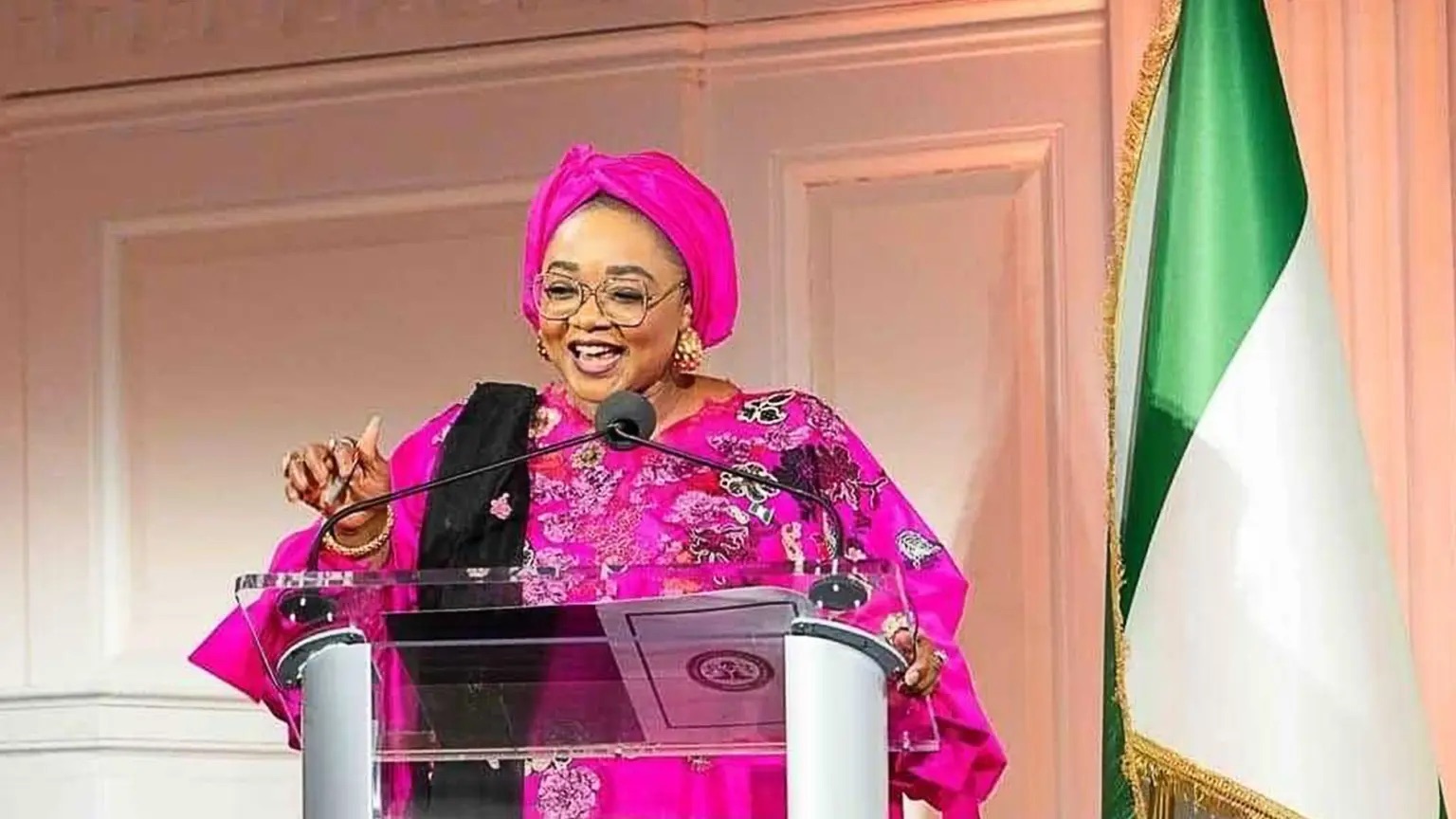
Minister of Women Affairs and Social Development, Imaan Sulaiman-Ibrahim, has disclosed that 46 per cent of Nigerian women aged 15 to 49 still use cloth during menstruation, while only eight per cent of schools have separate toilet compartments for girls with menstrual hygiene provisions.
She also revealed that only three per cent of schools in Nigeria provide basic gender-sensitive water, sanitation and hygiene (WASH) services, a situation which contributes to girls losing up to 20 per cent of their school year in underserved communities.
The minister said the figures exposed deep inequalities in access to menstrual hygiene products and facilities, particularly among rural women and girls and those from low-income households.
Sulaiman-Ibrahim made the disclosures on Thursday in Abuja while delivering the keynote address at the 2nd National Summit on Menstrual Health and Hygiene Management, where she officially launched the National Policy on Menstrual Health and Hygiene Management 2026–2030.
According to her, the 2024 Nigeria Demographic and Health Survey showed that 54 per cent of women used disposable sanitary pads during their last menstrual period, with usage varying significantly between urban and rural communities.
She said 76 per cent of women in urban areas used disposable pads, compared with 32 per cent in rural communities.
The income disparity was equally pronounced, with only 10 per cent of women in the lowest income group using disposable pads, compared with 90 per cent in the highest income bracket.
The minister said the statistics reflected the daily struggles of millions of Nigerian women and girls who lack access to affordable menstrual products, clean water, private toilets and adequate menstrual health information.
She identified schoolgirls forced to miss classes for lack of sanitary products, displaced girls managing menstruation without privacy or clean water in internally displaced persons’ camps, and mothers compelled to choose between buying menstrual products and feeding their families as among those affected.
“No girl should forfeit her education to a natural biological cycle, no woman should suffer indignity due to poverty or conflict, and no community should be denied basic WASH infrastructure because of geography,” she said.
Sulaiman-Ibrahim said the new policy was developed in partnership with Population Services International (PSI), WaterAid Nigeria and the Technical Working Group on Menstrual Health and Hygiene Management.
She explained that the document underwent technical reviews, consultations across the six geopolitical zones and national validation before securing Federal Executive Council approval on October 28, 2026.
The policy was approved alongside the National Care Policy and Implementation Plan 2026–2030 and the National Costed Action Plan on Ending Violence Against Children.
According to the minister, the three policy instruments address interconnected challenges affecting women, girls and children, including unpaid care work, child protection and menstrual health.
She said the menstrual health policy would be implemented within the broader framework of President Bola Tinubu’s designation of 2026 as the Year of Families and Social Development and the Renewed Hope Agenda.
The minister also commended the First Lady, Senator Oluremi Tinubu, for her interventions through the Renewed Hope Initiative’s Flow with Confidence programme, which she said had provided free sanitary supplies to hundreds of thousands of schoolgirls in rural, displaced and underserved communities.
She said the programme combined the distribution of menstrual products with education to address stigma, reduce period-related absenteeism and improve girls’ school attendance.
On implementation, Sulaiman-Ibrahim called on state governments to domesticate the policy and establish dedicated budget lines for menstrual health in their annual fiscal plans.
She also urged all 774 local government authorities to direct resources towards public schools, primary healthcare centres and displacement settlements.
Development partners, she said, must sustain technical and financial support, while the private sector should expand affordable and quality supply chains.
The minister further called on banks, airlines, railway and interstate transport operators, hotels, shopping malls and other public-facing institutions to provide free emergency menstrual products in customer and public restrooms.
She said such establishments should also maintain clean and private sanitation facilities and provide safe disposal systems.
“No woman or girl should suffer embarrassment or compromised dignity while banking, travelling, working, or patronising public spaces,” she said.
To encourage compliance and promote accountability, the minister announced plans by the ministry to institute an Annual National Menstrual Dignity and Hygiene Excellence Competition and Awards.
She said the initiative would recognise outstanding state governments, local government authorities, development partners, traditional and religious institutions, community champions and private sector organisations making measurable contributions to menstrual health and hygiene.
Sulaiman-Ibrahim also identified opportunities for local manufacturing and women’s economic empowerment in the menstrual health value chain.
She put the estimated annual domestic market for menstrual health products at N184 billion, noting that it was currently dominated by imported products.
She said the government would leverage the National Policy on Affirmative Procurement, which opens public contracting to women-owned and women-led businesses, to link government procurement of sanitary supplies and WASH infrastructure to Nigerian female entrepreneurs.
The minister added that tax waivers on locally manufactured sanitary towels and targeted financing would help stimulate domestic manufacturing, create jobs and strengthen women’s economic participation.
She stressed that the success of the five-year policy would depend on sustained implementation, adequate funding and measurable outcomes rather than its launch.
The expected results by 2030, she said, included improved female school retention, universal access to affordable menstrual products and gender-responsive sanitation facilities nationwide.
In a goodwill message, Population Services International (PSI) Nigeria commended the Federal Government for securing approval of the policy, but warned that its success would depend on adequate funding, state adoption and accountability.
Represented by Plangnan Dishil, a Technical Specialist in Economic Empowerment, the organisation said it had supported the policy development process through consultations across the six geopolitical zones, national reviews and validation exercises.
PSI also disclosed that it supported menstrual health interventions in Akwa Ibom, Bauchi, Kano, Lagos, Nasarawa and Sokoto, including the establishment of menstrual health technical working groups and advocacy core groups.
It said its interventions also involved training school, primary healthcare and community champions, engaging men and boys, traditional and religious leaders to challenge stigma, and supporting local producers and distributors of menstrual products.
However, it identified four priorities for effective implementation: a costed implementation plan, dedicated funding at federal and state levels, adoption by state governments and a functional monitoring and accountability framework.
“A policy is a promise. Today, we must ask how that promise will be kept,” PSI said, urging the government to ensure that every provision had a clear implementation plan, responsible institution and funding allocation.
The organisation pledged to continue working with national and subnational authorities to strengthen existing structures and support states to take ownership of the menstrual health agenda.
Similarly, the Federal Ministry of Water Resources and Sanitation called for increased investment in water, sanitation and hygiene infrastructure, describing access to clean water and private toilets as fundamental to effective menstrual health management.
The ministry, represented by its Deputy Director, Hygiene Promotion, Kogbara Idamaka, said schools, healthcare facilities, markets, workplaces and public spaces must have functional, gender-responsive and disability-inclusive WASH facilities.
It pledged to work with the Ministry of Women Affairs, state governments, development partners and the private sector to improve access to safe water, sanitation and sustainable hygiene services.
The ministry also urged stakeholders to prioritise climate-resilient water and sanitation infrastructure, community hygiene education and sustainable menstrual waste management.
“Access to safe water and adequate sanitation is not a privilege; it is essential to human dignity and well-being,” the representative said, stressing that no woman or girl should be denied dignity or opportunity because of her menstrual needs.
The Nigerian Supreme Council for Islamic Affairs (NSCIA) also endorsed the policy, calling for greater religious and community engagement to dismantle the stigma surrounding menstruation.
In its goodwill message, presented by Hajia Musleemah Abdulrahman, the council said menstruation should not be treated as a source of shame or a reason for discrimination against women and girls.
Representing the council’s position under the leadership of its President-General, the Sultan of Sokoto, Alhaji Muhammad Sa’ad Abubakar III, the message pledged the use of mosques, Islamic schools and women’s structures to promote menstrual dignity and encourage families to support girls and women.
The council also urged the government to pay greater attention to endometriosis, a medical condition it said was often misunderstood, with women and girls expected to endure severe pain without adequate medical attention.
“Too many have been told to ‘endure it’ when it is a real medical condition that needs early care, understanding and support,” the council said.
It added that girls should be encouraged to seek both spiritual and medical support when necessary.
Earlier, the Permanent Secretary of the Ministry of Women Affairs and Social Development, Esuabana Asanye said the summit provided an opportunity to review progress since the first national summit held in June 2025, identify implementation gaps and strengthen coordination among stakeholders.
She described menstrual health and hygiene management as a public health, human rights, gender equality, education and social protection issue.
Esuabana said the ministry, as the national coordinating ministry and secretariat for menstrual health interventions, remained committed to providing leadership, facilitating stakeholder coordination and ensuring that interventions aligned with national priorities.
She urged participants to develop practical recommendations that would accelerate implementation of the new policy, stressing the need to place the voices and lived experiences of women and girls at the centre of interventions.