Follow Us on Google
-
Physicians, surgeons, others need training in physiology to perform better –Dr. Nwoke
From Obinna Odogwu, Awka
Between June 2015 and May 2023, Nigerians spent $29.29 billion on foreign medical expenses.
This was according to the data published by the Central Bank of Nigeria (CBN) in its quarterly statistical bulletins released in July this year.
The period under review captures Late President Muhammadu Buhari’s administration which lasted for eight years from May 2015 to May 2023.
That sum is tabled under the Health-Related and Social Services category; and it reflects cumulative outflows of foreign exchange from June 2015. The former President was first sworn in on May 29, just two days before June.
That figure translates to an annual spending of about $3.6 billion during the eight-year period of two terms in office under review.
The CBN’s data show that Nigerians spent a total of $12.73 billion during Buhari’s first term which ended on May 29, 2019. During his second term, they parted with the sum of $16.56 billion.
In 2023 alone, Nigerians spent $3.82 million while in 2024, they spent about $2.41 million on foreign medical-related services from January to December.
The last year’s figure was confirmed by the CBN in a report on the amount spent on health-related and social services under the sectoral utilisation for transactions valid for foreign exchange.
Findings show that India, the United Kingdom, the United States of America, Singapore and a few other countries are Nigerians’ popular medical destinations.
Talking about India, more than 300,000 Africans including Nigerians reportedly travel to the country annually for medical services, spending more than $2 billion every year. The country is said to be generating more than $6 billion each year from medical tourism.
Although the CBN’s report showed that Nigerians spent $3.82 million and $2.41 million on foreign medical-related services in 2023 and 2024 respectively, the African Journal of Hospitality, Tourism and Leisure, says that Nigerians are estimated to spend $1 billion annually on medical tourism.
About 60 per cent of that amount is spent on oncology, orthopaedics, nephrology, cardiology, neurology, organ transplant, fertility and others. Additionally, the figure represents almost 20 per cent of the annual public health expenditure which mainly covers the salaries of health workers.
Why Nigerian elite, others seek medical treatments abroad
Many reasons have been adduced to explain why upper class Nigerians, and indeed, ordinary individuals with financial muscles, seek medical services abroad despite the high cost.
Some of the reasons are: unavailability of highly trained medical personnel, lack of quality healthcare infrastructure, chronic lack of specialised treatment in specific medical fields, and near zero confidence in the country’s medical personnel.
Others are: lack of functional medical equipment and in some cases, availability of only outdated equipment; lack of quality drugs, and reckless attitudes of some healthcare workers which have reportedly led to the death of some patients, among other reasons.
In addition to these, many health workers in Nigeria are underpaid; especially those in privately owned medical facilities. As a consequence, they lack the motivation to go the extra mile in efforts to care for their patients.
Aside these, there is also the issue of human capital flight where leading and highly experienced medical personnel have joined the brain drain to the United Kingdom, the United States of America, Germany, Canada, and other advanced countries.
Many healthcare professionals in Nigeria have complained, and are still complaining about poor staff welfare in the country. They said that the situation is worse for those in private clinics as not many of them pay their staff well, especially when placed side by side with their inputs in the hospitals.
They argue that with a lot more conducive environment, a better job security, and safety of workers in the advanced countries, Nigerian healthcare professionals, particularly the doctors and nurses, are drawn to developed nations where their skills are valued and compensated appropriately.
Recently, medical and dental consultants at Chukwuemeka Odumegwu Ojukwu University Teaching Hospital (COOUTH), Amaku, Awka in Anambra State threatened to withdraw their services in the hospital if their salaries were not reviewed upward to reflect the current economic realities.
Chairman of the Medical and Dental Consultants’ Association of Nigeria (MDCAN), COOUTH chapter, Dr Amaechi Nwachukwu, warned that the consultants might shut down the hospital if their demands were not met as quickly as possible.
Nwachukwu said that their exclusion from the Consolidated Medical Salary Structure (CONMESS) 2024 which was recently approved for resident doctors by the state governor, Prof. Chukwuma Soludo, was unacceptable to them.
He explained that by the reason of the new change in salary structure, some of their junior colleagues now earn salaries above theirs, a development he said did not go down well with the leadership and members of MDCAN.
“He also approved the payment of their Medical Residency Training Fund (MRTF), a fund to support their training as approved by the Federal Government”, he added.
“Recall that any payment to resident doctors in the health sector is automatically extended to their bosses, the consultants, in the same teaching hospital, as they are the heads of all doctors working there.
“However, despite our loyalty and diplomatic approach to issues, we were disappointed to note that we were excluded from the proper placement after September salaries were paid. We are left confused on how there are two different salary structures for doctors working in the same place?” he lamented.
Nwachukwu explained that the consultants were the specialists responsible for every patient who seeks medical attention within the hospital premises.
“We perform complex surgeries and manage critical cases referred from all over the state and beyond. We also train resident doctors seeking to become consultants like us and oversee all research conducted by doctors within the teaching hospital,” he added.
The medical specialists, who demanded that their salaries should equally be reviewed upward before November 21, 2025, told the state government that they would resume their suspended strike of 2020 to drive home their demands. The ultimatum started on October 20.
“We will stop the training of resident doctors, recall all resident doctors on outside postings, suspend all ongoing research, discharge all patients from the teaching hospital, and halt all demonstrations to medical students using patients.
“This will not only delay the graduation of medical students and resident doctors but also affect the overall functioning of the teaching hospital”, the MDCAN leadership warned.
“Many consultants have left the services of the teaching hospital for better conditions. We have lost key specialists to some other institutions where they are better appreciated and paid.
“Many have left the country due to the ‘Japa’ syndrome, but the few of us holding on here and keeping faith with the government are being treated as unimportant”, they lamented.
Unfortunately, political officeholders in Nigeria who are supposed to fix the hospitals and make them functional for the citizens have abandoned them, preferring to seek medical care abroad with the taxpayers’ money.
From governors to their deputies, National Assembly members to the President, virtually every political officeholder who has access to public funds fly out to overseas for medical purposes, abandoning the same people who voted them into power.
Sadly, no explanation has been offered by the government, whether past or present, as to what happened to the humongous amounts of money budgeted and spent on Nigeria’ health sector over the years.
For example, Late Buhari, less than two weeks to the end of his administration in May 2023, inaugurated the Presidential cum Very Important Personalities (VIP) Wing of the State House Medical Centre, Abuja which cost the country the sum of N21 billion.
The new wing, located inside the Presidential Villa in Asokoro, is an extension of the existing medical centre; and is meant to provide services to the president, vice-president, their families, and VIPs which may include high ranking National Assembly members, governors, senior presidential aides, ministers, and other high profile politicians and personalities.
The State House Medical Centre was established in 1976 to provide healthcare services to the above-mentioned class of government functionaries.
It was initially set up at Dodan Barracks, Lagos before being relocated to Abuja in 1992 after the General Ibrahim Babaginda regime made the city the seat of government.
But despite spending that humongous amount of money on the presidential hospital, the country’s political leaders continue to patronise hospitals in developed countries like the US, UK, France and others.
Sadly, their medical trips, funded with the taxpayers’ money, are usually shrouded in secrecy, leaving citizens to guess their leaders’ whereabouts.
Findings reveal that Buhari’s successor, Bola Tinubu, has never used the brand new presidential hospital with its “state-of-the-art facilities” handed over to him. He, instead, reportedly prefers foreign hospitals.
In fact, it was alleged that some of his many visits to France were for medical reasons; allegations which the presidency has since dismissed as untrue, saying that the foreign trips were for diplomatic purposes.
Mass exodus of health workers to abroad
In the past 20 years, more than 18,000 Nigerian medical doctors have left the country for Canada, the United States of America, the United Kingdom and other advanced nations in search of greener pastures.
This was disclosed by the National Association of Resident Doctors (NARD) in a post on X (formerly Twitter) sometime in May this year. It said that the situation was so due to poor working conditions which the health workers had been subjected to in Nigeria.
NARD said that 18,949 doctors emigrated to other countries between 2005 and 2024, revealing that 3,974 doctors exited Nigeria in 2024 alone. It remarked that the last year’s figure was the highest of all the years under review.
The association, in the post, disclosed that 13,629 doctors left the country between 2005 and 2014, and that the number surged significantly from 2015 onwards, following a worsening economic realities in the country.
NARD said that poor welfare and unfavourable working conditions were the major reasons why medical officers, particularly doctors, were exiting the country in droves.
“House Officers are the first resident doctors. They are the first on call, full of energy and hope, often working tirelessly through long shifts, sometimes without even a proper meal. Yet in 2025, many of them are still unpaid for months. This is unacceptable,” NARD posted on its X handle.
On November 1, 2025, NARD embarked on an industrial action to drive home the union’s 19-point demands which it said was reasonable and necessary for the welfare of doctors and patients. As of the time of filing this report, the strike is still ongoing.
Talking about the exodus of health workers, Nigeria’s Minister of Health and Social Welfare, Prof Ali Pate, said that despite the recent gains in licensing and workforce expansion, the country’s health sector continues to grapple with the challenge of losing its trained medical personnel to other countries of the world.
In April 2025, the minister said Nigeria lost over 16,000 doctors within the last five to seven years, describing the development as a major economic and human resource challenge.
The minister, while speaking at the seventh annual capacity building workshop of the Association of Medical Councils of Africa (AMCOA), said that the estimated cost of training a single doctor in Nigeria exceeds $21,000.
Other News
He explained that the emigration of trained medical doctors causes significant fiscal damage to the country’s economy.
“This trend is not just about people leaving,” the minister said. “It represents a fiscal loss. The estimated cost of training one doctor exceeds $21,000, a figure that reflects the magnitude of public financing walking out of our countries.”
Concerning Nigeria’s doctor-to-patient ratio, the minister revealed that the country is left with only about 55,000 doctors and that the doctor-to-patient ratio is 3.9 per 10,000.
The Medical and Dental Council of Nigeria in its 2022 data said that despite not having enough doctors in the country, majority of those still around are not evenly distributed.
It said that out of about 55,000 licensed doctors in the country, the majority of them are concentrated in a few states.
The data showed that Lagos State topped the list at the time with 7,385 doctors, followed by the Federal Capital Territory, Abuja (4,453), Rivers (2,194), Enugu (2,070), and Oyo (1,996).
On the flip side, states like Taraba had only 201 doctors, Jigawa (255), Zamfara (267), Kebbi (273), and Yobe (275) doctors.
Clinical physiologists proffer solutions
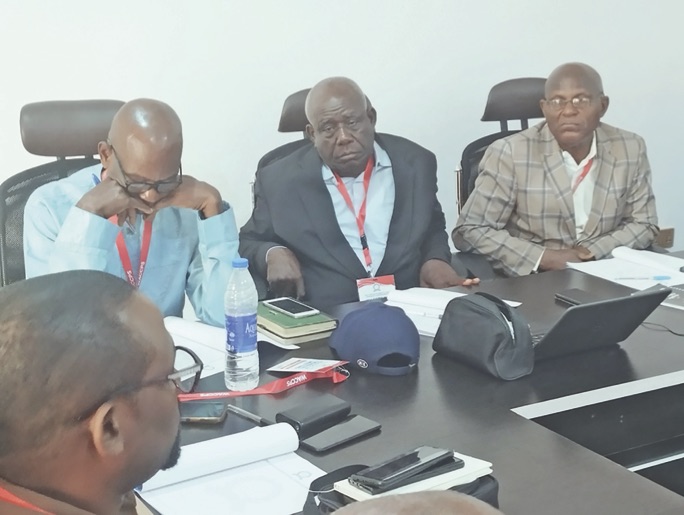
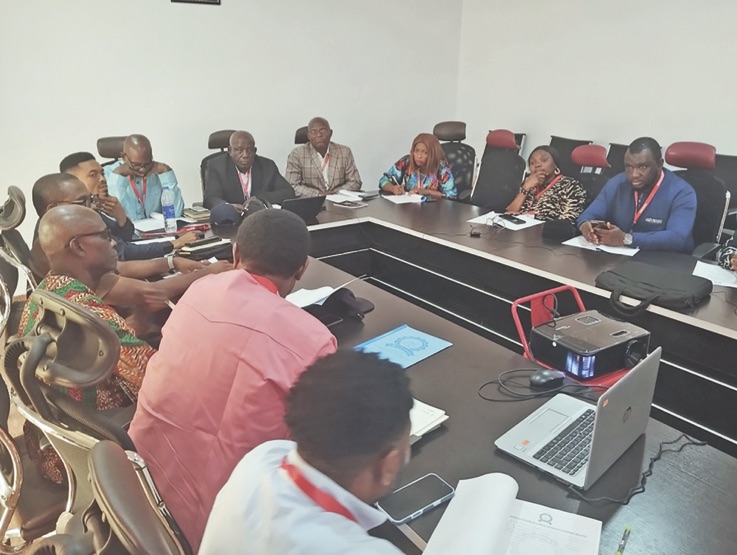
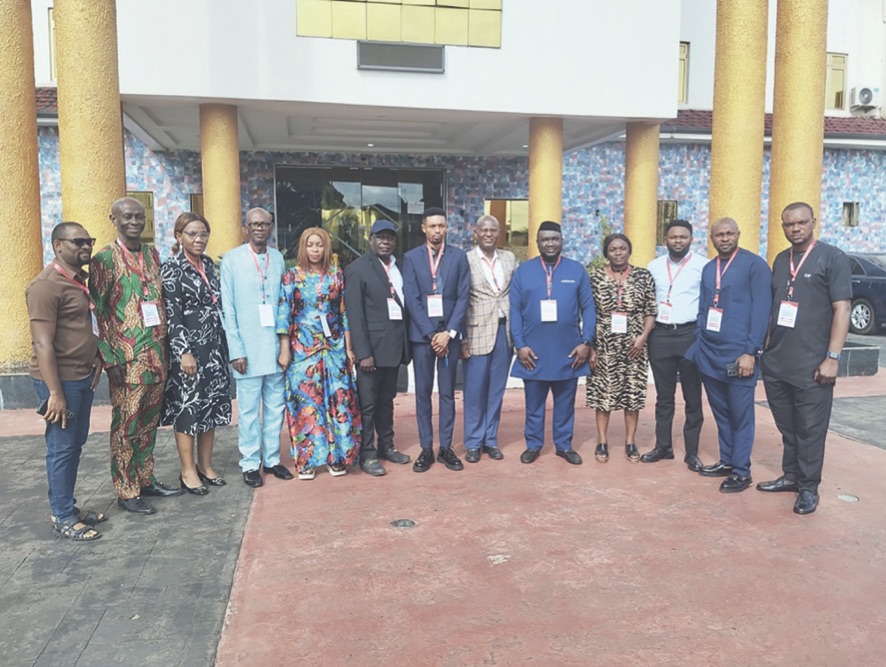
Worried by the series of challenges plaguing Nigeria’s healthcare sector, members of the West African College of Clinical Physiology Sciences (WACCPS) gathered in Awka, the Anambra State capital recently to brainstorm on the possible practical solutions to the problems.
And at the end of their meeting, one solution stood out strong – intensive and more practical training of health workers on how the various parts of human body works.
Provost of the college, Prof. Chukwuemeka Aloamaka, in an interview with Saturday Sun, argued that it was only when one understood how a particular organ or part of human body works that they would be able to treat an ailment that attacked it.
“Physiology is a discipline that provides knowledge about what happens within the body”, he explained. “With such knowledge you can train medical practitioners in different areas. So, it is a basis of the training of medical professionals.”
He said that he was particularly concerned about the emigration of medical professionals from Nigeria, saying that the ugly development leaves Nigerians with a few healthcare workers to cater to their medical needs.
“Nobody likes his product to be wasted but you have no control over the situation. It is a national problem because of the state of our economy”, he stated.
Aloamaka said that WACCPS, as a body, was set up to advance the knowledge in clinical physiology, and take such knowledge to a height of excellence so that its members would be certain and sure of the quality of training that goes out to enhance both medical education and health provision for members of society.
He said that there were various areas where the college could train medical officers. These include: the neuro area that has to do with the brain functions, musculoskeletal for movements, endocrinology and reproduction where you talk about the control of the internal system for the purpose of reproduction, the cardiovascular which has to do with the heart and blood vessel, the renal which has to do with the kidney, urination, for maintaining the body’s internal environment constantly and other areas.
The emeritus professor said that physiologists work with medical doctors and other healthcare professionals in hospitals to provide care to patients.
“If you go to some hospitals, Federal Medical Centres for example, you have physiology suits where patients also reach out to, to establish the state of their health. So, they work in liaison with medical doctors.
“You must know whether the body is functioning well. If you are treating, you also must be in forms; yes this your treatment has brought this person to a normal state of functions in the body. It is the physiologist that will tell the doctor that this person has returned to normal”, he stated.
A medical doctor on the WACCPS team, Onyebuchi Nwoke, said that based on his own experience and findings, every healthcare professional, including physicians, surgeons, nurses and others in various medical fields, need serious training in physiology to perform better.
Nwoke, a senior lecturer at Ambrose Ali University and a clinical physiologist registered by the Medical and Dental Council of Nigeria, explained why the Nigerian elite run to the developed countries for their medical needs.
He explained how a sound knowledge of clinical physiology and its application could help solve the earlier mentioned problems.
“As a medical doctor, I discovered the hiatus in Nigeria. The clinical physiologist is the doctor of the person who is well, while we that were trained in medical school for six years are the doctors of those who have lost their health with the bid of trying to bring them back to normal health.
“The clinical physiologist is the doctor of that person who is well to make sure he doesn’t lose his health. And this is what operates in these developed countries that our elites run to.
“When you arrive there, they send you into a health team; and the health team has as one of its critical components, the clinical physiologist. He works with the doctors, nurses, physiotherapists and all members of the health team. They work together.
“By the time they access you, of course they will know what your issues are. And you’re treated. When you come back you’ll start praising the white people, saying that they’re gods, spirits. No way. They only divided their labours properly.
“Here in Nigeria, the medical doctor does the job of both the doctor and other professionals; and at the end of the day, they so much work on him.
“Now, there are two laboratories anywhere: there is a medical laboratory and there is a physiological laboratory. Make reference to the United States, you will hear about the physiological laboratory manned by the clinical physiologist who knows how these experiments and tests should be done.
“When they are done properly, they bring out the diagnoses. Most diagnoses we operate with here in the absence of clinical physiological laboratory are mostly conjectures. And that’s why when you go to your pastor to pray, you pray very well,” he stated.
Dr Nwoke, who’s the immediate past Acting Head, Department of Physiology in the university, said that based on his experience and findings over time, a doctor with MBBS and a graduate with B.Sc. in physiology both need professional training in clinical physiology to hone their skills in their chosen career paths.
“Clinical physiology is to further the knowledge of both the medical doctor and the doctor who graduated with B.Sc physiology. Do you know that in my six years of study, I studied physiology for just 18 months but I spent six years in medical school?
“So, if there is anybody who really needs clinical physiological training, it is the medical doctor. This is because he deals with the patients. And we also have to bring the physiologists into it. That’s why I am so happy with the Professional Association of Practising Clinical Physiologists in Nigeria (PAPCPN).
“For once now, the young physiologist who is coming out from the physiology school is now being inducted into a professional body which is a start to tell them that where you are going is a very important place. You will need to join in taking the Nigerian sick person to the destination which is the wellness.
“So, there is a combination of what we are doing here today and what the doctors are doing. I am encouraging every other medical doctor to please give the adequate space for the clinical physiologists to come into the health team so that there can be a collaborative function, so that Nigeria will be better for it when it comes to treatment of patients”, he concluded.
The Chairman of Research, Ethics and Compliance at WACCPS, Prof. Vincent Ugochukwu Igbokwe, said that the college was interested in safety, professionalism and in maintaining ethical standards.
“And when you’re now talking about the medical standards we want to maintain, you are now looking at patient’s confidentiality; you’re now looking at communication and consent.
“Like now, let’s say you came to the hospital with your wife and your wife is the one that needs to be attended to, and you are just standing-by, and then before your wife goes to see the doctor, the physiologist has to measure, for example, your wife’s blood pressure.
“Then how does the clinical physiologist go about it? He will not just jump on your wife and begin to roll up your wife’s sleeve in case she is wearing long sleeves. If he does that, he will get a slap.
“Of course, he will be slapped for not adhering to ethical standards – consent, communication. So, when he goes there, yes, greet her, introduce yourself – communication; let her know what you want to do.
“I’d like to measure the blood pressure before you can go on to see the doctor. And then tell her, can you please roll up your sleeve”, he explained.
Igbokwe said that there was a difference between the training offered by the West African college and the ones offered by the university, saying that the former has improved packages for its trainees.
“When you look at other training in the university, you will discover that at the moment it has been there for long. University has been crying for equipment, instrument.
“Now, with this coming up, we actually liaise with standard hospitals that have these facilities. And we say look, can you help us? This is what we want to do. And they say bring it. And our students get the knowledge.
“What they are getting in the university is limited; and this is health. But one person you mismanage might be the breadwinner of that family; and you’re putting a lot of people in danger”, Igbokwe explained.
National President of the Professional Association of Practising Clinical Physiologists in Nigeria (PAPCPN), Ifeanyi Okeke, said that the college was worried about the quality of training in the country’s universities.
“The only worries we have is our academic system which everyone one is preaching about to change. We really need a situation whereby the universities go deep into the clinical posting for every physiologist.
“It is actually affecting our people because the clinical posting helps them to understand the practical aspect very well.
“Also, there is what we call internship. Once you are graduating as a physiologist, it should be a compulsory thing. PAPCPN is promoting the internship. We are sending all our graduates to different hospitals for their internship.
“But this is something that the government and the universities should work hand in hand to make sure that we achieve.
“So, because of the lack of practical aspect in the university, we are not so good with it. And that is the major thing that we are bridging. The West African College is coming in fully to focus on the clinical aspect; that is, the practical aspect of physiology”, he stated.
Okeke, who is also the Professional Programme Development Advisor of WACCPS, said that the group has established partnership with some hospitals and that they were planning to have partnership with some universities because “most of the persons you have seen here are members of the university leadership.”
Also speaking, the Director of Research and Innovation of the college, Prof. Nwankwo Amakwe, appealed for the government’s support.
“We need the intervention of the government; a pat on our back to see that this society is a panacea to the jobless youths because you see that most of the university products are going about looking for job.
“But if they could embrace a program like this, a clinical training for our young ones, the problem will be partly solved”, he argued.
WACCPS is a specialised professional training institution dedicated to promoting excellence in clinical physiology practice, education, and research in West Africa.
As a leading professional institution in the region, the organisation says that it strives to maintain the highest standards of clinical physiology practice, foster collaboration and innovation, and improve healthcare outcomes for the people of West Africa.
It says that its registrants comprise provisional clinical physiologists, clinical physiologists, healthcare professionals, and researchers who learn and share a commitment to advancing the field of clinical physiology and improving patient care.