Follow Us on Google
By Chinenye Anuforo
The Minister of State for Education, Professor Suwaiba Sa’id Ahmad, has challenged the media to stop portraying girls mainly as victims and instead project them as resilient, capable and deserving of equal opportunities.
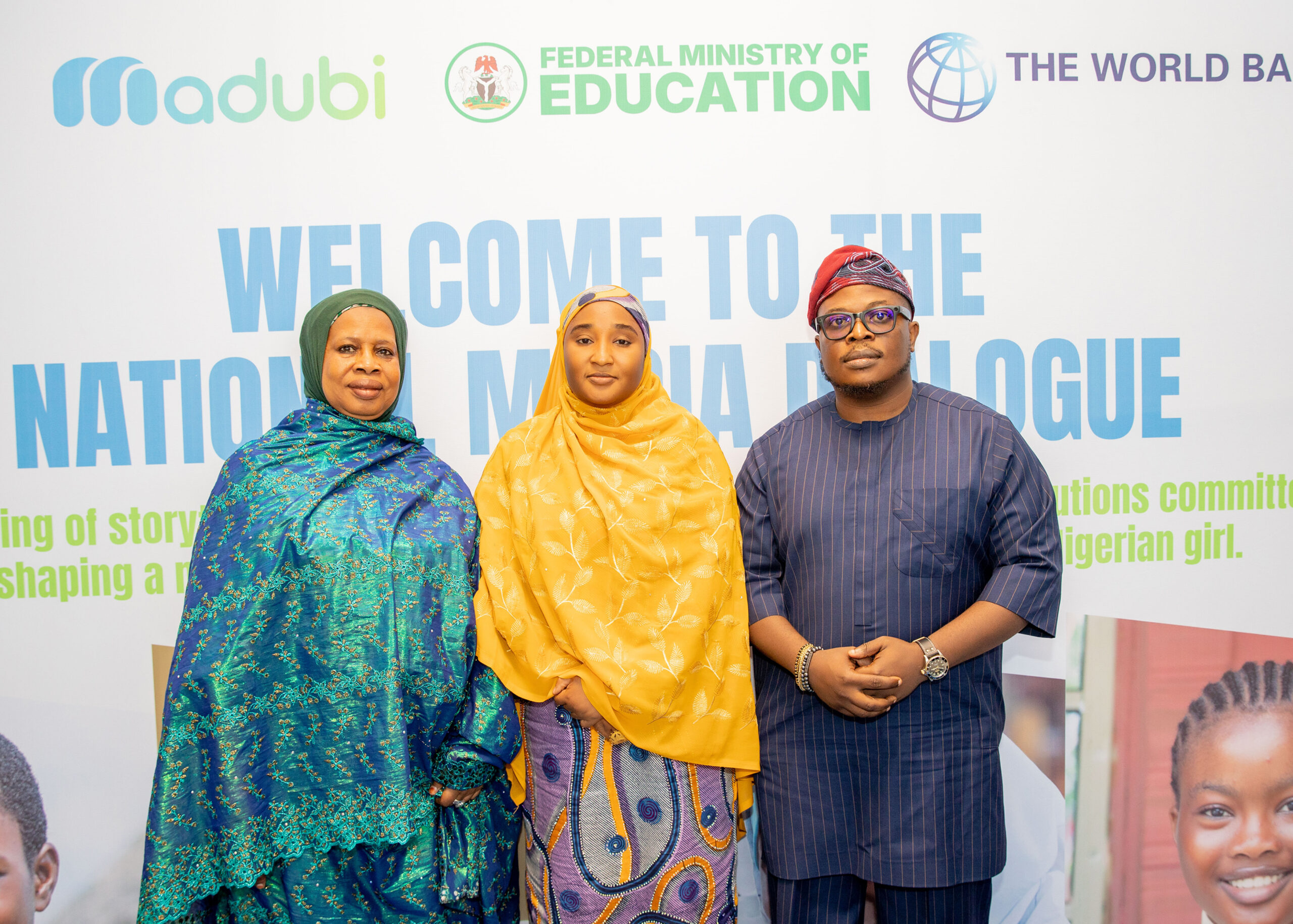
Speaking at the Madubi Phase III National Media Dialogue held Tuesday in Lagos under the theme, “The Girl in the Mirror: Media as Catalysts for Change in Girls’ Education,” the minister said persistent narratives that frame girls primarily through crisis and vulnerability undermine their potential and distort public perception.
The dialogue, organised by RED Media in collaboration with the Federal Ministry of Education and the World Bank-supported Adolescent Girls Initiative for Learning and Empowerment (AGILE), brought together education stakeholders and media executives to examine how media narratives influence attitudes toward girls’ education.
Professor Ahmad said while challenges confronting girls must be reported, such stories should not end with hardship and helplessness.
“Girls are not weak. They are strong. Report them from the perspective of their strength and not merely their struggles”, she declared.
According to her, girls often carry enormous responsibilities from an early age, balancing domestic duties and academic pursuits while confronting social expectations that boys rarely face.
Drawing from personal experience, the minister said girls demonstrate remarkable resilience and endurance that society frequently overlooks.
“When we speak about strength, we are not necessarily referring to physical strength. But in terms of resilience, endurance and responsibility, girls demonstrate extraordinary strength,” she said.
Ahmad argued that women and girls are often subjected to harsher standards in leadership and professional spaces, with society expecting them to prove themselves more than men.
She stressed that meaningful national development cannot happen if girls continue to face unequal access to opportunities.
“If we want a better Nigeria, then we must create opportunities for the girl-child. This is not optional,” she said.
The minister also criticised the media’s tendency to focus disproportionately on glamour, appearance and tragedy while overlooking stories of perseverance, leadership and impact.
“Too often, girls become visible only when something goes wrong,” she said.
“We must also tell stories of achievement, resilience and excellence.”
Earlier, Director and National Project Coordinator of AGILE, Mrs. Amina Abubakar Haruna, said the media remains central to changing social attitudes that limit girls’ educational prospects.
Haruna described AGILE as one of the Federal Government’s major education interventions aimed at expanding access to secondary education for girls.
According to her, the World Bank-assisted project has delivered significant interventions across participating states, including school renovations, digital literacy programmes, Conditional Cash Transfers and improved learning infrastructure.
She said the intervention has delivered renovated classrooms, hostel upgrades, solar-powered boreholes, sanitation facilities and other learning infrastructure, including support for Federal Unity Colleges.
However, she warned that physical infrastructure alone cannot guarantee lasting success.
“The media is not merely a channel for disseminating information; it is a catalyst for change,” Haruna said.
“It shapes opinion, challenges norms and amplifies the voices of those too often unheard.”
She urged journalists and media organisations to go beyond routine reporting and become active partners in driving public support for girls’ education.
“We are not asking you merely to report on a project. We are asking you to engage with the issues, investigate realities on the ground and help place girls’ education at the centre of Nigeria’s development agenda”, she said.
The dialogue also featured a panel session on “Shaping Narratives: How the Media Frames Girls’ Education,” moderated by Kelly Carey, Chairperson of the European Union Youth Sounding Board, Nigeria.
Carey said society’s willingness to invest in girls often begins with how they are represented in public discourse.
“Before government invests in a girl, society must first imagine her, and much of that imagination comes from the media,” she said.
Head of Presentation at Channels Television, Ms. Adejoke Rogers, argued that newsroom culture frequently presents girls through the lens of dependency and vulnerability.
“Girls do not want to be seen merely as vulnerable,” Rogers said.
“They want to be recognised for their strength and resilience.”
She urged journalists to frame stories around how girls overcome challenges and contribute meaningfully to society rather than limiting reports to hardship narratives.
Also speaking, Head of Programmes at Nigeria Info, Mr. Sherif Quadri, said changing media narratives must be accompanied by changes within homes and communities.
According to him, many limiting perceptions about girls begin with how boys and girls are raised.
“If parents do not tell their daughters, ‘You can do anything a boy can do,’ progress will remain difficult,” Quadri said.
For organisers, the Madubi campaign meaning “mirror” in Hausa is designed to provoke reflection and inspire a shift in how society views girls and their educational aspirations.
The consensus at the dialogue was clear: girls should no longer be defined solely by hardship or vulnerability, but by their strength, ambition and capacity to shape Nigeria’s future.