Follow Us on Google
.Job losses imminent, 30% import plunge feared
•Importers seek palliative from FG to survive
______________________
By Steve Agbota
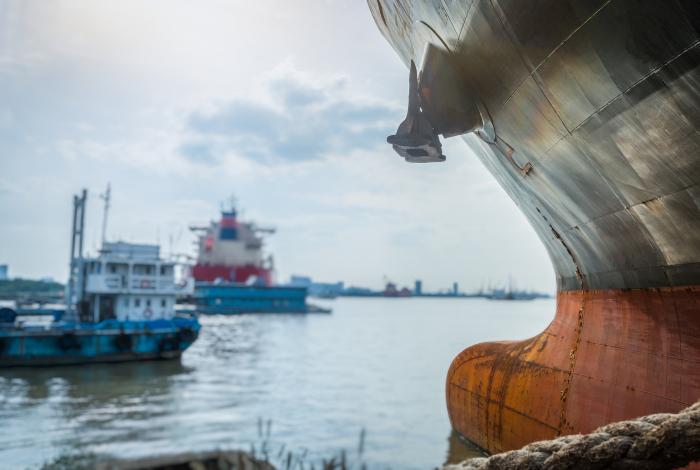
Amid rising tensions in the Strait of Hormuz and the concomitant spike in shipping costs, Nigerian shippers fear import volumes could plunge 30% within a month, after war‑risk insurance on $100 million vessels quadrupled from $250,000 to $1 million.
Stakeholders told Daily Sun that soaring war-risk insurance could hit Nigeria hard, driving up inflation and forcing some businesses to cut jobs just to stay afloat.
The rise in war risk premium was contained in a latest report by the United Nations Conference on Trade and Development (UNCTAD).
The report indicated that the sharp increase in insurance costs comes amid a near-total breakdown in shipping activities through the strategic chokepoint, where daily vessel transits have plunged by 97 per cent, from an average of 141 ships in February to single-digit movements in early March.
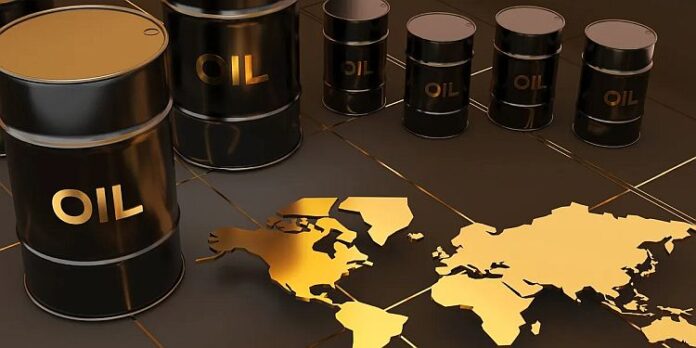
The Strait, which handles about 25 per cent of global seaborne oil trade, equivalent to roughly 20 million barrels per day, remains critical to global energy supply chains. Beyond insurance, freight markets have reacted strongly to the disruption. Between February 27 and March 6, 2026, dirty tanker rates rose by 54 per cent, while clean tanker rates surged by 72 per cent, reflecting tightening vessel availability and heightened risk exposure.
At the same time, bunker fuel prices have nearly doubled, with low-sulphur fuel increasing by 99 per cent and high-sulphur fuel by 100 per cent, further driving up the cost of maritime transportation. Energy markets have also responded sharply. Between February 27 and March 9, 2026, oil prices climbed by 27 per cent to about $91.8 per barrel, while gas prices surged by 74 per cent.
UNCTAD further highlighted that the Strait of Hormuz is a vital route for fertilisers, accounting for about one-third of global seaborne fertiliser trade, raising concerns about agricultural supply chains and food security, particularly in developing countries.
The global agency warned that the combined effect of soaring insurance premiums, rising freight and fuel costs, and increasing borrowing expenses could significantly strain global trade and economic stability, especially for vulnerable economies already grappling with high debt burdens and limited fiscal space.
With Brent crude trading above $90 per barrel, UNCTAD stressed that the duration and intensity of the disruption will determine the scale of its global economic impact, calling for urgent de-escalation and protection of maritime trade routes to safeguard supply chains.
However, in order to cushion the effects, shippers urged the Federal Government to suspend some charges at the ports, which will serve as a palliative in the long run.
Other News
Speaking to Daily Sun, the Executive Director, Centre for Promotion of Private Enterprises, CPPE, Dr Muda Yusuf, said that the implication of the war risk premium being jerked up to $1 million is obvious. According to him, the implication is that additional costs will increase, which will eventually translate to additional costs increasing prices of goods and services in the country.
“So, the implication is that it’s going to have an inflationary effect on the economy. So, the deceleration in inflation that we are celebrating is likely to be reversed as a result of this, if this situation persists.
Because all these costs will eventually be transferred to consumers.
“So, that is the implication. It’s going to affect operating costs. It’s going to affect production costs. It’s going to affect the purchasing power of the people. It’s going to affect the welfare of the people. So, those are the implications,” he said.
However, he said the situation will affect some people in terms of job losses because not everybody will be able to cope with the additional costs, adding that along the totality of the ecosystem, in the maritime sector, in the manufacturing sector, whatever sector it is that has high levels of import dependence, all those sectors will be seriously impacted and some of them may not be able to cope.
He added that some of them may throw in the towel because there is a limit to how much you can transfer additional costs to your consumers. Because consumer purchasing power is weak, consumer assistance is getting higher, and energy costs are going up. So, we now have additional costs coming from the shipping or maritime environment. That will be too much for some businesses to bear.
According to him, it’s a major risk to jobs in practically all sectors, and more importantly, even in the maritime sector. It’s a risk to jobs in those sectors.
“What the government can do is to look at all the charges in the maritime sector. Charges by NPA, by NIMASA, by all the people imposing charges on shipping. I think those charges should be suspended for now as a way to mitigate these high maritime or shipping costs. Because eventually, it is the ordinary Nigerians who will bear the brunt. So, the government can waive all those charges for now,” he urged.
The former spokesperson for the Shippers Association of Lagos State (SALS). Dr Kayode Farinto, said the rate of freight will definitely increase, that is, the charges of freight will increase, and that will automatically increase the value of goods imported, and it will reduce the purchasing power.
“Because whether you like it or not, a consignment of $4,000 now will now be attracting maybe an additional $2,000, that is about $6,000 for the container. So you know what it means. And what it means is that the importer will now transfer it to the final consumer. It’s a very bad omen. It’s not good for us. It’s not good for the whole world, but not Nigeria alone anyway,” added.
On how to cushion the effect of the war risk premium on Nigerian shippers, he urged the government to start thinking of policies, subsidies, and subventions to importers to ameliorate the suffering.
“So, genuine importers, the government should start thinking of how to give them policies, assist them with funds. That’s the only thing. If not, it will drastically drop importation by about 30%, under one month,” he said.