Follow Us on Google

From Jude Chinedu, Enugu
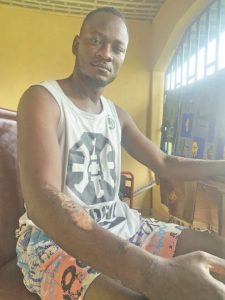
When Eze Cletus Elijah returned to Enugu in late October to prepare for his PhD examinations, the 38-year-old oil worker never imagined he would soon be hanging from ropes inside a police facility, beaten and pressured to implicate a state commissioner in a crisis he insists he knew nothing about. What began as a simple bail intervention spiralled into a nightmare that has now forced the Enugu State High Court to intervene.
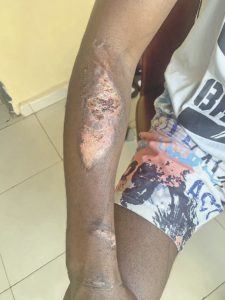
Eze, who once served as Chief Security Officer (CSO) of Mburubu community in Nkanu East LGA, had accompanied elders to secure the bail of a detained villager on October 30. As the discussions were drawing to an end, an officer asked him to “stay back.” When he protested that he had done nothing wrong, the officer responded with the ominous phrase, “There is an order from above.”
By nightfall, operatives of the Special Weapons and Tactical Squad (SWAT) arrived. Eze said he initially felt relief, having once worked closely with the unit. “The commander even called me by my nickname, Two Face. That gave me hope that I was in a friendly terrain,” he recalled.
That hope quickly evaporated. His hands were cuffed behind him, tightly enough to elicit cries of pain, his legs chained, and he was taken behind the commander’s office. There, he said, he was suspended using ropes and an iron rod in a manner he described as medieval. “I stayed like that for about five hours,” he narrated. “They kept beating me and asking where the guns were.”
His ordeal took an even darker turn when he was taken into what he described as a “shrine inside the police facility.” According to him, officers performed incantations while calling out names—including that of Enugu State Commissioner for Science and Technology, Prince Lawrence Ezeh. “They rubbed me with fetish substances and told me to confess that I was a hoodlum sponsored by the commissioner,” he said. He refused. “They said they could shoot me and dispose of my body. I fainted three times. Each time, they revived me, and they continued beating me.”
His account is now part of a suit before the Enugu State High Court and is corroborated by other victims, including 68-year-old Aniobi Ambrose, who said the crisis had escalated beyond anything the community ever imagined.
Ambrose said he was abducted on November 1 by armed men loyal to Ozo Jerry Patrick Onuokaibe, the man at the centre of the community’s throne dispute. “They double-crossed me with guns and machetes. I thought it was kidnapping,” he said. He was later handed over to SWAT operatives. “I saw our boys lying on the floor… tortured. I saw this young man here,” he added, gesturing to Eze Elijah, “in a condition that broke my heart.”
Their accounts shed light on a long-running chieftaincy crisis rooted in the community’s 2003 constitution, which outlines the rotation of the traditional throne and bars certain families, including that of the late Igwe, from contesting. A High Court judgment in January 2025 (Suit No. HAMA/ 1/ 2024) disqualified Onuokaibe from contesting. Another in October 2025 (Suit No. HAMA/ 24/2025) barred him from holding a new yam festival or parading himself as Igwe-elect. Yet he allegedly went ahead with the festival, printed invitation cards and insisted no other village could celebrate theirs until he was done with his. Ambrose said youths protested because their actions defied the court order and the community’s custom. “But after it died down, he started arresting people,” he added.
Other News
Ambrose also accused the Commissioner for Chieftaincy Matters, Hon. Okey Ogbodo, of inconsistency. “He plays double face. Today he accepts the community’s 2003 constitution, tomorrow he says someone brought another one. We don’t trust him again,” he said.
The victims told the reporter that a list of about 70 community members had been compiled for arrest, forcing many to flee their homes. Eze said what happened after weeks in detention confirmed their fears. According to him, the same Onuokaibe who petitioned the police later came to SWAT and secured their release. “He made us call him ‘Igwe’ before we were released,” he claimed. To Ambrose, this was the clearest evidence that the police had no case. “How can the complainant become the surety? It shows they realise no crime was committed,” he said.
In court on November 24, their lawyer, Mr Ike Ozor, described the arrests and alleged torture as persecution orchestrated by a man legally barred from the throne. He told the court that the police actions had become “life-threatening.” Justice C.O. Ajah agreed that their fundamental rights were in jeopardy and issued a restraining order stopping the police, SWAT Commander CSP Anosike Nduwuisi, an IPO identified as Emmanuel Uchenna Ogazi, and Onuokaibe from further arrests or harassment. The case was returned to the Chief Judge for reassignment.
Despite his ordeal, Eze expressed admiration for Governor Peter Mbah, whom he described as a “peace-loving man.” He insisted the governor was unaware of the crisis. “Some people are blocking the truth from getting to him. If he knew what SWAT is doing, what they did to us, he would act,” he said.
The Enugu State Police Command has remained silent on the allegations. When contacted, Police Public Relations Officer Daniel Ndulewe promised twice to respond but did not follow up before press time. However, Onuokaibe confirmed he authored the petition leading to the arrest of the 10 youths.
He alleged that they attacked him with guns, machetes and dangerous weapons while he was briefing his community on a court order restraining him from performing the new yam festival. He claimed that several people sustained injuries and that property was destroyed.
On why he later secured their release, he said: “I decided to come for the bail of the suspects as a way of restoring peace. I led them all through their stay at the police, bought them food the day they were released, bought them fresh clothes and gave them transport money.”
He added that the youths prayed for him in his house. “It is unfortunate that the same people I helped have turned back to institute a court action against me and told the court all manner of lies. I know they are being instigated to lie against me,” he said.
As the case returns to court, the story of Mburubu remains a troubling portrait of power, fear and a throne at the heart of a community’s deepening unrest.