Follow Us on Google
From Jude Chinedu, Enugu
Governor Peter Mbah of Enugu State, his Kebbi counterpart, Nasir Idris, and the National President of the Nigeria Union of Teachers (NUT), Audu Amba, have rallied support for teachers amid growing concerns that technology and Artificial Intelligence (AI) could diminish their role in the classroom.
They spoke on Tuesday at the 59th National Conference of Delegates of the NUT in Enugu, where education stakeholders examined how teachers could remain relevant in an increasingly technology-driven learning environment.
The conference, the union’s 8th quadrennial gathering, had as its theme: “The Deployment of Technology and Artificial Intelligence in Education Will Erode the Place of Teachers in the Classroom: A Myth or Reality?”
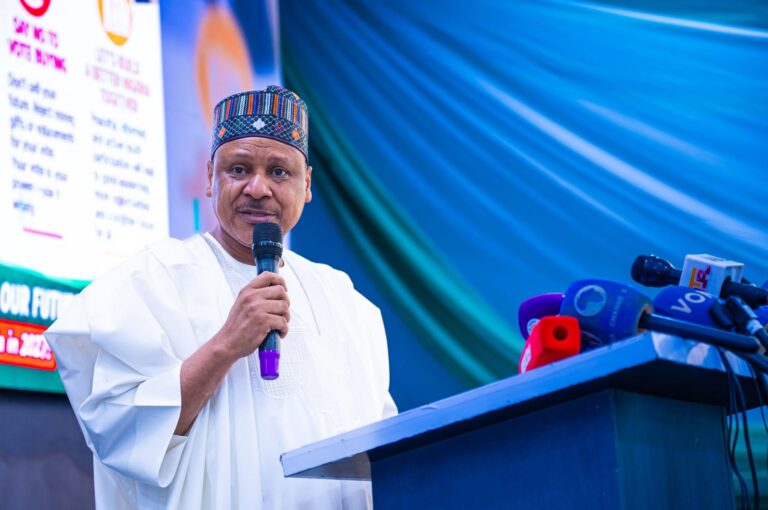
Setting the tone for the debate, Mbah said the future of education should not be framed as a contest between teachers and technology, but as a partnership in which technology empowers teachers to deliver better learning outcomes. “The future is therefore not teacher versus technology. The future is teacher with technology,” he declared.
Mbah said AI could assist teachers in preparing lessons, personalising learning, identifying learning gaps and widening access to knowledge, but could not replace the human qualities central to effective teaching.
He described AI as a “handmaid of development” that should make teachers more productive, innovative and effective, rather than an instrument for taking away their jobs.
The governor said his administration had made education a major priority, committing roughly one-third of the state’s budgets to the sector and rolling out technology-driven Smart Green Schools across the state. Official state records show that about 33 per cent of recent budgets have gone to education, including the development of Smart Green Schools across the 260 wards.
Mbah said the government had also recruited 6,850 teachers and other education personnel to address manpower shortages and improve the student-teacher ratio.
“Our teachers must not be victims of the technological revolution. They must be among its principal beneficiaries and drivers,” he said.
He called for continuous capacity building, ethical standards, data protection and responsible regulation to ensure that AI was deployed in ways that strengthened rather than undermined teaching.
Also speaking, Idris, himself a former NUT national president, stressed the need for governments to invest in teachers and improve their welfare.
The Kebbi governor said his administration had prioritised workers’ salaries, pensions, gratuities and death benefits at both state and local government levels.
“We don’t owe salaries, we don’t owe pensions and we don’t owe gratuity,” Idris said.
He said his administration had recruited thousands of workers, including teachers and health personnel, while thousands of casual workers had been absorbed into the permanent civil service.
Independent reports have put the number of workers recruited or absorbed by the administration at more than 5,000, including about 2,000 teachers, while more than 2,000 schools have either been constructed, rehabilitated or furnished.
Idris said the interventions were designed to improve teaching and learning, keep more children in school and reduce the number of out-of-school children in Kebbi.
Other News
Recalling his transition from teaching to politics, he said some people initially doubted whether a teacher could successfully govern a state, but workers stood by him.
“Teaching has done so many things for me,” he said.
He said his background as a teacher informed his support for extending teachers’ years of service from 35 to 40 years in the state, a policy also publicly highlighted by his administration.
On his part, Amba called for increased funding of education, improved teachers’ welfare and stronger protection of schools against insecurity.
The NUT president identified poor remuneration, teacher shortages, dilapidated infrastructure, inadequate instructional materials, underfunding, insecurity, weak policy implementation and the digital divide as some of the major challenges confronting education.
He urged governments at all levels to increase investment in the sector and fully implement approved teachers’ welfare packages, including special salary structures, bursaries, pension provisions, housing and loan facilities. The union also raised concerns at the conference over poor teachers’ welfare and attacks on schools.
Amba said the NUT would continue to work with governments, labour unions, Education International and other stakeholders to strengthen the teaching profession and improve learning outcomes.
The keynote speaker and Executive Director, Academics, African Federation of Teaching Regulatory Authorities (AFTRA), Prof. Steve Nwokeocha, said teachers had to adapt to the rapidly changing technological environment.
He said fears that educational technology could erode the place of teachers were genuine but could be overcome through continuous professional development and adaptation.
“Computers will not replace teachers, but teachers who use computers will replace those who do not use them,” Nwokeocha said.
According to him, technology could not completely replace teachers because education also involved human judgement, empathy, relationships, mentorship and character formation.
He urged ministries of education and private school proprietors to invest in digital infrastructure and Open Educational Resources, while teachers should take greater responsibility for self-development and make productive use of smartphones and other available technologies.
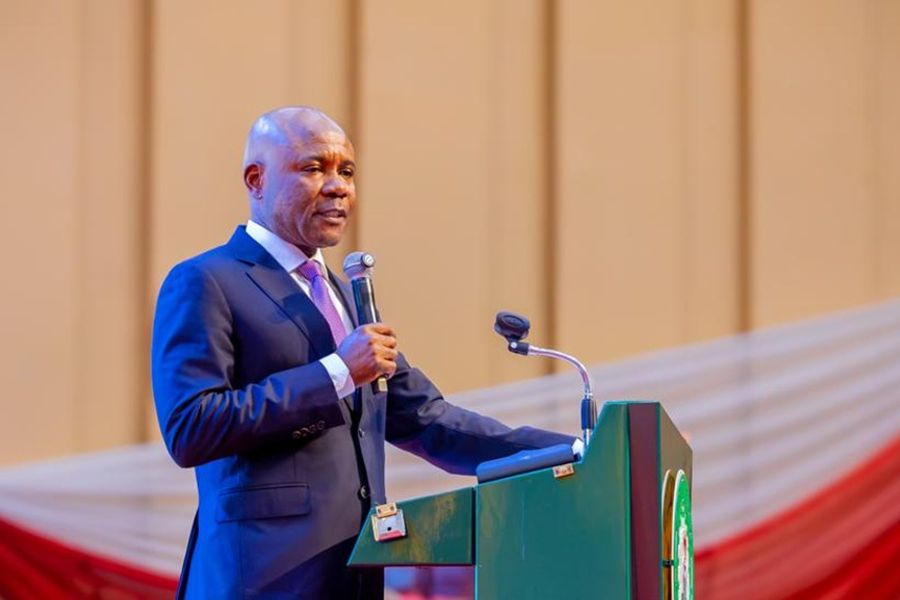
The Executive Secretary of the Universal Basic Education Commission (UBEC), Aisha Garba, similarly said technology and AI should complement rather than replace teachers.
Garba said UBEC had expanded its Smart School and digital-learning programmes as part of efforts to improve teachers’ digital competence and access to technology-driven education.
UBEC records show that 37 Smart Schools have been established nationwide, while the commission has also expanded digital-learning infrastructure and teacher training programmes.
She urged stakeholders to ensure that technology investments were inclusive, sustainable and capable of reaching underserved communities.