Follow Us on Google
- Organised labour begins minimum wage renegotiation by July 2026
- Demands 100% salary payment pending new wage law
From Adanna Nnamani, Abuja
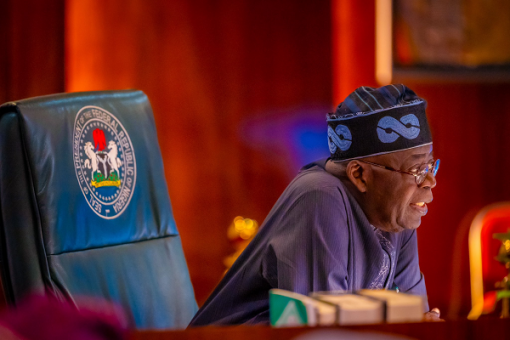
President Bola Ahmed Tinubu has reaffirmed his administration’s commitment to tackling insecurity and poverty, describing both as major threats to decent work and national development.
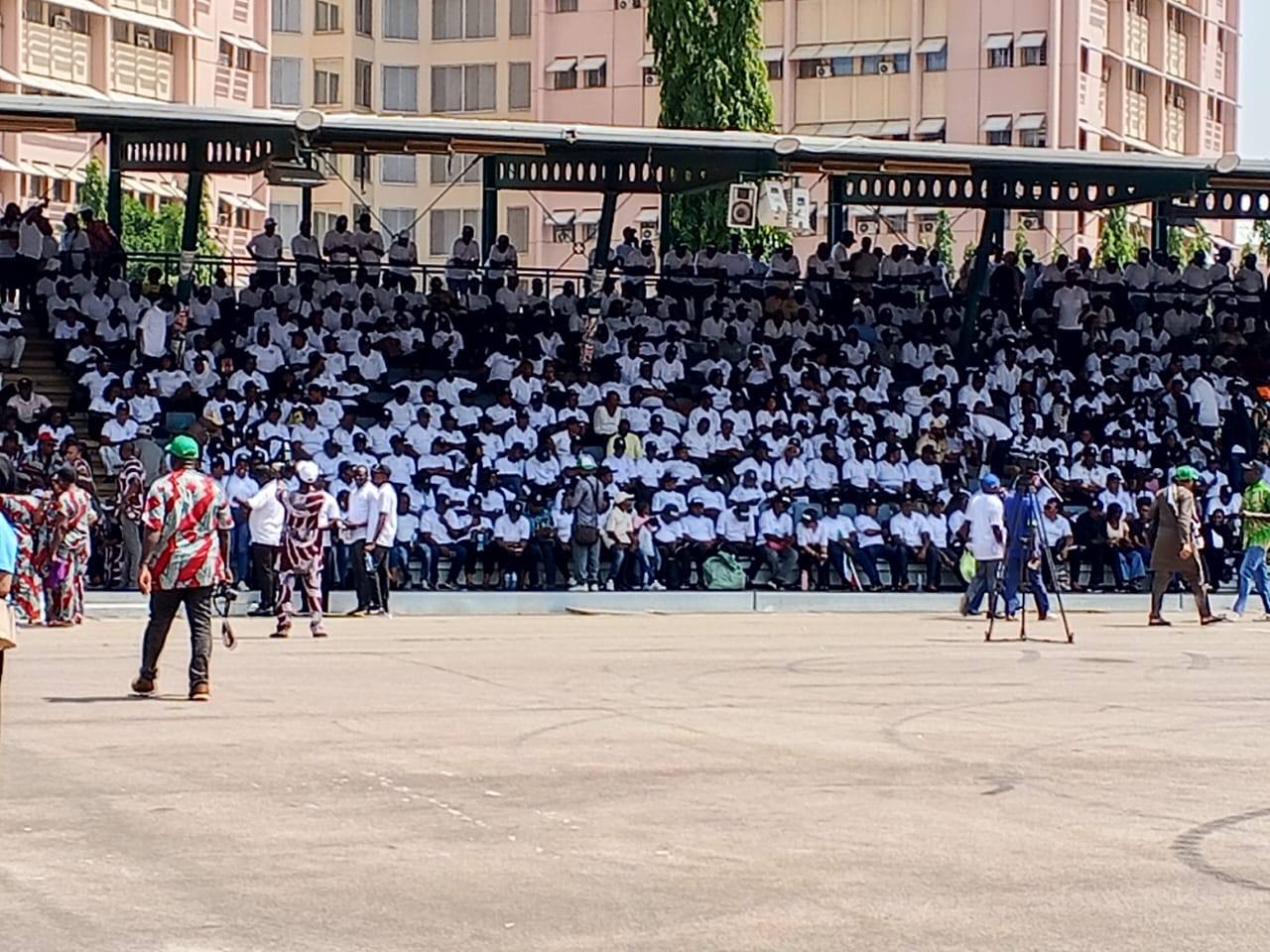
Speaking at the 2026 Workers’ Day celebration held at Eagle Square in Abuja on Friday, Tinubu, who was represented by the Secretary to the Government of the Federation (SGF), George Akume, said his administration was treating the twin challenges as a national emergency that has continued to undermine productivity, livelihoods, and investor confidence.
The President also acknowledged the economic hardship facing Nigerians but assured that his administration was implementing targeted reforms and social investment programmes aimed at restoring stability, creating jobs, and improving living standards.
He also urged organised labour to sustain dialogue with the government, emphasising that industrial action should be a last resort in resolving disputes.
He said, “Indeed, there cannot be decent work where workers fear for their lives, or where wages cannot feed a family, noting that insecurity disrupts farms, factories, markets and other economic activities, thus making it almost a mirage to attain decent work.
“My administration has treated these hydra-headed challenges as a national emergency, bearing in mind that these challenges affect productivity, threaten livelihoods, and undermine the confidence of workers and employers alike.
“As I proceed, let me pause to acknowledge a truth that we must not ignore; insecurity and poverty remain significant obstacles to achieving a peaceful Nigeria where the citizens can sleep with their two eyes closed and ultimately achieve the Decent Work Agenda as envisioned by the International Labour Organisation (ILO).
“However, I stand before you today to assure you that this administration is not resting on its oars, nor is it indifferent to the plight of Nigerians.
“We are fully aware of the weight of these challenges, and are confronting them with deliberate, coordinated, and sustained action.
“You can see this from the renewed vigour and commitment from our intentional policies, the resilience of our security men and women, some of whom painfully have paid the supreme price with their lives, and we are eternally grateful to them.”
In the same vein, the Minister of Labour and Employment, Muhammad Dingyadi, said the theme of this year’s May Day, “Insecurity and Poverty: The Bane of Decent Work,” reflects the realities confronting workers across the country.
Dingyadi noted that the rising cost of living and insecurity continue to impact productivity and livelihoods, but assured that the Federal Government was intensifying collaboration with security agencies to safeguard workplaces and communities.
He reiterated the government’s commitment to wage reforms and workers’ welfare, adding that efforts were ongoing with labour unions and state governments to ensure full compliance with the new minimum wage.
However, organised labour, led by the Nigeria Labour Congress (NLC) and the Trade Union Congress (TUC), painted a gloomy picture of the nation’s economic reality, declaring that the economy is no longer working for the majority of Nigerians.
The NLC President, Joe Ajaero, and TUC President, Festus Osifo, announced plans to commence renegotiation of the national minimum wage by July 2026, noting that the current wage structure has been overtaken by rising inflation and the cost of living.
Other News
They also demanded the payment of 100 per cent of workers’ basic salaries from July pending the conclusion and passage of a new minimum wage law, saying that the move is necessary to cushion the hardship confronting workers in the country.
According to labour leaders, the renegotiation process would begin ahead of the expiration of the current wage framework early next year to avoid delays experienced in previous reviews.
They warned that Nigerian workers could no longer cope with prevailing economic conditions, stressing that urgent action is required to prevent further deterioration in living standards.
Labour further criticised what it described as policy choices that prioritise external capital over local production, arguing that such an approach undermines domestic industries and limits job creation.
They also raised concerns over widening inequality, noting that the benefits of economic reforms are increasingly concentrated in the hands of a few, while millions struggle to meet basic needs.
They urged the government to prioritise policies that promote job creation, fair wages, and improved welfare, warning that failure to address current challenges could deepen social and economic instability.
Labour further faulted the country’s energy sector, describing persistent power shortages and rising electricity tariffs as a major burden on workers and businesses. They called for a comprehensive reform of the sector to ensure reliable and affordable electricity.
In the oil and gas sector, they warned that rising fuel prices and global shocks continue to worsen transportation costs and living conditions, urging the government to strengthen local refining capacity and reduce dependence on imports.
The unions also decried the state of education and ongoing industrial disputes in tertiary institutions, calling on the government to urgently resolve issues with non-teaching staff unions and prioritise investment in the sector.
They raised concerns over the neglect of research and development, noting that inadequate funding and poor policy attention were undermining innovation and national development.
Labour also touched on issues of corruption and illicit financial flows, warning that the loss of public resources continues to weaken the economy and deprive citizens of critical services.
Looking ahead, the unions signalled their intention to play an active role in the 2027 general elections, stating that support would only be given to candidates and parties committed to workers’ welfare and national development.
“We announce to the political class, 2027 will be different. No more will we be voting fodder for those who visit us only at election time.
“Our Charter of Demands is our tool. Any candidate, any party that refuses to commit to workers’ rights, to security, to free education, to public healthcare, and to ending IFFs will not receive our support. And those who have actively abused workers will face our organised rejection,” they stated.
The workers’ bodies emphasised the need for unity among workers, stressing that collective action remains the most effective tool for advancing labour rights and improving living conditions.