Follow Us on Google

•FIRS may collect VAT on imports at ports
By Steve Agbota
Financial experts have predicted that the Nigerian maritime sector could witness tougher tax regulations as the Federal Government targets up to N500 billion from spectrum fees and other new levies that would affect businesses involved in shipping.
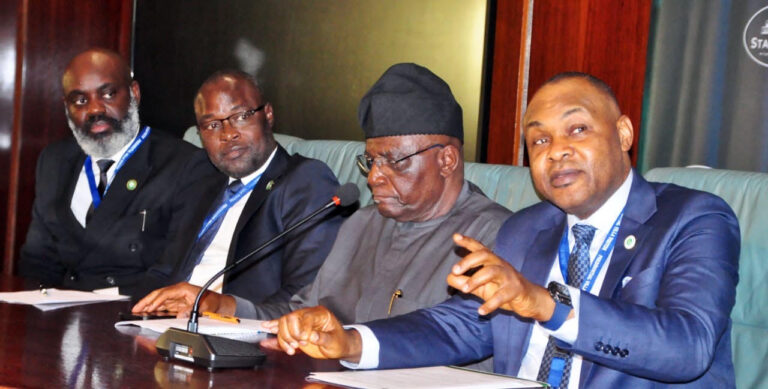
This was revealed by experts at a virtual breakfast meeting organised by the Nigerian Chamber of Shipping (NCS) recently, themed: “Nigeria’s 2023 Economic Outlook: Special Focus on Maritime Shipping Industry.” While Nigeria’s upcoming general elections, debt relief strategies, naira devaluation, forex issues and insecurity are expected to play a significant role in determining the economic performance of the nation in 2023, the maritime sector is being tipped to encounter more tax audits and possible increase in taxes.
One of the panelists, Mr. Akinwale Alao, made the observation even as he postulated that an increased tax audit by the Federal Inland Revenue Service (FIRS) is part of the new developments in the revised Finance Bill 2022.
Alao, however, hinted that FIRS activities may hinder cargo evacuation from ports, stressing the need for more emphasis on tax education and enlightenment by the FIRS in line with the new developments.
“Some new layers of taxation will affect importation as non-residents making taxable supplies to recipients in Nigeria to have the primary obligation to charge, collect and remit VAT to FIRS.
“Importers that purchase goods from non-resident companies would be made to provide evidence that the companies paid VAT before the goods are cleared and that would mean added cost of imports,” he said.
Earlier, the Guest Speaker, Dr. Chamberlain Peterside, described the Lekki Deep Seaport and NLNG Train 7 project as major game-changers in the nation’s maritime space with massive employment that could result in national GDP growth in 2023.
He also described the tranquility on the nation’s seas following the successful implementation of the Deep Blue Project as one of the defining factors for the shipping sector’s performance this year.
Peterside also wondered the level of attention the new administration will give to the maritime/shipping sector, stressing that this will determine the level of progress the sector attains in 2023 and subsequent years.
“When will Nigeria have another national shipping line in partnership with indigenous private sector operators? With several new deep sea ports emerging, how are local players ready to capitalise on ancillary maritime activities such as vessel servicing and ship repairs? Can indigenous maritime/shipping operators step up to leverage growth opportunities in the export market and intra-African trading activities, under AfCFTA,” he asked rhetorically at the end of his presentation.
Also speaking at the summit, the Chairman of Seaports Terminal Operators Association of Nigeria (STOAN), Princess Vicky Haastrup lamented that infrastructural challenges such as deplorable port access roads have hindered optimal performance of seaport terminals in the country for more than a decade.
Haastrup also observed that policies affecting maritime businesses are being churned out without recourse to industry stakeholders input, leaving the nation to suffer severe negative consequences.
She cited the new levies on used vehicles and new automobiles as recent developments that have seen Nigerian importers route their vehicles to neighboring ports in a bid to smuggle them into the country as an alternative to the high duties at the nation’s seaports.
When quizzed on the possibility of a Single Window platform eliminating the traffic quagmire on port access roads, Haastrup lamented that port agencies were yet to fully grasp the true meaning of Single Window, adding that human contact is still required by freight agents for Customs processes.
Meanwhile, the Director General of NCS, Mrs. Vivian Chimezie-Azubuike re-echoed that the International Maritime Association (IMO) has said that From January 1st 2024, ports around the world must adopt Maritime Single Windows (MSWs) system for the electronic exchange of information required on ships’ arrival at a port, their stay and their departure.
Vivian encouraged the port authorities to be prepared for this development which she tipped to simplify port processes and eliminate unnecessary delays in cargo evacuation.