Follow Us on Google

…Says Egypt, India, others understudying Nigeria’s anti-corruption model
By Steve Agbota
The latest report from Maritime Anti-Corruption Network (MACN) has confirmed that cases of corruption and sharp practices have declined significantly in the Nigerian ports.
The MACN, in its latest report, revealed that Nigeria has transformed from being a global hotspot for maritime corruption to an international success story, with reported cases of large, unregistered cash demands by officials dropping dramatically from 266 in 2019 to 30 in 2024.
The dip is a reduction of 236 cases, which is about 89 per cent.
According to MACN, the positive development has prompted countries such as Egypt, India, Ghana, and Senegal to study Nigeria’s anti-corruption model.
The Chief Executive Officer of the Convention for Business Integrity (CBI) representing the MACN in Nigeria, Soji Apampa,
said that prior to port reforms, shipping companies were frequently extorted for substantial sums, sometimes ranging from $20,000 to $150,000 per sundry delays.
According to him, introduction of standard operating procedures, the Nigeria Port Process Manual, and enforcement by the Port Security Task Team (PSTT) in collaboration with government agencies such as the DSS and ICPC, led to a steady decline in cases.
He said corruption cases dropped by 128 in 2020, 84 in 2021, 48 in 2022, 45 in 2023, and 30 last year.
According to Apampa, this transformation, which is now hailed globally as the “Nigerian miracle,” has caught the attention of other nations, saying countries including Egypt, Ukraine, India, Ghana, and Senegal are beginning to adopt similar reforms modeled after Nigeria’s success.
Highlighting the country’s achievements, Mr. Apampa disclosed that Nigeria was nominated for the first-ever Collective Action Award by the Basel Institute on Governance in 2022.
He further emphasised that the reform shifted global perspectives, such that various groups that were once focused on corruption challenges in the country, have been dismantled.
He said today, Nigeria is viewed as a mentor for other nations struggling with maritime corruption.
However, he noted that extending reforms from vessel clearance to cargo and port corridor operations remain a challenge, due to entrenched interests.
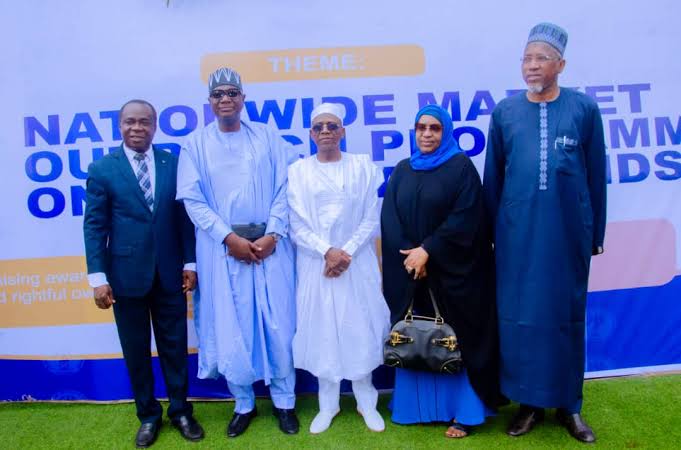
He highlighted the importance of collaboration, particularly through the newly signed Memorandum of Understanding (MoU) with the Council for the Regulation of Freight Forwarding in Nigeria (CRFFN), which is aimed at further enhancing transparency and operational efficiency.
“This is your MOU, it is our MoU, and together we can make a real difference for our country,” Apampa told CRFFN..
On his part, Mr. Kingsley Igwe, Registrar of the Council for the Regulation of Freight Forwarding in Nigeria (CRFFN) described the MoU as a pivotal step towards enhancing ease of doing business in the maritime sector, in line with the Federal Government’s Renewable Agenda under President Bola Ahmed.
He said the agreement introduces a suite of digital tools designed to streamline operations for all port users, including importers, exporters, freight forwarders, and government agencies.
“These tools are intended to mitigate bottlenecks in real time while enabling regulators such as CRFFN to monitor and address challenges across the supply chain,” he said.
He noted that the tools are not designed to implicate or harm anyone, but to create a cleaner, more transparent maritime environment.
The CRFFN Registrar emphasised that the initiative represents a win-win for government, citizens, port operators, terminal operators, and logistics service providers.
“This is a good initiative that CRFFN has brought in, to reduce crime, especially in the logistics sector, and to create a transparent environment for all who do business in our ports.
“This initiative is about efficiency, reduction of costs, and improvement of cargo flow around our ports and logistics corridors. This change will improve the lives of ordinary citizens by reducing costs and saving money.
“Once properly utilised, these tools can prevent undue payments, cargo loss, and delays caused by non-state or state actors. But users must also operate with integrity, no one goes to equity with a dirty hand,” he said.