Follow Us on Google

•Says $21bn imports dwarf $1.65bn exports
The Manufacturers Association of Nigeria (MAN) has warned that slowing manufacturing growth and the influx of imports, which far exceed the country’s export earnings, could trigger further factory closures and deepen the challenges facing local industries.
MAN, while quoting the National Bureau of Statistics (NBS) Q4 2025 export and import of manufactured products, noted that Nigeria exported just $1.65 billion worth of goods against imports of $21 billion.
The figures, MAN stated, were arrived at using a conversion to dollar based on World Bank’s 2025 average exchange rate of N1,518.38. In 2024, MAN disclosed that 767 manufacturing companies shut down operations in 2023, while another 335 became distressed.
It said the diseases that led to their demise have not been addressed, advising the federal government and other relevant stakeholders to tow manufacturers out of the tempest and ultimately save the country from a worsened unemployment nightmare.
The association warned that while Nigerian factories operate below capacity, the country continues to spend heavily on imported goods, supporting production and employment in foreign economies at the expense of domestic industries.
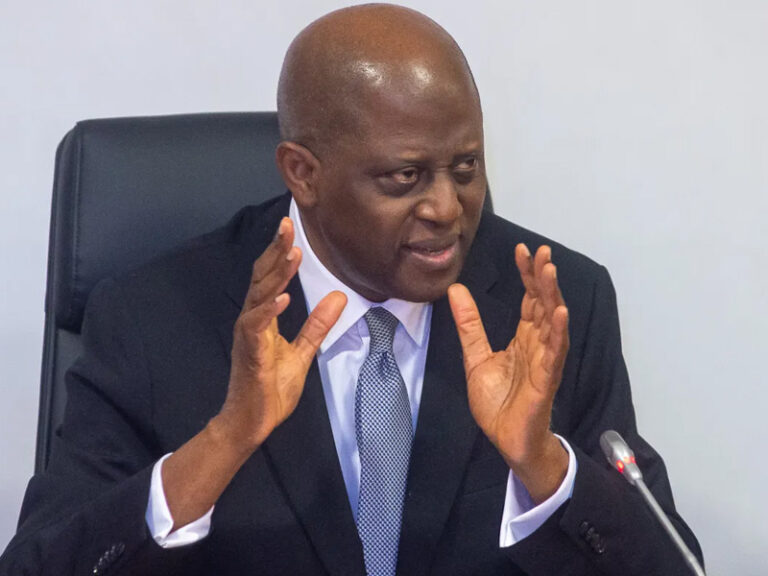
The Director General, Segun Ajayi-Kadir stressed that sustainable national prosperity could not be built on consumer transactions and imports alone, but required a strong industrial foundation capable of generating jobs, expanding exports and strengthening economic resilience.
He expressed concern over the challenging macroeconomic environment confronting manufacturers, noting that rising production costs and declining consumer purchasing power had continued to undermine factory operations, reduce capacity utilisation and increase inventories of unsold products.
“MAN is aware that the government faces immense macroeconomic pressures to maintain disinflation and manage a total public debt of N159.35 trillion, with a debt service-to-revenue ratio of more than 60 per cent. This is no
small feat, but manufacturers are also navigating a very tough Nigerian’s purchasing power. The painful result of this mismatch, with production costs too high and purchasing power too low, is evident in declining capacity utilisation and rising inventories of unsold products.”
MAN acknowledged in its report that the Federal Government’s efforts to manage inflation and public debt, which stood at N159.35 trillion, with debt servicing consuming more than 60 per cent of revenue.
However, it maintained that manufacturers were also grappling with difficult operating conditions, arguing that economic stabilisation must translate into stronger domestic production and improved business performance.
According to the association, the latest economic figures highlight the widening gap between headline economic growth and the performance of the productive sector.
Although Nigeria recorded real gross domestic product (GDP) growth of 4.43 per cent in the second quarter of 2026, as reported by the National Bureau of Statistics (NBS), more than 56 per cent of the expansion came from the services sector.
“Industrial growth, meanwhile, declined from 7.46 per cent in the second quarter of 2025 to 3.96 per cent in the corresponding period of 2026.
“Manufacturing’s contribution to national output also fell to 7.72 per cent in the second quarter of 2026 from 9.57 per cent in the first quarter, highlighting the difficulties confronting the sector.”
MAN further warned that the contraction recorded in some strategic manufacturing subsectors could trigger additional company closures within the next six months if comprehensive and coordinated support measures were not introduced.
Ajayi-Kadir specifically cited textiles and apparel, which contracted by 1.23 per cent, and motor vehicles and assembly, which declined by 1.02 per cent in the second quarter of 2026.
He said the developments were particularly troubling because these subsectors have significant potential to generate employment, stimulate local supply chains and support industrial development.
Other News
He added that the widening trade deficit reflected a structural weakness in the economy, as domestic production remained insufficient to meet demand and compete effectively in international markets.
“Services are flourishing at the expense of the nation’s productive heart. Nigeria exports a mere $1.65 billion in goods, yet imports $21 billion, deepening our trade deficit. Factories stand underutilised while resources fuel industries overseas. This gap is dangerous because enduring wealth is forged on a solid industrial foundation, not on fleeting consumer transactions or imports.”
Questioning the approach to bilateral trade agreements, he noted that Nigeria had signed several arrangements, including the Comprehensive Economic Partnership Agreement (CEPA) and the Economic and Trade Investment Partnership (ETIP), without clearly defined market-access modalities and adequately negotiated tariff-offer schedules.
MAN DG warned that trade agreements could deliver limited benefits to domestic manufacturers if local industries were not sufficiently competitive and the terms did not adequately protect Nigeria’s economic interests.
He maintained that Nigeria could not achieve lasting prosperity by trading largely in goods produced elsewhere while its own factories remained underutilised.
Despite the challenges, manufacturers have retained some optimism about the economy. MAN’s Chief Executive Officer Confidence Index recorded a modest increase to 52.1 points.
However, Ajayi-Kadir cautioned policymakers against interpreting the improvement as evidence of a meaningful industrial recovery, noting that manufacturers were waiting to see whether recent policy initiatives would translate into tangible relief.
These include the Nigeria Tax Act, the Nigeria First policy and the proposed N1 trillion Manufacturing Stabilisation Fund.
Ajayi-Kadir stressed that confidence alone could not revive production without effective implementation, affordable financing, lower operating costs and policies that stimulate demand for locally manufactured goods.
Speaking on Nigeria’s industrial development challenges, Dr Kandeh Kolleh Yumkella, former director general, United Nations Industrial Development (UNIDO) said manufacturing accounted for about seven per cent of GDP, while manufactured exports generated only about three per cent of export revenue. Exports of goods and services, he added, represented just 10.7 per cent of GDP, significantly below the levels recorded by several African peers.
He said Nigeria’s industrial challenge was not a lack of ambition or entrepreneurial capacity, but the need to convert its economic scale into higher productivity, competitiveness and export growth.
Yumkella called for a manufacturing strategy that positions Nigeria to serve domestic consumers, expand into West African and other African markets, and compete increasingly in the global economy.
“Nigeria accounts for an estimated 65 to 75 per cent of the Economic Community of West African States (ECOWAS) GDP, yet intra-regional trade remains at only about 10 to 12 per cent.”
According to him, the disparity represents a significant opportunity to expand regional markets, strengthen industrial cooperation and establish more integrated manufacturing value chains across West Africa.
He advocated a shift towards regional value chains in which countries specialise in areas of comparative advantage, integrate production systems and benefit from economies of scale.
The future of African industrialisation, he said, does not depend on every country producing everything independently, but on specialisation, integration and the development of regional production networks.
Nigeria, he added, is strategically positioned to lead this process by strengthening West African manufacturing integration and helping to improve Africa’s competitiveness in the global economy.