Follow Us on Google
By Moses Akaigwe
There have been mixed reactions to the 2023 Fiscal Policy Measures and Tax Adjustment introduced by the Federal Government last month.
As part of the measures announced by the Minister of Finance, Budget and National Planning, Dr. Zainab Ahmed, following the approval of President Muhammadu Buhari, importation of vehicles of 4000cc and above, will attract 4 per cent Import Adjustment Tax (IAT) levy.
However, automobiles below 2000cc, mass transit buses, electric vehicles, and locally manufactured vehicles, are exempted from the IAT, also described as “Green Tax” in the minister’s circular.
While some, including importers whose products are affected by the extra levy, fear that it is likely to hurt the economy, others, especially those in the domestic auto industry, have been commending the government for the initiative.
Reacting to the environmental tax levy, the Director-General of the National Automotive Design and Development Council (NADDC), Jelani Aliyu, said the measure is in tandem with the goals of promoting alternative energy vehicles and achieving environmental friendliness.
The NADDC DG explained: “Nigeria is signatory to the 2015 Paris Accord on the mitigation of greenhouse gases, and again in 2021 at the COP26 in Glasgow, the nation committed to net zero by 2060.”
The IAT, Aliyu stated that the environmental tax levy that the Ministry of Finance is imposing is part of levers to achieve the set targets in the mitigation of greenhouse gases.
On its own, the NADDC has since last year engaged top gear as part of its drive towards ensuring that Nigeria embraces electric vehicle technology and has been wooing local and foreign investors to key into the project.
“The NADDC on its part, towards the actualisation of the Paris Accord and COP26 environmental targets, is promoting in the revised 2023 NAIDP Policy, valuable industrial and end-user incentives aimed at financially supporting producers, suppliers and buyers of electric vehicles and other cleaner modes of transportation,” Aliyu told The Sun last week.
Following the release of the Import Adjustment Tax (IAT) on Motor Vehicles by the finance ministry on April 20, the Manufacturers Association of Nigeria (MAN) issued a statement in which it called for the exercise of “strategic caution.”
Signed by the Director General, Segun Ajayi-Kadir, the MAN statement read, “While we support and respect the government’s opinion and measures aimed at addressing climate change and Nigeria’s commitment to net zero emission,
“it would have been better if we exercised some level of strategic caution and allowed for a period of realistic transition to clean energy.
“This is considering the fact that most of our members engage logistics companies, majority of whom are in the Small and Medium-scale Enterprise (SMEs) cadre, who would need some time to migrate to green fuel and who lack the financial capacity to purchase electric vehicles.
“Anything short of this will increase the input cost of products culminating in un-competitiveness, as well as eliminating many SMEs in the logistics downstream of the manufacturing sector.”
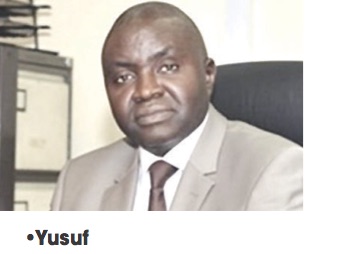
Also reacting, the Director/Chief Executive Officer, Centre for the Promotion of Private Enterprise (CPPE), Dr. Muda Yusuf, warned that some tax and import duty provisions in the 2023 Fiscal Policy Measures would significantly hurt the economy and worsen the de-industrialization worries in the Nigerian economy.
Some of the measures, Yusul argued, could exacerbate inflationary pressures which are detrimental to economic growth and manufacturing, construction and transportation sectors.
On the measures as they concern motor vehicles, he said the new IAT levy, which raises the duties payable on some fully built automobiles to more than 40 percent, would be difficult to justify.
He recognised the fact that Nigeria is about 90 percent dependent on road transportation which underscores the importance of motor vehicles in the economy.
Any measure that will further raise the already high costs of vehicles, will therefore be counterproductive, he stated.
The CPPE Director gave other reasons for faulting the extra duty on some imported vehicles, saying, “There is an increasing affordability problem for citizens with regard to vehicle acquisition, especially by the middle class of the Nigerian society.
“Cost of locally assembled vehicles are beyond the reach of most Nigerians, contrary to the assurance given by government at the inception of the auto policy.
“There is limited access to credit for vehicle purchase by Nigerians. Over 90 percent of purchases are done out of pocket, which is extremely challenging. And where the credit facilities exist, the interest rates are outrageous, between 25-30 percent. “
“There is an additional 2 percent and 4 percent green tax, depending on the engine capacity of the vehicle. This translates to import duty of 42 percent or 44 percent, depending on the engine capacity of the vehicle.”
Yusuf argued that fiscal policy measures must seek to ensure a good balance between objectives of revenue generation, boosting domestic production, enhancing the welfare of citizens, promoting economic growth, deepening economic inclusion, facilitating job creation and recognising societal ethos, beliefs and values.