Follow Us on Google
By Fred Itua, Abuja
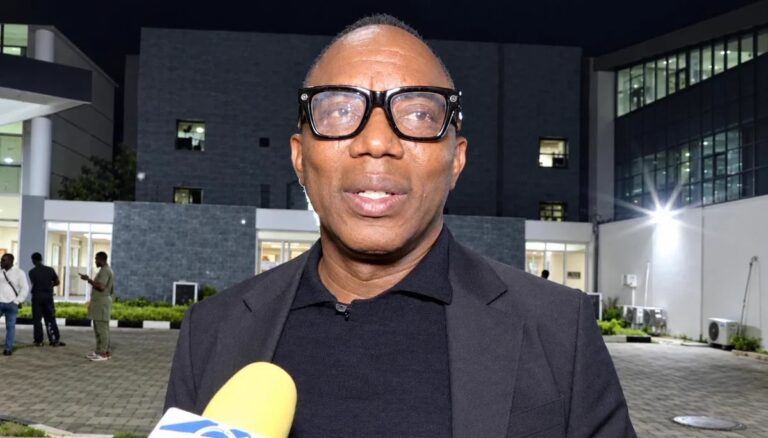
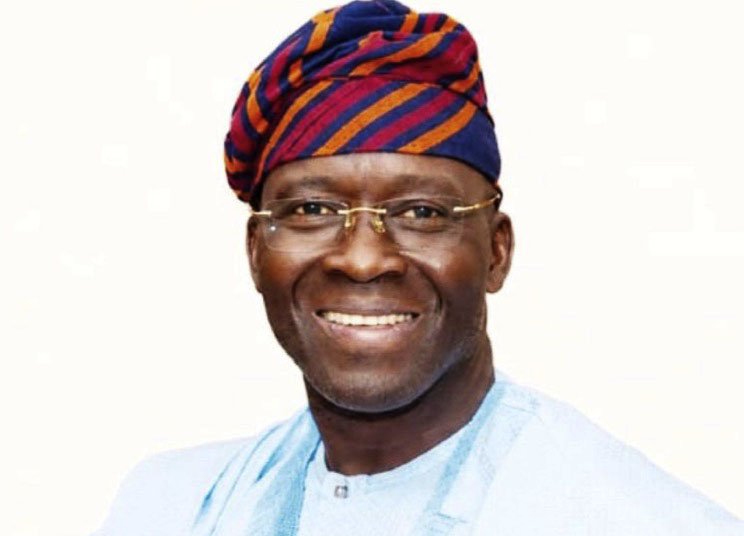
Mogaji Olusegun Agboola is the governorship candidate of the Social Democratic Party (SDP) in Oyo State. He speaks on his seven point agenda, which seeks to make local governments the development centres of an SDP led administration should he win the 2027 election.
As the governorship candidate for the 2027 election, how ready are you to contend with more established opponents in the APC, APM, ADC and PDP?
Without attempting an analysis of all the parties you have mentioned, we know the collateral damage that APM carries. They used to be PDP, or PDP-APM as they called themselves, and they are trying to establish themselves as a new party, even though they were formed by the sitting governor of the state, who will be completing his two terms in 2027 and is seeking a third term through a proxy. We know that is not something Oyo State people look kindly on. The coalition that brought him to power in 2019 was formed to end a potential third term by an incumbent, Governor Ajimobi, who had endorsed a candidate for the APC.
The APC, which you also mentioned, appears to be the ruling party at the federal level trying to bring in its own candidate, in an attempt to return to power after the Ajimobi led administration left office. But we all know the internal fractures within that party, along lines of titans who feel disenfranchised. The ADC, like the APM, is a very new party. The SDP, however, is the oldest political party in Nigeria. We are not new, and we are well known to everybody. Almost all the current political actors cut their teeth in the SDP. President Bola Ahmed Tinubu was an SDP senator. The current Olubadan of Ibadanland, whom I respectfully refer to as Kabiyesi Rashidi Ladoja, was also an SDP senator. Our current incumbent, who has now formed the APM, contested under the SDP after he was denied a chance in the PDP. One of our most successful governors in Oyo State, Kolapo Ishola, also came from the SDP. So we all know the SDP very well, and we know how these actors have conducted themselves.
You said the APM is a new party, but it is old wine in a new bottle. Its governor has been in the saddle for the last seven and a half years. Will incumbency not count for the party?
There is a temptation to think so. But incumbency is actually more of an albatross than an advantage for them. Oyo State people are intelligent, dynamic and progressive, and they do not want anyone to perpetuate themselves in leadership, particularly when that leadership has been fraught with ill advised decisions. There are many projects we can analyse to show that the people are already disenfranchised and dissatisfied. So incumbency is more of an albatross, because I struggle to see how the APM can successfully defend the last seven or eight years of the current governor. Some have said he has built roads and other infrastructure. The roads may count for something, though I am not sure we should call them achievements. When we inspect them one by one, we must ask: achievements at what cost, and in what direction? Are the priorities right or misplaced? Oyo State’s debt profile is currently one of the highest in the entire South West, so what has that debt been spent on? Take the Circular Road. I do not know how many people ply it today, despite all the money invested. Then there is the airport, which has gulped several hundred billion naira, if we are honest. The budget has been revised upward repeatedly. It was initially put at N52 billion, and is now in excess of N100 billion. Airports do not add commercial or economic value to a state without a clear plan. Is it meant to be a cargo airport or a passenger transit airport? They are not clear on that, yet they have committed all this money to it. We also know the airport is owned by the Federal Government, not the state, so will the state recoup its investment? How would that happen? I am not convinced the state government has enabled enough business activity to justify either a cargo or passenger transit airport, yet they have committed these sums regardless. Consider also the inner and connecting roads. At what cost? Some of them have created more problems than solutions. The Bodija/Isopako Road, for instance, was closed from February to July, shutting off an important route into an international plank market. When it was finally commissioned, it was still not fully completed or motorable.
So what will you do differently if elected governor? How many points are in your agenda?
We have a seven point agenda. Central to it is bringing governance closer to the people through the local governments. We believe only local government can address the range of localised problems unique to different areas. The agrarian Oke Ogun cannot have the same problems as cosmopolitan Ibadan, so if we do not understand their individual problems, we cannot apply the same solution to everybody. Our central theme is to turn local governments into service centres through which the entire thrust of our administration is delivered. Once that backbone is in place, everything else can be channelled through it: education, healthcare delivery, support services for the agricultural community, infrastructure development based on genuine needs assessment, and youth empowerment tailored to the specific skills required in each local government. Access to funding for small and medium scale businesses can also be localised through local government services, since they already know their people, understand their needs and can provide the appropriate solutions.
How will you handle local government autonomy?
I believe the incumbent governor has a complete misunderstanding of what local government autonomy means. He appears to be troubled by the prospect of relinquishing the wallet that belongs to local government, rather than concerned with its actual administration. A state government can coordinate, advise and make suggestions regarding service delivery, but I do not believe the state has the tools to dictate what a local government needs or what should be approved for it. His opinions, formed from what he has or has not seen before, are in my view irrelevant to this matter. He should listen instead to what the constitution says: that local governments are designed to be autonomous.
A local government chairman should be content in that role, and should also feel capable of aspiring to be a governor, or even president, one day. They should not be lackeys or subordinates to a state governor, because they are the third tier of government as recognised in our constitution. Perhaps because he appoints council chairmen and decides who occupies that office, he does not always find the most qualified people, and so he does not see how much value they could contribute. It is not lost on us that the governor may be resisting the loss of a wallet leaving his control, and that this is why he holds such a dim view of local governments. With competent people at the helm, local governments are best placed to deliver government services to the people.
As a socialist party, what will the SDP do about free education, which was implemented by Chief Obafemi Awolowo in the South West?
It breaks my heart to say this. In the era of Chief Obafemi Awolowo and Chief Bola Ige, Oyo State was one of the foremost educationally advanced states in Nigeria. To compare that to our current position, Oyo State has now become the most educationally backward state in the entire South West.
Let us look at social welfare and sport. What should the state expect from an SDP government?
Sport is a massive industry worldwide. A club without a feeder system is merely a training ground. Until we build a system that allows children’s ability to be harnessed from primary school through secondary school and into university, and then into clubs run by the state, we will continue to fall short. We had more than Shooting Stars in Ibadan. We had Exide Battery Boys and Leventis United too. Shooting Stars is currently held together only because it is sponsored by the state. Every country that excels in football builds industries and infrastructure around it. I would return the Academicals to the institutions, reinstate the Principal’s Cup, and bring back literary and debating societies. Extra-curricular activities and athletics would help our children compete and bring out the best in them from primary school level, so that we can identify those who are truly gifted from a young age.
Jamaica, for example, is not a very large country, yet it produces some of the greatest athletes in the world, because they identify gifted and skilled children from primary school onward, particularly those with the right physical attributes. This is one of the cheapest forms of productivity, since all it requires is a body and a pair of boots. It is not an expensive venture, if only the state would look at it holistically, as we intend to do.