Follow Us on Google
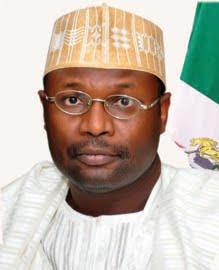
By October 2025, the curtain would fall on the tenure of Prof. Mahmood Yakubu, Nigeria’s chief electoral officer, after 10 eventful years as the chairman of the Independent Electoral Commission (INEC). First appointed in 2015 to succeed the iconic Prof. Attahiru Jega as INEC chairman, Yakubu stepped into the big shoes left behind by his predecessor and hit the ground running almost immediately. Ten years after, opinions are divided over his tenure in office and how his performance impacted on Nigeria’s electoral management system. Conversations are also on about what legacies he is leaving behind as INEC chairman and how they will shape the future of Nigeria’s electoral democracy.
One of the most difficult jobs to hold in Nigeria is the chairmanship of INEC. Although an independent and apolitical body, which serves as an impartial and unbiased umpire in the regular electoral contests, the fact that INEC manages the contestation for power in Nigeria’s multi-party democracy most often than not draws the institution along with its leadership into the murky waters of Nigerian politics. From Prof. Eme Awa’s FEDECO in the Second Republic to Prof. Humphrey Nwosu’s NEC in the Third Republic, and from Tamuno Dagogo Jack’s NECON to Attahiru Jega’s INEC, public opinions about the institution and its leadership have always been polarised along partisan lines, often resulting in one man’s villain being another man’s hero.
For example, while Nwosu earned praise for his conduct of the free and fair June 12 1993, presidential election, the erudite university don was condemned in some quarters for failing to announce a declarative winner of the election amid the controversy of annulment. Similarly, Jega was condemned in some sections of the country for conducting the 2011 presidential election that produced President Goodluck Jonathan in the midst of the worst post-election violence in the history of the Fourth Republic. And since the tables turned in 2015 and President Jonathan lost to President Muhammadu Buhari, there has been love lost between Jega and the losing side of the political divide.
And as long as Nigeria remains a multi-party democracy, the job of the INEC chairman will continue to be a difficult one. As the conversation continues about the emergence of the next INEC chairman, it is imperative to appraise the tenure of the outgoing chairman in order to guard the public against setting the wrong agenda for the right course of improved electoral management system as a means of deepening Nigeria’s democratic consolidation.
What was never in doubt was the truth that Yakubu was an independent-minded progressive who brought technological innovations into the electoral management system of Nigeria. This was because Yakubu had an illustrious career as an academic don and public administrator before his appointment in 2015 as INEC chairman. A University of Oxford-trained historian, Yakubu previously held the position of executive secretary of Tertiary Education Trust Fund (TETFUND) and, until his appoint on October 21, 2015, as INEC chairman, was a professor of political history and international studies at the Nigerian Defence Academy.
Other News
As soon as he assumed office, Yakubu set out to improve on the record of his predecessor by accelerating the process of deployment of technology to improve Nigeria’s electoral management system. In place of the ineffective card reader device for accreditation, Yakubu introduced the Bimodal Voter Accreditation System (BVAS), a watershed technology, which firmed up the process of accreditation and almost eradicated the menace of over-voting in Nigeria. And to make collation of results seamless and transparent to the voting public, Yakubu’s INEC introduced the INEC Result Viewing Portal (IREV), a revolutionary piece of electoral management technology that enabled Nigerians to track and independently collate election results as they are uploaded by the BVAS machine right from the polling units.
To institutionalize some of the reforms initiated by him, Yakubu partnered with civil society organizations, political parties, media and other critical stakeholders to constructively engage with the National Assembly to create the enabling legal framework. In the many efforts at legally mainstreaming technology into the Electoral Act, Yakubu led from the front and at every turn declared INEC’s readiness, willingness and capability to transmit election results electronically. Unfortunately, the political class in Nigeria is not ready to commit class suicide and every effort by Yakubu and his partners in progress was frustrated by a National Assembly that was far from progressive.
However, despite the uncooperative nature of the political class towards comprehensive electoral reforms, Yakubu’s introduction of critical technological innovations bolstered public interest in elections and, between 2019 and 2023, Nigeria’s electoral democracy got consolidated after 24 years since transition from military to civil democratic rule. Thanks to the confidence in his reforms and technological innovations, Yakubu’s legacy will be defined as the man who led Nigeria’s democracy to consolidation when the people of Nigeria powered a fringe political party to national prominence in a matter of months. Whereas, the 2023 presidential election was not without its flaws, but the fact that the system created by Yakubu’s INEC allowed for the rise of a third force party, the Labour Party, and Peter Obi its presidential candidate, and the positive disruption caused by people power. The defeat of the ruling APC and the main opposition PDP by the LP in their strongholds was a testimony to a greatly improved electoral process under Yakubu as chairman of INEC. In fact, but for the disunity among the ranks of the opposition, the year 2023 would have marked the second time after 2015 when a ruling party would lose power to the opposition.
But my close observation of the political system in Nigeria has revealed to me that the quest for improved electoral process goes beyond INEC and its leadership. The major driver of electoral reforms should ordinarily be the political party system, both in government and in the opposition. Sadly, the political party system is the weakest link in Nigeria’s democracy value chain. Without the political will of all political stakeholders to put the interest of Nigeria’s democracy ahead of partisan interests, the efforts of INEC will always be undermined by short-sighted politicians. As Yakubu moves on to other responsibilities, he owes the nation a duty of an insider account of the challenges and opportunities he faced as chairman of INEC.