Follow Us on Google

Sunday Ani
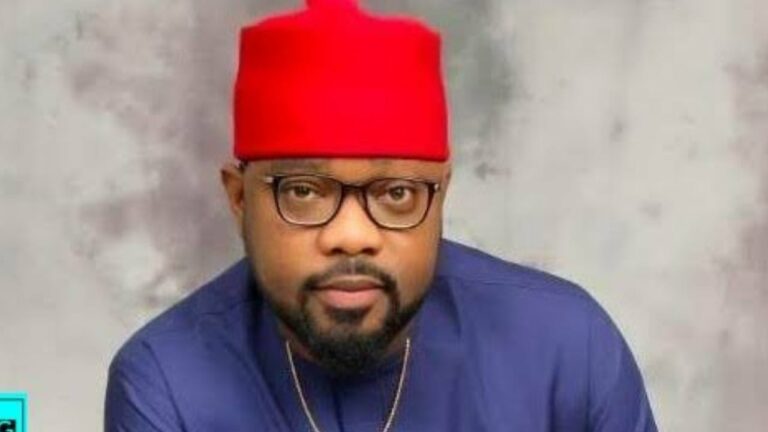
President of the Pharmaceutical Society of Nigeria (PSN), Mazi Sam Ohuabunwa, has described the suspension of the former acting chairman of the Economic and Financial Crimes Commission (EFCC) as a tick to the anticorruption fight. He added that if anybody had a doubt about the anticorruption fight, the fact that government could interdict the agent that is handling it ordinarily shows its seriousness.
In this interview, he spoke on other national issues.
The Nigeria Bureau of Statistics recently said the inflation rate in June was 12.56 percent; a development some analysts have described as very frightening. What is the implication of such high inflation index on the nation’s economy?
Inflation does two things to the economy. First, it is a reflection of increased cost of goods and services. That also does two things. In an economy where you have no corresponding increase in wages or income, it means that fewer people will be able to afford the goods and services. Therefore, there is going to be a drop in purchases and aggregate demand, which can also lead to shrinking of the economy. Secondly, on the human side, it will lead to increased poverty and misery because people cannot afford to buy what they want to buy. They become poorer and the misery index increases because when you add unemployment to inflation, the misery index goes high. Misery index is a combination of inflation rate and unemployment. So, there is going to be increased poverty, unemployment, and contraction of the economy, if the inflation is sustained.
Last week, the President said that gold mining would create about 25,000 jobs annually if well harnessed. Do you think the Federal Government has done what it ought to do in terms of tapping the country’s solid minerals potentials?
For me, I must say that it was a very exciting story seeing that gold bullion is said to have been mined in Nigeria. I thought that was a beautiful thing to see because it represents the potentials and what we have been saying that every state in Nigeria has the ability to survive if they can look at their endowment. Each time, the issue of restructuring comes up and some states express fears, I had always wondered why they should be afraid because every state has something it can produce in commercial quantities, supply domestically, export and make money. As far back as when Oby Ezekwesili was the Minister of Mines, I knew that work had been done to identify these minerals. There were about 34 of these key minerals in the country and you have at least one in each state and sometimes in good quantities. But, unfortunately, Nigeria as a country has failed to optimize these opportunities. We have decided to follow the least line of resistance, which is depend on oil and leave mining to what is called artisanal mining where people dig the soil with hoes. Where on earth do you mine with hoe and axe? It is pitiable and this has been going on for years. Ministers after ministers come but they keep running in circles. I am just hoping we will understand what it will take to commercialise these activities, create the appropriate incentives and get proper mining going on so that we can do it the way it is done in other countries that depend on solid minerals and begin to earn income. It is a good development; I just hope and pray that it is not just showing the picture, but we need to be sure that we have put on ground the system that will make it possible for people to come and mine. And of course, it will require a safe and secure environment because without safety and security, mining cannot take place. And right now, the country is challenged security-wise; and that may undermine this opportunity we are looking at. So, government must think seriously how to deal with the security issues and create safe environment that will attract investors, not artisanal miners. Artisanal miners can’t produce much and they are taking undue advantage by some of these other predators around from different countries that go to villages and work with these artisanal miners. We need to take bold steps and bring in the right investor so that we can develop this sector that has been crying for development over the years.
You just talked about insecurity in the land; do you agree with those who believe that insecurity would continue to plague Nigeria until 2023 when President Muhammadu Buhari would leave office?
I cannot believe that. I don’t belong to that school of thought because I don’t think we should have insecurity one more day longer. It is already bad enough and I believe security is the primary responsibility of any government, and if a government is not meeting that obligation, then it means that it has failed in its primary obligation. So, I don’t believe that any government will just keep quiet and hope that things will just happen. I think the government is trying but the truth of the matter is that, as a business manager, what we measure is the result and not the effort. From the result we are seeing, the efforts are not yielding the desired result. But, why everybody is worried is that all over the world, if you give responsibility to people and they are not able to deliver, what you do is to rejig your structure or change management. But, the President seems to have confidence in his security chiefs, so I don’t know what he is seeing which we are not seeing; he is in a vantage position more than anyone else. But, from what we can see, the result does not match the efforts we hear that are being put. Every day, we hear that people are being killed, bombed, destroyed, and that Boko Haram insurgents are being killed but they keep coming; how many are they? Are they in millions or in trillion that they keep killing them and they keep coming? Where are they coming from? So, Nigerians are not satisfied with the results they are seeing.
You are aware of the altercation between the National Assembly joint committee on Labour and Minister of State for Labour, Festus Keyamo, concerning the 774,000 jobs and the president’s tacit support to the minister. Some people have argued that the president’s action is a green light for other ministers to look down on the NASS members in future. Do you align with such submission?
I am surprised that the president will go against the National Assembly because the Assembly has been very supportive, even more than it is comfortable for those of us who want the system to run very well. The National Assembly has been kowtowing to the president and doing everything he wants. The president would send a bill and they would approve and return it within one week without proper debate. I have been embarrassed by some of those measures by the National Assembly. They seem to have lost their independence. They have done that to please the president, and maybe, their party. For me, if there is a conflict and the president is standing against the NASS, he might be stoking a battle, which may slow his pace of getting things done in the NASS. The NASS is an independent arm of government and if they have decided to be subservient to the executive, I guess they have done so maybe for exigencies of helping the performance of government. So, I think the President would have been more circumspect. There are other ways to sort out the problem without taking side with either of the parties. However, I have always said that the president may know things we don’t know. But, from the point where we are, I think the NASS has given him so much support that he ought not to have allowed them to be rubbished by one minister.
The recent suspension of the former acting chairman of the EFCC, Ibrahim Magu has been generating reactions among Nigerians with many saying that it has put a question mark on the anticorruption campaign of the current administration. Do you agree with such thought?
No, I don’t agree. I think it has actually given a tick to the anticorruption fight. If anybody had a doubt about the anti-corruption fight, the fact that government can interdict the agent that is handling it ordinarily should show that the government is serious. In normal circumstances, this action will bolster the anti-corruption image of government, not reduce it. It should give a tick and thumps up to the anti-corruption fight of government.
However, the truth of the matter is that it is just a testimony that we have moved nowhere in the anticorruption fight. It is a sign of seriousness on the part of the president but on the other side, it shows that we have not gone anywhere; that we are still where we were before. Despite all the efforts, we don’t seem to have made any improvement. But arresting Magu is a sign that the president does not broach corruption; he fights it the best way he can. As I said earlier, we do not measure things by efforts or intentions or programmes or activities but by results. It is the result that we reward and not the activity. So, if we have everything and still come back to find out that even the anticorruption czar himself is corrupt, if they find him so, then it shows that we have not moved far. We need to find other ways to deal with the issues and I have said that several times. We are not holistic in anti-corruption campaign and that’s why people keep saying that government is fighting known enemies, or political enemies and all that. Yes, people have been arrested and money returned, but from who and by who? That is just a tip of the iceberg. The ice itself is still under. What we are seeing is just the tip. To uproot corruption in Nigeria will require a major revolution, which will be holistic and total. It will involve several dimensions, not just the EFCC or the ICPC; those ones are just scratching the surface. When the fight starts, everyone will know that the fight has started.