Follow Us on Google
The Lagos State Security Trust Fund (LSSTF) is taking its security intervention model beyond the traditional boundaries of government and corporate philanthropy, opening a new frontier of international partnerships aimed at strengthening the capacity of security agencies and deepening preventive security across Lagos State.
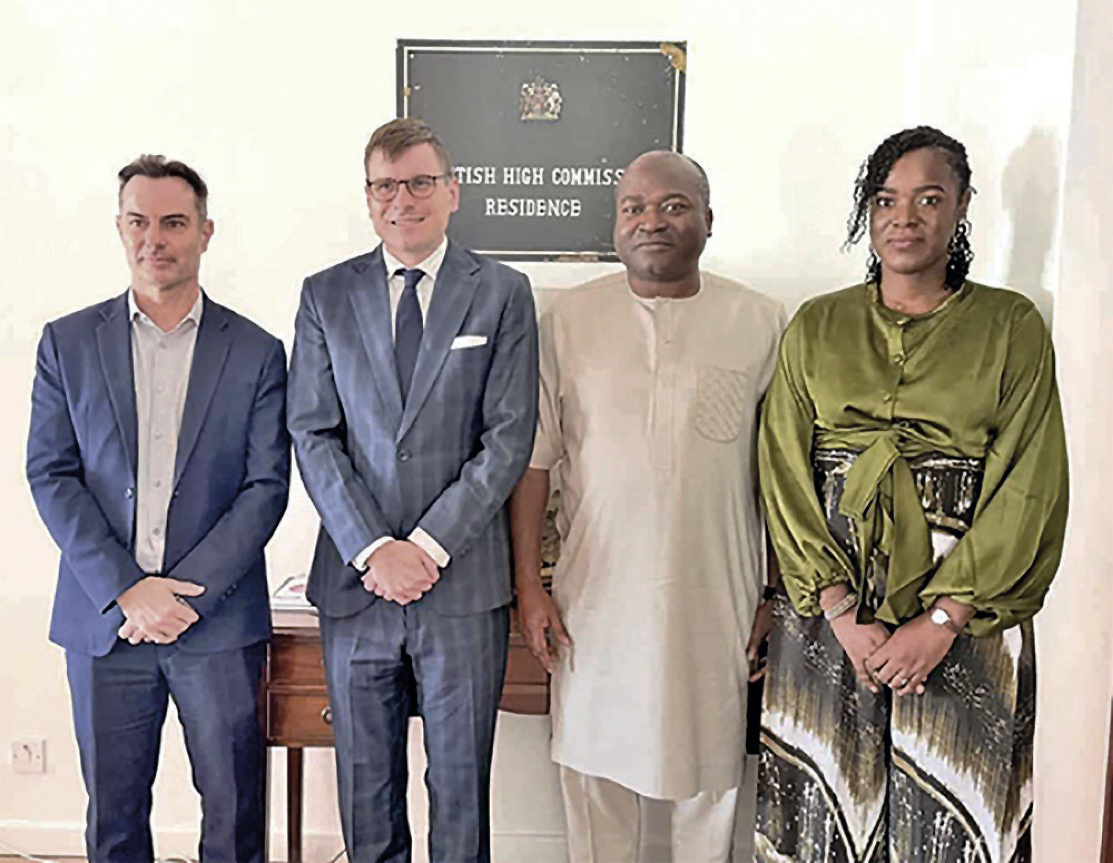
The move became evident when the Executive Secretary/Chief Executive Officer of LSSTF, Dr. Ayodele Ogunsan, led a delegation of the Fund, comprising the Director of Administration, Adegbola Lewis; Executive Assistant, Adaobi Nwankwo; and others, to the British High Commission in Lagos, where he sought stronger collaboration with the United Kingdom on security training, technical support, equipment and preventive interventions.
The engagement, according to Ogunsan, marks a deliberate effort to bring the international community more directly into Lagos’ evolving security architecture.
For an organisation established in 2007 as a public-private partnership to address the security challenges confronting Lagos, the initiative represents another phase in the evolution of the Fund.
Ogunsan said the scale and complexity of contemporary security threats required broader partnerships, with governments, businesses, international organisations and diplomatic missions contributing their expertise and resources towards building a safer society.
Welcoming the LSSTF delegation, the Deputy Head of Mission of the British High Commission in Lagos and Chief Operating Officer of the mission, Simon Field, expressed appreciation for the visit and indicated the Commission’s willingness to explore areas of mutual interest.
Field was joined by the British High Commission’s Regional Director, Anglo-West Africa, Mark Smithson; Trade and Investment representative, Mark Smithson; and Home Office Programme Manager, Anne Yakubu.
For Ogunsan, the choice of the United Kingdom as one of the first international partners to approach was deliberate, noting the longstanding relationship between Nigeria and the UK.
“We know what’s always been the culture from any United Kingdom entity, or business, or association, or whatever in the country, and I think that is the result of the age-long relationship between the UK and Nigeria. We’ve been together for a very long time,” he said.
Introducing the LSSTF to the British officials, Ogunsan explained that the Fund was created in response to a period when Lagos faced severe security challenges and the government alone could not provide all the resources required by security agencies.
“Prior to 2007, Lagos was under a siege. We had a major challenge in our security system. It was practically difficult for our security operatives to have the proper training they need to keep the city safe. Logistics and all the other security equipment that they needed were not really adequate,” he said.
According to him, the state chose a different path by creating an intervention mechanism capable of mobilising resources from the private sector and other stakeholders and deploying them directly to security priorities.
“For the last 19 years, I’m able to say that this agency is the most successful security model that we’ve ever had in this country. Over the years, all other states have come to this same source to learn from us how we’re able to stand alone and combat all these challenges,” Ogunsan said.
A major point Ogunsan emphasised was the Fund’s independence from government subvention.
“We don’t have any subvention from government,” he said, explaining that the Fund’s mandate was to engage individuals, private-sector organisations and other stakeholders, alongside donations from the state government.
According to him, the contributions are voluntary, stressing that the Fund does not put individuals or organisations under pressure to contribute.
“The mandate is, go out there, meet individuals, the private sector, organisations, and then donation from the state government. We don’t push, we don’t put anyone under pressure, it’s voluntary,” he said.
Ogunsan added that the model places a premium on prudence, transparency and accountability in the management of resources.
“We run a very small office but do big things. We don’t take money from people, and then begin to spend it lavishly and waste those resources,” he said.
He also outlined the Fund’s growing support for multiple security agencies, stressing that Lagos’ security architecture could not depend on a single institution.
Other News
Among the agencies that have benefited from LSSTF interventions, he listed the Nigerian Army, Nigerian Navy, Nigerian Air Force, Nigerian Immigration Service, Nigeria Security and Civil Defence Corps, National Drug Law Enforcement Agency and Nigerian Correctional Service.
“As long as you are a security agency and you are on this soil, we take responsibility. We support them financially. We give them infrastructure. We provide the equipment they need. We kit them up,” he said.
It is against this backdrop that Ogunsan is seeking to expand the Fund’s international partnerships, with the United Kingdom emerging as a key potential partner.
Presenting the Fund’s areas of need to the British delegation, he said: “What we need from you, sir, is very simple. We need your support in vehicles, equipment, training and retraining our security operatives.”
Ogunsan proposed specialised training and a “train-the-trainer” model under which selected Nigerian security personnel would receive advanced training, either in Nigeria or abroad, and subsequently transfer the knowledge and skills acquired to other officers.
“We look forward to you helping us in training and retraining our operatives,” he said.
He also appealed for support through equipment and technical resources that could be made available to Lagos security agencies.
“If there are equipment that you feel are not needed in England, we will take them. We will use them, because I know whatever is used over there will be of great benefit to us,” he said.
The LSSTF boss further urged British companies operating in Nigeria to consider supporting the Fund’s security intervention programmes as part of their contribution to strengthening security and community development.
Ogunsan also highlighted the Fund’s Campaign Against Crime, Cultism and Other Vices, known as LSSTF-CACCOV, which he said had expanded from a police-focused intervention into a broader preventive-security platform involving other stakeholders.
The initiative, according to him, is designed to engage young people before they become vulnerable to criminal influences, including cultism, drug abuse and internet-related crimes.
He also referenced the Fund’s support for community-based interventions, security awareness campaigns and the wider deployment of technology and surveillance as part of Lagos’ emerging preventive-security architecture.
On her part, Ms. Anne Yakubu expressed the interest of the British High Commission in becoming involved in the Fund’s preventive-security initiatives, particularly those targeting young people and communities vulnerable to crime.
Yakubu stressed that the effectiveness of preventive programmes often depended on the ability to demonstrate tangible success stories, particularly where interventions helped individuals reject criminal pathways and build productive lives.
The engagement, therefore, signals a potential new dimension to Lagos’ security intervention strategy, as the LSSTF seeks to move beyond domestic funding and partnerships to tap into international expertise, technical support, training and resources.
For the LSSTF, the engagement is not intended to be a one-off diplomatic courtesy call. Rather, the Fund is deliberately seeking to bring the international community into the security conversation of Lagos in a more structured and sustainable manner.
The proposed partnership with the British High Commission is expected to focus on areas including capacity building, specialised training, equipment, technical assistance and preventive-security programmes, particularly those aimed at young people and vulnerable communities.
Ogunsan said the objective was to strengthen the ability of security agencies to respond effectively to emerging threats while also investing in measures capable of preventing crime before it occurs.
The initiative, if successfully developed, could further position the LSSTF’s public-private security intervention model as a platform capable of attracting international partnerships and resources to complement the efforts of the Lagos State Government and security agencies in keeping the state safe.