Follow Us on Google

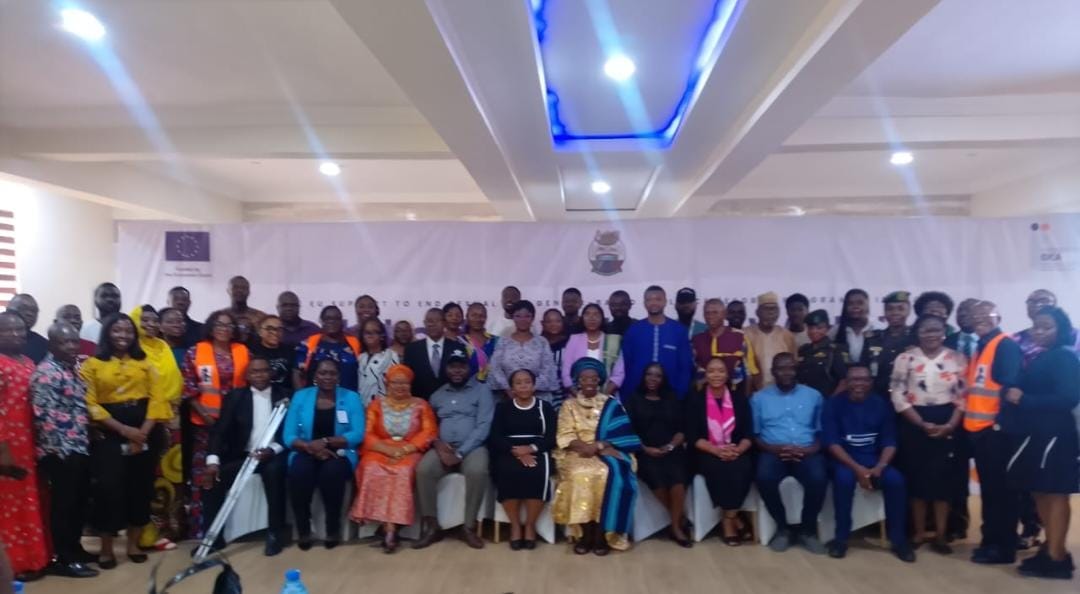
The Benue State Government has commenced the review and harmonisation of three major laws dealing with Sexual and Gender-Based Violence (SGBV), child protection and criminal justice, with a view to addressing existing legal gaps and strengthening access to justice for survivors.
The laws being reviewed are the Violence Against Persons (Prohibition) VAPP Law, the Child Rights Law and the Penal Code Law.
The programme is funded by European Union and implemented by International Institute for Democracy and Electoral Assistance (International IDEA) through the EU Support to End Sexual and Gender-
Based Violence (ESGBV) Programme in Nigeria.
The organisation said the stakeholders’ validation workshop is a critical step towards strengthening Benue State’s
legal and institutional response tonSGBV and provides a veritable platform for relevant stakeholders to review and validate the proposed amendments
to the Violence Against Persons (Prohibition) Law, Child Rights Law and Penal Code, ensuring that the proposed reforms adequately address existing legal and institutional gaps as well as
emerging realities within the sector among others.
Speaking at the two-day stakeholders’ Validation Workshop on the Draft Amendment Bills to the Benue State Violence Against Person’s (Prohibition) (VAPP), Child Rights and Penal Code in Makurdi, the GBV Policy and Strategy Development Specialist, ESGBV Programme at International IDEA, Melissa Omene, said an assessment of the implementation of existing laws in Benue had identified inconsistencies, gaps in addressing emerging forms of violence and weaknesses in investigation and prosecution.
Omene disclosed that the assessment, conducted earlier in the year, involved a review of existing legislation and policies, as well as interviews with 112 key informants from 32 institutions. She identified limited provisions supporting Sexual Assault Referral Centres, inadequate disability inclusion and difficulties faced by survivors in rural and conflict-affected communities as some of the challenges requiring attention.
According to her, the proposed amendments seek to establish a more coherent, survivor-centred and gender-responsive legal framework that would strengthen prevention, protection, investigation, prosecution and rehabilitation.
She said the review would also address emerging forms of abuse, including technology-facilitated violence, while improving institutional coordination and support for survivors.
Also speaking, the Commissioner for Women Affairs and Social Welfare, Mrs Theresa Ikwue, said the protection of women and children remained a priority of the administration of Governor Hyacinth Alia.
Ikwue, who commended International IDEA, the European Union and other development partners for supporting the reform process, said SGBV, child abuse, exploitation and harmful practices required more than public awareness campaigns, but strong legal frameworks, effective institutions and collective action to ensure that perpetrators were held accountable.
The commissioner who urged participants to ensure that the proposed amendments were inclusive and reflected the experiences of survivors, women, children and persons with disabilities, called for stronger collaboration among the Ministries of Justice, Women Affairs and Social Welfare, Health, the House of Assembly, security agencies, traditional rulers, religious organisations and civil society groups.
The Commissioner for Health and Human Services, Dr Paul Ogwuche, said weaknesses in the existing legal framework had consequences for the health sector, noting that hospitals continued to receive victims of sexual assault, child abuse, trafficking, forced labour, early marriage and communal violence.
Ogwuche who was represented by Dr Joshua Agbadu said some women and children suffered serious health complications arising from abuse and harmful practices, while displaced families in Internally Displaced Persons’ (IDP) camps faced trauma, malnutrition and preventable diseases.
Ogwuche maintained that justice should extend beyond punishing offenders to providing medical attention, psychosocial support and rehabilitation for survivors and urged that the amended laws guarantee access to healthcare, immunisation and education for children, irrespective of their background or circumstances.
On the Penal Code, the commissioner called for provisions that reflect contemporary realities, including cyber-related offences, modern forms of sexual and gender-based violence, child abuse and organised crime, assuring stakeholders that the Ministry of Health would continue to provide emergency medical care, train health workers on the clinical management of rape and violence, document injuries for evidential purposes and strengthen referral services.
In his remarks, the Director-General of the Benue State Bureau for International Cooperation and Development (BICD), Dr Leo-Angelo Viashima, identified inter-agency collaboration as a major requirement for effective implementation of the proposed laws.
Viashima said government institutions needed to be involved in the drafting and review process to ensure that they understood their responsibilities and could effectively implement the provisions when enacted.
He also called for wider public education on the laws, particularly among schools, communities and relevant government institutions, stressing that legislation would have limited impact if those responsible for enforcing it and members of the public did not understand its provisions.
The BICD director further highlighted the importance of traditional and religious leaders in community awareness, reporting and appropriate alternative dispute resolution, while stressing that such interventions should not undermine survivors’ access to justice.
He recalled that the state government had previously directed the establishment of family courts to facilitate the handling of cases involving GBV and child protection, urging relevant authorities to sustain efforts towards actualising the initiative.
Earlier, the Permanent Secretary, Ministry of Justice, Thomas Ese, represented by the Director of Public Prosecution, Dooshima Ortserga, described the validation workshop as a significant milestone in the state’s justice sector reform.
She said the technical teams, with support from development partners, had reviewed the existing laws and identified gaps requiring stronger provisions for investigation, prosecution and survivor support, adding that contributions from stakeholders would determine whether the proposed provisions were fair, enforceable and responsive to the realities of Benue communities.
She explained that after validation, the draft amendment bills would be forwarded to the Benue State Executive Council and subsequently to the State House of Assembly for consideration and passage.
Also in a goodwill message, the Project Officer of International Centre for Migration Policy Development (ICMPD) in Benue State, Selbol Langyi, said said the validation of the draft Violence Against Persons (Prohibition) Law, Child Rights Law and Penal Code Law marked a significant step towards strengthening the state’s legal and institutional framework for protecting vulnerable persons and improving access to justice.
He said ICMPD was implementing two projects in Benue, the School Anti-Trafficking Education and Advocacy Project (STEAP) and the Building an Environment Free from Human Trafficking (TIPVAP) Project, both aimed at preventing human trafficking, combating violence, strengthening protection systems and promoting awareness of rights and legal safeguards.
Langyi said ICMPD was pleased to have participated in the consultations and review meetings leading to the validation of the proposed laws. He commended the Benue State Government, relevant ministries, International IDEA, civil society organisations and other stakeholders for their contributions, expressing hope that the eventual enactment and effective implementation of the laws would improve protection, access to justice and outcomes for victims and survivors.
The workshop brought together representatives of government ministries and agencies including Benue State Ministry of Justice, Ministry of Women Affairs and Social Welfare, Ministry of Health, Ministry of Education and Knowledge Management, Ministry of Youths and sports, Benue State House of Assembly, Secretary to the State
Government, Benue State Ministry of Humanitarian Affairs and Disaster
Management, Judiciary, Nigeria Police Force (NPF), Nigeria Security and
Civil Defence Corps (NSCDC), Civil Protection Guard, National Agency
for the Prohibition of Trafficking in Persons (NAPTIP), Department of State Services (DSS), Nigerian Correctional Service (NCS), Benue State Emergency Management Agency (BENSEMA), Sexual Assault Referral Centres (SARCs), Human Rights Commission, Legal Aid Council of
Nigeria, National Orientation Agency (NOA), Humanitarian Actors and
Development Partners, CSOs Networks (including for Persons with
Disabilities), Traditional and Religious Leaders.