Follow Us on Google
From Sola Ojo, Abuja
The Labour Party (LP), once celebrated as Nigeria’s fastest-rising opposition platform after the 2023 general elections, is now deeply entangled in a prolonged leadership crisis that has tested the limits of judicial intervention, party constitutionalism, and political cohesion.
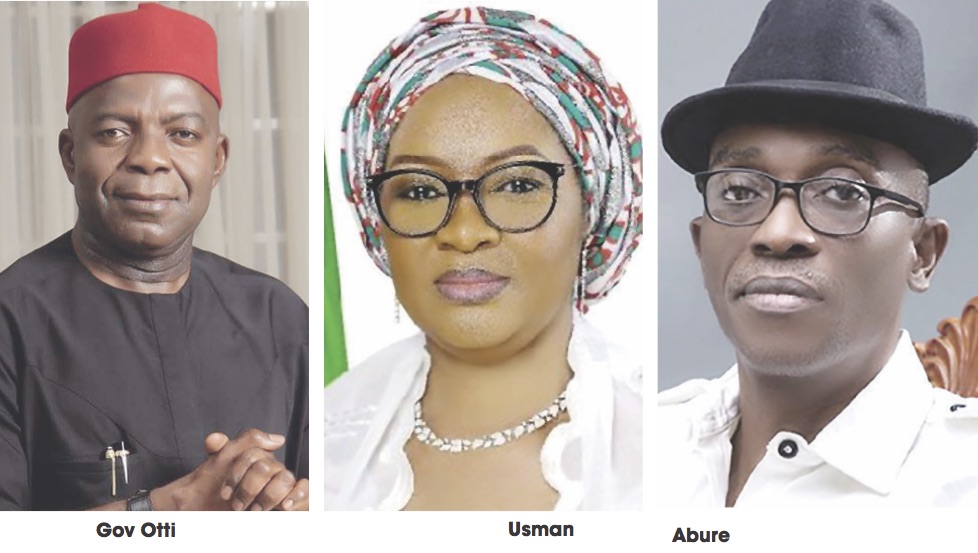
At the heart of the crisis are competing claims to legitimacy between the Julius Abure–led National Working Committee (NWC) and a Caretaker Committee associated with former Minister of Finance, Senator Esther Nenadi Usman.
The controversy has now entered another critical phase following the latest judgment of the Federal High Court sitting in Abuja, which recognised the Nenadi Usman-led caretaker arrangement, a decision the Abure leadership has vowed to challenge at the Court of Appeal.
Daily Sun recalled that party’s post-2023 surge was largely driven by public disillusionment with Nigeria’s two dominant parties and the candidacy of Peter Obi, whose presidential run galvanised millions of young voters and urban professionals.
However, rather than consolidate this momentum into strong institutional growth, the party soon became mired in internal disputes over leadership, control of party structures, and ideological direction.
These disputes escalated into legal battles that have spanned the Federal High Court, the Court of Appeal, and ultimately the Supreme Court, drawing the judiciary into what many jurists traditionally regard as the “internal affairs” of political parties.
One of the most significant turning points in the party’s crisis was the decision of the Court of Appeal, which at a time recognised the Abure-led NWC as the authentic leadership of the party.
That ruling appeared to settle the matter, at least temporarily, by affirming the authority of the party’s elected national officers.
However, the legal dispute did not end there. Esther Nenadi Usman and her allies approached the Supreme Court, not necessarily to enthrone an alternative leadership, but to challenge the competence of the lower courts to make pronouncements on party leadership in the first place.
In its April 4, 2025 judgment, the Supreme Court declined jurisdiction, holding firmly that issues relating to party leadership are internal affairs over which courts should not ordinarily exercise authority.
Crucially, the Supreme Court did not dissolve the Abure-led NWC, did not declare its tenure expired, and did not order the establishment of a caretaker committee.
Instead, it reinforced a long-standing judicial principle: courts do not appoint leaders for political parties.
This distinction has since become the core of the party’s argument against the latest FCT High Court ruling.
The caretaker committee led by Nenadi Usman emerged from internal dissension within the party, driven by claims of exclusion, alleged mismanagement, and dissatisfaction with the Abure leadership.
Supporters of the caretaker arrangement argued that it was necessary to stabilise the party and reposition it ahead of future elections.
The Abure-led NWC, however, has consistently maintained that the caretaker committee is unconstitutional, alien to the Labour Party constitution, and led by individuals who were either not registered members at the time or lacked the authority to assume leadership positions.
This disagreement was further complicated by the recent judgment of Justice Peter Lifu of the Federal High Court, FCT, which recognised the Nenadi Usman-led caretaker committee.
Other News
According to the Abure faction, the ruling effectively did what the Supreme Court had warned against: Judicially validating a leadership structure for a political party.
In reacting to the judgment, the Party’s National Publicity Secretary, Obiora Ifoh, described the ruling as contradictory and legally unsustainable.
The party argued that while the court acknowledged that leadership matters are internal affairs of political parties, it nonetheless proceeded to validate a caretaker committee, an act the party insists amounts to appointing leadership by judicial fiat.
The Abure-led NWC also challenged the court’s conclusion that a leadership vacuum existed, pointing to the national convention held on March 27, 2024.
According to the party, the convention was conducted before the expiration of the previous executive’s tenure and lawfully produced the current leadership, thereby foreclosing any claim of vacuum.
Beyond the legal substance, the party raised procedural concerns, including the reassignment of the case and the alleged denial of an opportunity to respond to counter-affidavits before judgment was delivered.
These issues, the party insists, would form part of its grounds of appeal.
As it is, the crisis within the party is not merely legal; it is profoundly political, pundits say. They further contend that allegations of “body language” from the court, premature jubilation by rival factions, and claims of financial and political pressure underscore the intense struggle for control of a party that, despite its internal chaos, remains electorally valuable.
This struggle, political analysts say, has fuelled perceptions fair or otherwise, that powerful interests are attempting to capture the party structure ahead of future elections, particularly in the light of the party’s demonstrated ability to disrupt Nigeria’s traditional political order.
Daily Sun gathered that what appears as the most damaging consequence of the party’s internal implosion has been the exit of its most prominent political figure, Peter Obi.
Obi’s departure from the party marked a symbolic and practical turning point, with some arguing that it symbolically signalled the collapse of the fragile unity that powered the 2023 movement and, practically, it deprived the party of its most effective national mobiliser and moral anchor. His exit was widely interpreted as a response to the deepening leadership crisis, endless litigation, and the inability of the party to resolve its internal disputes through political and constitutional means.
For many supporters, it confirmed fears that the Labour Party was becoming indistinguishable from the old political formations it once promised to replace, riven by factionalism, personality clashes, and institutional weakness.
As the party heads back to the Court of Appeal, it faces a defining moment. Beyond the legal arguments, the larger question is whether the party can survive its own contradictions.
The Supreme Court has already drawn a clear boundary by declaring party leadership an internal affair. Each subsequent judicial pronouncement that appears to cross that boundary only deepens uncertainty and invites further litigation.
In all these developments, the electoral body, the Independent Electoral Commission (INEC), is yet to come clear on which side of the divide it stands, though Abure has so far been attending periodical meetings of political parties at its headquarters.
Of great importance is that, while the crisis lingers, Abure continued to occupy the party’s national secretariat in Abuja, conducting congresses and primary elections in some states, among others.
So far, the party stands at a crossroads between institutional renewal and irreversible decline, and the appeal against the FCT High Court judgment may yet clarify the legal issues, but it would not resolve the political ones, and may eventually, get to the supreme Court again.