Follow Us on Google
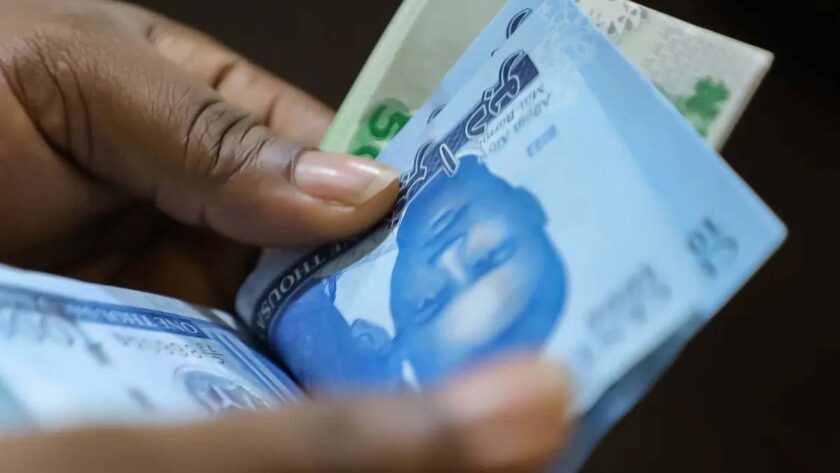
For many Nigerians facing urgent financial needs, loan apps have become the quickest escape route. A few clicks, little paperwork and money can land in a bank account within minutes.
When emergencies arise, consumers often turn to loan apps because traditional banks may require more documentation, collateral or time before approving credit.
But the ease of obtaining one loan can also make it easier to obtain another.
What starts as a convenient solution can quickly become a painful financial burden.
Across Nigeria, consumers are increasingly taking loans from multiple digital lenders, struggling with repayment and in some cases, borrowing again simply to settle previous debts.
The Federal Competition and Consumer Protection Commission (FCCPC) currently lists 505 fully approved digital money-lending companies, 35 conditionally approved operators and 112 apps on its watchlist, showing how crowded Nigeria’s digital-credit market has become.
Industry estimates cited by Making Finance Work for Africa indicate that digital lending apps in Nigeria disbursed about 145 million loans worth $2.1 billion in 2023, many of them worth less than $20.
The small size of many loans, however, does not necessarily mean small financial consequences.
A 2024 consumer protection survey by Innovations for Poverty Action (IPA) found that 37 per cent of digital-credit users surveyed had been unable to repay at least one loan, while 17 per cent said they had reduced food spending to repay a loan.
For borrowers, the problem often begins with the reason for taking the loan.
Babatunde Akin-Moses, co-founder of digital lender Sycamore, said rising living costs were squeezing household incomes and making it harder for consumers to meet their financial obligations.
“The cost of food, transportation, housing and other essentials has gone up, while income has not increased at the same pace for many people,” he said.
Akin-Moses said some borrowers now owe several lenders simultaneously, making repayment increasingly difficult.
“Once their income is not enough to service all those obligations, repayment becomes difficult,” he said.
He added that default should not automatically be interpreted as a refusal to pay.
“In many cases, the bigger issue is that their ability to pay has come under pressure,” he said.
Technology has made this cycle easier to enter.
Gbolabo Awelewa, a technology and risk-management expert, said cloud infrastructure, BVN and NIN verification, mobile-money systems and third-party credit scoring had significantly reduced the barriers to digital lending.
But the fierce competition among lenders can also create pressure to approve loans quickly.
“When your model depends on volume and speed, and the app next to yours approves in ninety seconds, there’s pressure to relax your risk criteria rather than lose the customer,” Awelewa said.
For consumers, this means that getting a loan can sometimes be easier than determining whether they can comfortably repay it.
The biggest trap, according to experts, is multiple borrowing.
A consumer who takes ₦50,000 from one app to deal with an immediate need may turn to another platform when the first repayment date approaches. A third loan may then be used to settle the second.
Awelewa described the problem as partly a weakness in credit information-sharing.
“Someone can take loans from three or four apps in a week and none of them see the full picture until it’s too late,” he said.
Other News
The cost of borrowing can compound the problem.
FairMoney, for example, gives a representative example of a ₦100,000 three-month loan attracting ₦30,000 in interest, bringing total repayment to ₦130,000 and a representative annual percentage rate of 120 per cent.
Branch publishes APRs ranging from 34 per cent to 271 per cent, while Carbon states that its monthly rates range from 4.5 per cent to 30 per cent, with a maximum APR of 195 per cent.
Actual rates vary depending on the loan, repayment period and borrower’s risk profile.
Akin-Moses said consumers should look beyond the amount they receive and consider the total cost of repayment.
“If a business borrows ₦1 million for one month to execute a transaction where it expects to make a 20% margin, paying 4% for the loan is not necessarily expensive,” he said.
The danger, he said, comes when borrowing no longer produces enough economic value to justify its cost.
“At that point, the credit is no longer helping the borrower manage a temporary cash-flow need. It is creating a debt cycle,” he said.
Fintech entrepreneur Roosevelt Elias said Nigerians must also distinguish between easy access to loans and access to affordable credit.
“The demand is real and it is enormous,” Elias said. “But a queue of over four hundred approved lenders … is not the same thing as access to affordable credit.”
He argued that many Nigerians need better financial knowledge rather than simply more opportunities to borrow.
“Nigerians need financial education even more than they need loans,” Elias said.
He called for stronger credit infrastructure, consumer protection and a national credit system linking borrowers’ records to their NIN and BVN.
There is also a growing concern over what consumers give up in exchange for quick loans.
The Nigeria Data Protection Commission has previously reported more than 400 privacy-breach cases involving digital lenders.
Awelewa warned that some lending applications collect more personal information than may be necessary to assess a borrower’s creditworthiness.
“Any lender sitting on that much personal data is a target,” he said.
Regulators have responded by tightening oversight. The FCCPC’s Digital, Electronic, Online or Non-Traditional Consumer Lending Regulations 2025 require greater transparency from digital lenders and empower the Commission to monitor consumer-lending interest rates to ensure they are not exploitative.
The regulations also provide sanctions, including fines, suspension and revocation of approval.
But experts say regulation alone will not prevent consumers from burning their fingers.
Borrowers must understand that the speed of approval does not mean the loan is cheap, nor does the small amount borrowed mean the repayment burden will be small.
As Awelewa put it, the problem is not necessarily the speed of digital credit but whether the systems supporting that speed are strong enough.
“Fast credit is a good thing for a country like ours where a lot of people are locked out of traditional banking,” he said. “The problem isn’t the speed. It’s that disbursement capability has scaled faster than the infrastructure, bureau reporting, data governance, verification, that would make that speed safe.”
For millions of Nigerians, loan apps will remain an important source of emergency cash. But without careful borrowing, multiple-loan checks and stronger consumer protection, the convenience of receiving money within minutes can leave borrowers paying for that convenience long after the emergency has passed.