Follow Us on Google
• How non-compliance with Supreme Court order may affect their second term bid
• Why states aren’t obeying apex court ruling, Tinubu’s directive
By Omoniyi Salaudeen, Okey Sampson, Umuahi Femi Folaranmi, Yenagoa, Scholastica Hir, Makurdi, Lateef Dada, Osogbo, Tony John, Port Harcourt, Laide Raheem, Abeokuta and Lukman Olabiyi
The implementation of Local Government autonomy being pushed by the Federal Government has taken a new twist. The recent threat by President Bola Ahmed Tinubu to invoke Executive Order to enforce direct payment of revenue allocations into the accounts of local councils marks the end of the diplomatic phase and the beginning of a direct financial confrontation between the centre and the states. The Executive Order is considered the nuclear option and which states are currently most at risk of having their financial lifelines severed or redirected.
As things currently stand, all states but one remains in the crosshairs for different reasons. If the President makes good on his words to issue Executive Order, it will essentially result in the Federation Account Allocation Committee (FAAC) bypassing the states and paying directly into the local council accounts.
Since the Supreme Court ruling in July 2024, mandating direct allocation into local government accounts, only Jigawa State has proven that the money can go directly into the council accounts. Several other states have reportedly continued to route funds through the State Joint Local Government Account (SJLGA) first, despite the apex court ruling. In these states, governors reportedly screen the funds, releasing only enough for salaries and leaving chairmen with zero discretionary capital.
Despite the judicial verdict, many governors have exploited constitutional grey areas to maintain control. The threat of an Executive Order is Tinubu’s way of saying that the administrative convenience governors have enjoyed is no longer a valid excuse for non-compliance. If the Executive Order is issued this first quarter, there could be a scenario where federal allocations to resisting states are pruned at the source, leaving governors with significantly less cash to manage their political machines as the 2027 election cycle begins to loom.
Knife and the yam rhetoric
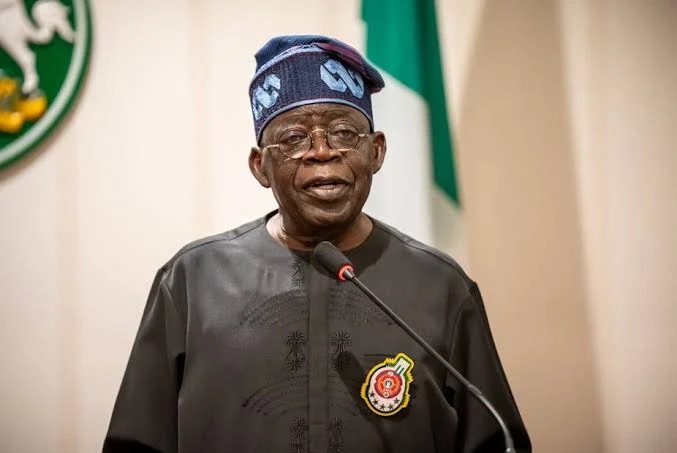
Despite the landmark July 2024 Supreme Court ruling, the journey toward local government financial autonomy in the country has been characterized by sustained legal and political inertia. President Tinubu recently intensified his rhetoric. In late December 2025, during an APC National Executive Committee meeting, he issued a direct warning to governors, urging them to obey the subsisting apex court ruling. “The Supreme Court has said, ‘give them their money directly.’ If you wait for my Executive Order, because I have the knife, I have the yam, I will cut it,” he declared.
The President’s threat implies that if states continue to resist, the Federal Government may use the Federation Account Allocation Committee (FAAC) to bypass state-controlled accounts entirely, effectively “cutting the yam” at the source and sending it directly to the 774 local council accounts.
Already, the Central Bank of Nigeria (CBN) has issued guidelines requiring local governments to provide verified standalone accounts to receive federal allocations directly, signalling that the technical infrastructure for autonomy is being built.
Looming resistance
While the apex court declared State-Local Government Joint Accounts unconstitutional, many states still operate them under the guise of administrative necessity or legacy state laws that have not yet been repealed. Most governors view local government funds as a vital political and economic lifeline, and they are unlikely to yield without a fight that could involve further Supreme Court clarifications or a full-scale constitutional amendment. Some state governors, like Anambra’s Charles Soludo, have expressed concerns that granting full autonomy to local governments could lead to chaos and inefficiency. Others argue that local governments lack the capacity to manage their finances effectively.
How resistance can affect 2027 elections
The stakes are higher now because the National Assembly has recently signalled its support for Executive Order. Senator Sunday Karimi and others have noted that trillions are being diverted through fraudulent voucher schemes. Reports revealed that state governments managed or controlled approximately N7.43 trillion in local government funds between July 2024 and December 2025.
The reason many governors haven’t shifted ground is a calculation of constitutional ambiguity. They argue that Section 162 (6-8) of the 1999 Constitution still mentions the State Joint Local Government Account. They believe a Presidential Executive Order cannot override a section of the Constitution, even with a Supreme Court judgment in hand.
According to analysts, instructing the FAAC to refuse any disbursement request that includes a state-controlled Joint Account as the recipient is Tinubu’s way of ensuring compliance. In the circumstance, erring governors who decide to maintain the old line of resistance may be at the risk of losing grassroots support for their re-election. This implies that the controversy over local government autonomy is not just a legal battle; it is a political earthquake for state governors. In Nigeria, the grassroots determines election outcomes. Therefore, a shift toward direct funding could be a threat to the very foundations of how governors secure re-election.
For decades, the Local Government Joint Account (JAAC) has served as the war chest for many governors. Without this off-budget cash, a governor’s ability to maintain a large, expensive political network is severely diminished. A governor who cannot grease the wheels at the ward level faces a much higher risk of losing their local support during the general election.
In the past, governors could blame a lack of development on federal neglect or dwindling allocations. However, states like Jigawa are now showing what direct funding can do. In states where governors are still obstructing direct payment like the on-going tensions in Osun and Cross River, the opposition is already using the strangulation of the grassroots as a major campaign slogan. Governors who resist are being labelled as enemies of the poor.
At this time, President Tinubu appears to be calculative in his threat to use an Executive Order to ensure compliance. Within the ruling All Progressives Congress (APC), the threat carries a specific political weight. With the presidential nudge, progressive governors who openly defy Tinubu’s agenda on LG autonomy may find themselves without federal cover during the 2027 primaries. The Presidency and the APC National Working Committee (NWC) could theoretically favour compliant candidates who promise to implement the Supreme Court ruling, effectively ending the careers of rebel governors.
Additionally, the Nigeria Union of Local Government Employees (NULGE) and the Nigeria Union of Teachers (NUT) are among the most organized voting blocs in the country. These unions are the fiercest advocates for autonomy because it ensures their salaries are no longer diverted for state priorities. Any governor who resists autonomy risks a protest vote from hundreds of thousands of local workers and their families—a margin that can easily tip a state election.
Other News
Partial compliance
Sunday Sun reporters, who monitored the situation across the states, filed varying degrees of compliance. A few states, such as Delta, have reportedly begun experimental phases of direct fund releases to elected council chairmen.
However, in Abia State, findings showed that local governments have yet to receive allocation directly from the federation account. The LG officials, who spoke under the cover of anonymity for fear of being victimized, lamented the grip the state government has had on council funds. He said: “Local government funds in Abia, like most councils in the country, are handled by the state government which in turn pays the salary of workers and other entitlements.
“Over the years, Local Government workers in the state have not been paid their leave allowance, but if the councils were allowed to manage their funds, workers could have been paid. The issue of gratuity is even worse. Any worker that retired from services faces a bleak future as he will have no money to fall back on”. He urged the President to move beyond warning and take a decisive action.
Efforts to reach the President of the Nigeria Union of Local Government Employee (NULGE), Mrs Linda Unaeze, proved abortive, as her phone line could not be reached for comment.
In Bayelsa State, there are conflicting accounts of the scenario currently playing out. Governor Douye Diri, during the recent inauguration of council chairmen, justified the Joint account structure (JAAC) as a way of ensuring that the state government can fill financial deficits when it surfaces. ‘’The issue of JAAC, the joint account, is to enable the state government fill the gaps where there are gaps in other local government areas,” Governor Diri said.
Yet, the Chairman of Kolokuma/ Opokuma Local Government who doubles as Chairman of NULGE in the state, Mr Lelei Tariye, in his contradictory account, submitted that the local government system in the state was working because the government adhered strictly to autonomy for the councils even before the Supreme Court ruling. “The autonomy being enjoyed by the local councils has shifted the burden of responsibility on the council chairman, as they have no excuse not to perform,” he stated.
The NULGE President in Benue state, Comrade Joshua Odiniya, speaking with Sunday Sun, urged President Tinubu to invoke an Executive Order to compel state governors who were yet to comply with the Supreme Court ruling on local government financial autonomy to comply. He said, “It would allow Local Governments to initiate projects for accelerated rural development. It will take care of issues of primary Healthcare, roads to rural areas that would push food outside from those places.”
Odiniya was, however, quick to add that the state governor, Rev Fr Hyacinth Alia was doing very well in the state. “In Benue, by 25th of every month, we are done with salary. On the issue of minimum wage, he was the second person in the country to implement it and instead of the approved N70,000, he is paying N75,000 which is far above. If the President gives the Executive Order, I believe my governor would be the first to respond,” he stated.
In Osun State, the payment of Local Government allocations has become a contentious issue, leading to a prolonged legal battle between the chairmen elected during the tenure of former governor Adegboyega Oyetola in 2022 and those elected on February 22, 2025, by the administration of Governor Ademola Adeleke.
The chairman of Association of Local Government of Nigeria (ALGON) in the state, Abiodun Idowu, said the legal tussle was impeding receipt of the allocations and begged the state government to withdraw court cases to allow them access the allocation for the development of the grassroots.
NULGE’s President in Osun, Nathaniel Ogungbanghe, lamented the current standoff while the State chapter of the All Progressives Congress (APC) claimed that the allocations were being disbursed into the rightful local councils’ accounts. Kola Olabisi, APC’s Director of Media and Information, asserted, “It is not true that the said federal allocations are being paid into any accounts belonging to our local government chairmen or any APC member, but rather into the accounts of the respective local government councils.”
In Rivers State, some key members of the NULGE), who spoke under the condition of anonymity to avoid the issue being politicised because of the political crisis in the state, said local government councils have been receiving allocations since the first quarters of 2025.
It was further gathered that the local government councils, had received allocations for January to October last fiscal year, amounting to N7.54 trillion. The Union leaders told Sunday Sun that even with the staggering allocations, Rivers State government still carries out some payments like the Primary Healthcare Services, which local government authorities are supposed to perform.
In Ogun State, a senior staffer of one of the local governments in the state, who did not want his name in print, told Sunday Sun that local governments are still receiving their allocations through the state government. Expressing disappointment for the failure of the Federal Government to take an affirmative action, he said the onus lay on President Tinubu-led administration to ensure that the local governments are granted real financial autonomy.
He, however, expressed cautious optimism that local councils may begin to receive their allocations directly from Abuja after the 2027 election as most of the governors belong to the same party with the president, who can then invoke and enforce the Executive Order.
Efforts to speak with the President of NULGE, Comrade Adefesobi Adebayo, through his mobile phone to ascertain whether local governments in the states have started receiving their monthly allocations directly from Abuja, was not successful. Several calls made to his mobile line failed to connect.
In Lagos State, the Commissioner for Local Government, Chieftaincy Affairs and Rural Development, Mr Bolaji Robert, during a ministerial press briefing marking the second anniversary of Governor Babajide Sanwo-Olu’s second term in office said: “The issue of local government autonomy is alien to the government of Lagos State. Our local governments are receiving their funds without hindrance, and we do not owe any local government.
“This is why Lagos local governments are ahead of others in terms of roads, healthcare, and infrastructure. Investigations will show that the state has had no involvement in local government funds since this administration began.”