Follow Us on Google
• I’ll like to be remembered for the lives that I touched
• The church should focus on changing lives, not on controversies around payment of tithes
By Christy Anyanwu
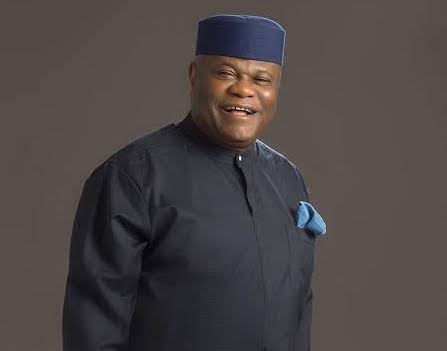
Bishop Mike Okonkwo is a renowned Nigerian pastor, prophet and evangelist. Born on September 6, 1945 in Ogbunike, Anambra State, he is the founder and presiding bishop of The Redeemed Evangelical Mission (TREM).
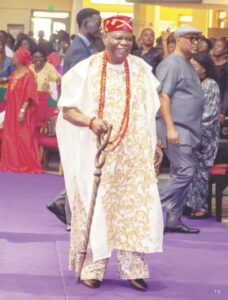
With over 180 branches in Nigeria and 10 countries around the world, TREM has become a prominent Pentecostal church.
Before his calling into ministry, Bishop Okonkwo worked with the Nigerian Ports Authority and later, the African Continental Bank. However, after an encounter with Jesus in 1970, he dedicated his life to serving God.
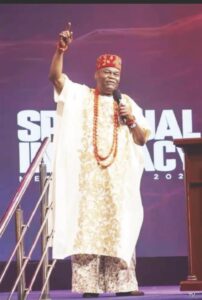
He is a respected voice in the Christian community. He was National President of the Pentecostal Fellowship of Nigeria (PFN) between 1998 and 2005.
His foundation, Mike Okonkwo Foundation, provides adult literacy classes, scholarships and vocational training to empower the underprivileged. In addition, Bishop Okonkwo hosts annual lectures that bring together prominent Nigerians to discuss national issues and proffer solutions.
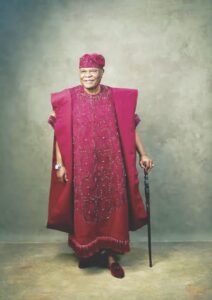
In this interview, Bishop Okonkwo gives insights into his life, ministry and other issues.
You just turned 80 today. What reflection do you have on your journey and the ministry so far?
Well, the reflection that I have is that, one, you think in terms of the fact that it’s already 80. Growing up, you keep on thinking that 80 is very far, so you still have time. But we can now see the brevity of time. Despite how it is, it’s like yesterday. I can reflect back and know what I was doing when I was still a young boy at the age of between five and six, living in Lagos. So, for me, it just shows you that life is very brief; never take any time you have to be alive for granted, as long as you’re alive. Whatever you have to do, keep on doing it, never postpone, don’t procrastinate.
How has your family, especially your wife, Bishop Peace Okonkwo, supported you throughout your ministry?
She has been very supportive from the inception of the ministry. And, I mean, she’s done whatever she could do, whatever sacrifice she could make. When the ministry was young, first of all, you must understand that I approached her to marry her while I was working in the bank. I had not entered the ministry. So, she had the mindset that she was going to marry a banker. Then, here I was, leaving the bank, which was in those days, not like today when everything in ministry is glamorous, generally.
In those days, you didn’t marry a preacher. No one wanted to touch you with a long pole because you didn’t have a future, especially the Pentecostal or charismatic type, except, probably, you want to go and be an Anglican priest or a Reverend Father or something like that. Not charismatic preachers, because there was nothing to look forward to.
So, for me to transition from knowing I had a bright future in the bank and being well paid to now leave that, to go to a place where I didn’t know whether I would get money, no payment, nothing, no guarantee of any salary, nothing, just faith in God. And then, for her to still believe that she could see a future in me… In fact, she was told when I answered the call to ministry that she should reject me, she should not marry me because she was going to starve. But for her to still believe, just because she believed that there was a future for me, even though there was nothing to show at that point in time but just that belief, for me, that’s huge support.
And then, here we are, we got married. After marriage, all the gifts they gave to us, we put together in the bank. One day, I woke up and said, look, I’m going to borrow this money to travel to Israel. And she gave it all. I said, I would repay it later. So, I just took the money and went to Israel and she never for one day said, where is that money? Till today! But God has been our source in being gracious.
And so she followed me, step by step, all the way, laboured with me, suffered with me, and kept the home front when I was travelling everywhere, going on crusades in different parts of the world. She was able to keep the home. And then to keep the church – one of the challenges of ministry is to have a wife that will not misunderstand your role as a pastor, knowing that you are in the business of people.
If she was an insecure wife, she could see you with people and start fighting. I’ve seen it happen. Some people genuinely called by God, anointed by God, because their wife was insecure, their ministry was destroyed. I don’t have that experience with my wife, no. She had never, not for one day, said, What are you doing with that person? Or what is this? Or what is that? I wouldn’t have survived. There is no way I would have survived, because it would be just putting me under undue pressure.
This is a business of people. In fact, quote unquote, you are a pastor to them, you are a father to them, you are a husband to them. So, are you going to divorce me from my role? No. So, my wife has been very instrumental. And, for instance, one other thing is that she is a fine liner in the ministry. I, at times, am just a headliner; you know what’s going on at the end. But my wife can look at you, know you once, and know your name. Tomorrow, when she sees you, she will call you by your name. That helped me completely.
Where some people feel I am ignoring them, my wife covers it all. So, she’s been a huge blessing.
You’ve had over 50 years of dedicated service to God. What would you say have been some of the most significant moments or major milestones in your ministry that stand you out?
The most important thing, for me, which I value most, is the fact that God has helped me to maintain my values, my character and integrity in ministry. Because there are many things that could have distracted you, and you would go to the extreme, misbehave and then do some things that are funny or manipulate that to prove a point to people that you have arrived.
From day one, I said to myself, if money would be the motivating factor for me being a minister, I don’t want it. Wherever God leads me to minister, I will go. And I’m not going to ask for any penny from anyone to minister to him. And God has helped me to maintain sanity in an insane society, where all kinds of things are going on. I’m not under stress; I’m not under pressure for anyone.
I’m not in any competition with anyone. Because some of these things are things that lead you into putting your hands in all kinds of things. You want to be like this one, you want to be like that one.
Do you know what they did to get to where they are? Let me build gradually. Let God lead me. I hate double standards, you know, playing games to acquire anything. No, I don’t like it. So, I would say the values that God has enabled me to keep, the character he gave me – I can go to bed and not say, oh, this is what I received, a condemnation. You remember how you got to where you got to. That has helped me. And it has challenged a lot of other people to live a life of integrity.
Thank God for structures. Thank God for the spread across the nations. Yes, they are all wonderful, but, for me, at the end of the day, the building will not speak for itself. It’s human beings that you built your life into. There are many whom my life has impacted today and there’s no place in the world I go to that I don’t see somebody who will come to me, even when I disguise myself, and say, I was in your ministry. Some of them are doing great work, even on their own; doing mighty works on their own. So, when I see that, I’m energised and I’m happy.
You recently organised free eye cataract surgery as part of the events marking your 80th birthday. Tell us more about it – the initiative and its impact on the community. Why did you choose to do that? In addition, what drives your passion to reach out to the unreachable?
The church is not only meant for itself; The church, to me, is not really relevant when it is ministering to itself. We are the light of the world and the salt of the earth. In other words, God’s intention is that the church’s impact must be felt in an environment. If it’s not felt in the environment, you are a dead church.
I was saying, not long ago, that this road you came into, it was not the government that built it. We built it. When we came here, there was nothing here. There was nothing in this area. It was all bush, jungle, filled with snakes, crocodiles and all kinds of monkeys all over the place. There was no road to even come into this place. And there was no bank account anywhere in order to get money to do what we were doing. But it’s a step-by-step thing.
Now, I don’t know which road you came with. If it’s the other road, you came on, you would have noticed there is a recently tarred road that was done by us. The government didn’t do it for us. And this is the same example you see in wherever our branches are located because they are strictly instructed from the headquarters that, anywhere you are, ensure that you leave a mark for the community. Some build boreholes, some repair schools and buy equipment for the schools.
In some places, we revamp police stations and re-roof their buildings and paint them and stuff like that. We do different things in different communities across the nation.
We chose the eye surgery because a lot of people are losing their sight because of cataract. And cataract is treatable. All you need is a little surgery and the person will be seeing clearly. So, they are doing surgeries for 500 people and more. The exercise will last for about a month. But one of the conditions is that the person should register at least for us to have a data of who really we are attending to.
Looking back on your teenage years, what were your aspirations growing up, before coming into ministry?
While growing up, you should have aspirations. When I started working, I had the desire to work in the bank and stay as a banker. But I couldn’t when I encountered God and started a relationship with Him. I had to jettison the idea and go into ministry.
My desire was to be a banker. And I was already doing well in the bank and I had a bright future. But I just left, like I said, from the known to the unknown. People had to advise me so that, six months after, I left the bank to go into ministry. People advised me, look, resign. Don’t leave a record as if you were fired from the bank or as if you did something wrong because, in the future, it may tell wrongly.
Then, the ministry was taking all my time and my heart was no longer in the bank. It was no longer there and so I just didn’t care. I didn’t care whatever happened. I just wanted to do my thing.
Other News
Tell us more about the Empowerment for the Less Privileged (ELP) Foundation and the inspiration behind its establishment?
It’s the same thing, impact. It’s not enough to have a church, but what impact is it making? What life is it touching? So that’s the motivation. Give back to the society. Let them experience God through your actions, not only through preaching. Let people know through your actions that God is at the end of the day for humanity. That’s the inspiration.
How do you see your ministry evolving in the next chapter of your life?
That’s why it’s important to plan a transition. And that can only happen when you have a backup plan, a backup that is a new generation which God has also given to us, because it’s only a new generation that can perpetuate the ministry.
If you don’t plan towards that and think that it will end with you, then forget about raising up other hands. So, God is helping us to raise new hands that will go into other parts of the world to ensure that the vision continues.
What legacy do you hope to leave? What do you want people to remember you for?
The lives touched. That’s all. The lives that were touched. Oh, my life was changed. I was transformed. If not for this ministry, I don’t know where I would have been.
That, for me, is enough. It’s not the building. You can leave the building and leave all those things. At the end of the day, like I said, buildings will not speak. It’s people. If you want a continuous and perpetual legacy, it is the people that you leave behind. And that applies to even businesses. How can a business continue if there are no people?
No matter how powerful, how big that business is, that’s one of the things that have killed most in Nigeria. We hardly see a business in Nigeria that has lasted 100 years, 200 years. But, abroad, you see some that have lasted for 300 years and are still on-going: it’s the people.
What life lessons would you say you’ve learned in life and how have they shaped your ministry and relationships?
Life is full of ups and downs. It’s not just a bed of roses and everything will go fine. No.
You’re going to experience a lot of things, ups and downs. You must be prepared for it. It’s not going to be just smooth sailing. No. People are going to disappoint you. People are going to stab you in the back, even when you have helped them, they will turn around and say you didn’t help. All these things are part of life that you will experience. There are those who will be building with you while on the other side will also be destroying.
These are facts of life you will encounter. And, so, when they come, you take them in your stride. You ask God’s grace to help you.
We put too much trust and believe that everything is fine. Always endeavour to inspect, don’t assume. Inspect whatever you delegate. Don’t expect what you didn’t inspect.
As a respected voice in Nigeria, what are your thoughts on the current state of the nation and how do you think Christendom can contribute to positive change?
We have not helped as much as we should. First, it was that we came late into politics as Christians because politics was described as a dirty game.
And so we were all racing to heaven and didn’t care about what happened. We were only to wake up to find out that what happened to our environment was going to affect even what we were doing. So we all started to give a fresh orientation to our churches that politics, after all, is not wrong.
It’s the practitioners that are wrong. So, we have come late and we really need to work hard to make our members get involved.
We have, in a way, been able to get them to know it’s not a dirty game, but we have not made them get involved. Because, until you are involved, you can really not produce credible leaders. The only process by which we choose leaders is through the electoral process.
So, if I have to be involved in an electoral process, I have to belong to a party. If you don’t belong to a party, you only talk. At the end of the day, they make their choices.
So, Christians need to receive full orientation and assist in that direction because we can have credible people. Two, it’s not just having a credible image.
Anyone going into politics from our camp, as Christians, should be specifically instructed. You are not going there to join them to do what they are doing. You should be different.
You should be the light. I was saying it not long ago, who are the people, when you go to the political terrain, who are the people who perpetrate evil? James, John, Matthew, Mary, they are the people. So, we need to begin to preach the gospel that changes lives.
I don’t want to put the whole blame on politicians. We also need to take some responsibility. Talking about preaching that touches lives or changes lives, there have been a lot of controversies around paying tithes and not paying tithes, saying if you don’t pay your tithes, you are cursed. That’s why I was talking about training. When people are not trained and know how to interpret the Bible, they interpret it based on their own understanding.
And some people say this curse is just to put the people in bondage, to make them fearful. Let me tell you, God does not want us to do anything for Him out of fear. Once it is out of fear, it is not God.
It must never be. Whatever we do, whether it is prayers, you are not going to do it out of duty. It’s out of a relationship with God.
Whether praising Him, whatever it is, once it becomes an obligation, you must let God do this. Then you can’t manipulate God. But God is omnipotent, omniscient.
You don’t manipulate Him. He is all God by Himself. So, with or without us, He is a good God.
With or without us, He died for us ever before we were born. And so, whatever we do in the kingdom is in appreciation to Him to say, Lord, I can’t thank you enough. This is the only way I can express my gratitude to you.
So, it is lack of understanding of scriptures.
It’s not just tithing; a lot of things have been misinterpreted.
And so, it’s creating controversy that should not be there. So, that’s why we are telling the new generation, you need to study. Don’t just jump into ministry.
Study about what you are getting into so that you can be versatile and effective on the pulpit. We have a generation, unfortunately, today, that will ask you questions. They will call you out.
They will drag you. And it’s not because they are rude; it’s because they want to know.
They are asking questions. So, if you don’t train yourself and they ask you questions, you can’t shut them down. Unfortunately, the social media has made it way more worse.