Follow Us on Google
There is another phrase that requires care: media lynching. It is deliberately provocative because the scale of the Arday coverage was itself extraordinary. But the metaphor should not be used merely for rhetorical heat. What deserves examination is the mechanism by which an allegation becomes a form of social punishment before the institutional process has reached its conclusion. Once an accusation becomes a headline, it acquires a velocity that due process cannot match. The accusation travels. The denial follows behind. The correction, if it eventually arrives, often finds the audience already gone. And the person at the centre of the story remains trapped inside the first version of the narrative. That is the modern asymmetry of reputational harm.

An allegation can be instantaneous. An exoneration is procedural. The first travels at digital speed. The second moves at institutional speed. By the time the second arrives, the damage done by the first may be irreversible. That is why the O’Reilly comparison is so important. His case reminds us that academic misconduct can be investigated without necessarily becoming a national morality play.
Why, then, did Arday’s case become one? Was it because the allegations were more serious? Was it because of the circumstances of his appointment? Was it because his public biography had become part of his professional identity? Was it because of the wider politics of race and diversity? Was it because of the news cycle? Was it because some commentators had a prior ideological interest in challenging diversity appointments? Or was race itself part of the equation? The honest answer may ultimately be some combination of these factors. But that is precisely why the question must be investigated rather than dismissed.
Then enters Nathan Cofnas. And then, almost unbelievably, the story turns. Nathan Cofnas, the Ghent University postdoctoral researcher who publicly brought the plagiarism allegations against Arday into the centre of the storm, has now himself been suspended by Ghent University.
Ghent says it has opened a preliminary disciplinary investigation and suspended the researcher as a precautionary measure. The university has not publicly disclosed the full details of the case, but Cofnas says he is being investigated for discrimination against Arday. Ghent has stressed that it supports academic freedom and open academic debate, including controversial views, while insisting that academic freedom carries responsibilities and is not unlimited where the rights of others are concerned.
Again, precision matters. Cofnas’s suspension does not prove that his allegations against Arday were false. It does not erase whatever evidence may have existed. It does not retrospectively determine the Cambridge case. And it certainly does not constitute a posthumous finding that Arday was innocent of every allegation made against him. But it does produce an extraordinary symmetry. The accuser is now the subject of an institutional investigation.
The man who stood outside the circle of scrutiny, pointing at another, has entered the circle himself. That does not tell us who was right. It reminds us that every participant in an allegation has responsibilities. The accused has responsibilities. The accuser has responsibilities. The institution has responsibilities.
The media has responsibilities. And the public has responsibilities. Academic freedom is not a licence for reputational destruction.
There is a lesson here that goes beyond Arday and Cofnas. Academic freedom must protect the scholar who challenges orthodoxy. It must also protect the scholar who is challenged. Without the freedom to question, scholarship becomes dogma. Without the obligation to substantiate, questioning becomes accusation. Without due process, accusation becomes punishment. And without proportionality, punishment becomes spectacle. That is the line we should be watching.
Cofnas was entitled to raise questions. Arday was entitled to answer them. Cambridge was entitled and obliged to investigate. The media was entitled to report legitimate findings. But somewhere between questioning and condemnation, something went badly wrong. The distinction between those two states is where the human being disappears.
The priest returns to the story. And this brings us back to Rev. Father Madu. At first glance, the priest and the professor have nothing in common. One is confronted by an institutional instruction. The other was confronted by an academic accusation. One worries about returning. The other faced the collapse of professional standing. One carries his fear quietly. The other carried his crisis beneath an avalanche of public attention. Still, both expose the same institutional weakness: We are often very good at managing positions and very poor at measuring human weight. The institution sees the priest’s assignment. It may not see the priest’s fear. The institution sees the professor’s dossier. It may not see the professor’s vulnerability. The institution sees a rule.
The person experiences the consequence. This is not an argument against rules. It is an argument for humane institutions. A Church that sends a priest must ask what awaits him. A university that investigates an academic must remember that an investigation concerns a human being. A newsroom that publishes an allegation must ask whether the public interest justifies the intensity and persistence of the exposure. A social-media audience that consumes the story must remember that the person being discussed is not a fictional character.
Other News
Perhaps the most uncomfortable question arising from the Arday-O’Reilly comparison is not: Was Arday above scrutiny? Of course not. Nor is it: Was O’Reilly above scrutiny? Certainly not. The real question is: Why does scrutiny sometimes weigh differently on different people? Why does one person’s error become evidence of human fallibility while another person’s error becomes evidence of fraud? Why does one academic receive the institutional protection of proportionality while another is subjected to the social punishment of relentless exposure? Why does one case remain a disciplinary file while another becomes a national obsession? And, beneath all those questions: Does race have anything to do with it? We should neither answer that question reflexively nor run from it. We should investigate it. Because the absence of an explicit racial motive does not automatically establish the absence of racial effect.
And now, the lesson. There is a temptation, after tragedies such as this, to search for a single villain. That temptation should be resisted. Arday’s story contains questions about academic integrity. It contains questions about Cambridge’s due diligence. It contains questions about media conduct. It contains questions about public accountability. It contains questions about race.
And now it contains questions about the conduct of the person who brought some of the allegations into the public domain.
These questions can coexist. They do not cancel one another.
That is precisely why the story demands maturity rather than slogans. We should be able to say that academic integrity matters and that racial bias deserves scrutiny. We should be able to defend academic freedom and insist upon responsibility. We should be able to investigate an allegation without turning the allegation itself into a verdict. We should be able to acknowledge institutional failure without inventing evidence that does not exist. And we should be able to mourn a human being without pretending that difficult questions about his professional record never existed. That is what intellectual honesty looks like.
Here are two men, one invisible question stares at – Madu and Arday – who stand at different ends of very different institutional worlds. Yet, beneath the difference lies a common institutional problem. The institution sees the role. The individual experiences the weight. To an institution, Madu may be a priest who can be transferred. To the institution, Arday was a professor whose academic record could be scrutinised. One is a priest confronting the burden of being sent back. The other was an academic confronting the burden of being publicly pulled down. One asks, implicitly: Where can I safely live? The other was left facing the far more terrifying question: What happens when the world that celebrated me begins to question whether I deserved to be there?
Neither designation captures the whole human being. The priest had fear. The professor had vulnerability. The file does not. The memorandum does not. The disciplinary procedure does not. The headline certainly does not. That is why institutions need something more than rules. They need mitigating mechanisms, ways of slowing down the machinery when the human consequences become disproportionate to what is known.
Before sending someone back, ask what awaits him. Before publicly amplifying an allegation, establish what has actually been established. Before allowing an accusation to become a narrative, distinguish evidence from inference. Before judging a person, remember that the public sees only the part of the burden that has escaped into view. And when the institution itself becomes part of the pressure, somebody must be assigned the responsibility of asking the human question. How is the person carrying this? That question is not sentimental. It is institutional intelligence.
It is pastoral intelligence. It is academic intelligence. It is human intelligence.
At this point, the burden behind the verdict beckons. The tragedy of Arday should not be reduced to a morality play in which one man must be declared villain and another saint. Likewise, Madu’s predicament should not be reduced to a simple question of whether he obeyed or disobeyed. The deeper issue is what happens when institutional processes encounter human vulnerability. Rules are necessary. Academic scrutiny is necessary. Accountability is necessary. Obedience may be necessary. But none of these necessities cancels the obligation to see the person behind the position. The weight we do not see is precisely the weight that institutions are most likely to underestimate.
It is the weight of being told to return when home feels unsafe. The weight of being told that your scholarship is under suspicion. The weight of knowing that strangers are discussing your integrity. The weight of watching your professional identity become public property. The weight of being unable to explain everything because the process is still unfolding. The weight of waiting for an institutional verdict while the court of public opinion has already delivered its own. And sometimes, the most devastating part of the story is that the verdict comes after the person can no longer answer.
What do the key characters remind us? The priest reminds us that an institutional order may conceal a human burden. The professor reminds us that an allegation may conceal a human burden. O’Reilly reminds us that institutional responses to comparable academic failings can be dramatically different. Cofnas’ suspension reminds us that the accuser is not beyond scrutiny. And the racial question reminds us that equality is not merely about applying the same rule; it is also about asking whether the rule, the scrutiny and the consequences are experienced with the same intensity by different people.
What should we learn? Perhaps the lesson is not that institutions should stop questioning. They must question. Nor that academics should stop challenging other academics. They must. Nor that priests should never be asked to return to their assignments. They may have to. The lesson is simpler and more demanding: Question without dehumanising. Discipline without destroying. Command without forgetting vulnerability. Investigate without prematurely condemning. And above all: See the weight before judging the person carrying it.
There is always something behind the visible act that the eye cannot see. A priest standing before an instruction. An academic standing before an accusation. A media audience standing before a story. And behind every one of them, a human being carrying something the rest of us cannot fully see. A human being standing beneath the weight of both. That is the weight we do not see. The weight we do not see is therefore not simply fear. It is not simply shame. It is not simply professional humiliation. It is the cumulative burden produced when institutions, media and society attach different weights to the same kinds of human frailty. Perhaps, that is the first duty of a humane institution: before judging the person, measure the weight. And before declaring that the weight is the same for everyone, ask the more difficult question: Who is carrying it?
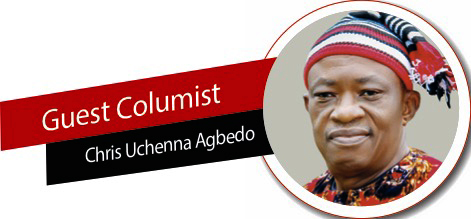
•Prof Agbedo writes from University of Nigeria, Nsukka