Follow Us on Google
By Vivian Onyebukwa
The war between the United States, Israel and Iran that started in March 2026 has taken a toll on Nigerians, as petroleum products, food items, and other things have continued to experience a daily surge in prices.
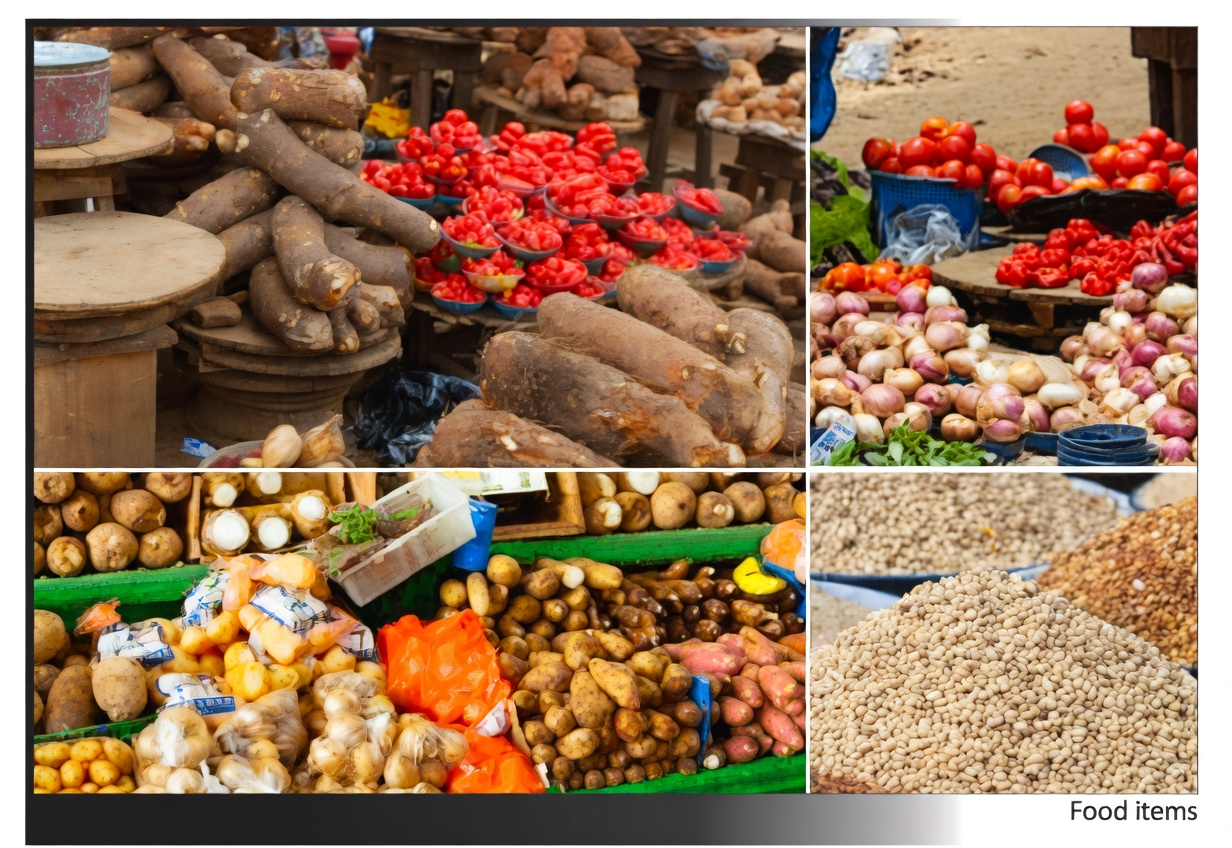
Staples like tomatoes, beans, and melon (egusi) saw a significant hike, with some costs jumping over 100 per cent in Lagos markets due to logistics disruption.
For instance, a bag of rice moved from between N50, 000 and N51, 000 in some areas to 54,000. A small bag of fresh tomatoes has gone from N22, 000 to N50, 000, while large bags hit N125, 000. A bag of beans increased from N45, 000 to between N65, 000 and N67, 000. The bigger bags rose from N85,000 and N90,000 to N120,000 and N130,000.

A bag of melon has gone up to N290, 000 from below N230, 000, while a small bag of pepper went from N18, 000 to N82, 000, and large bags reached roughly N172, 000. A bag of garri, one of the staple foods sold for N15.000, before the crises began, went up to N19.000 to N19, 500. A bag of corn was sold for N28, 000, N29, 000 in some areas, but has gone up to N35, 000. A bag of melon (egusi) was sold for 260,000, N270, 000, but it is now sold for N300, 000.
Also, 50 litres of local groundnut oil sold for N110, N120, 000, went up to as high as N145, 000, while a bag of onion formerly sold for N50, 000 now goes for between N110, 000 and N115, 000 per bag. A crate of eggs, which was sold for N5, 500, is now N5, 700, while a gallon of red oil moved from N45, 000 to N48, 000.

Lamentations
This continuous daily increase in the prices of food items, and its effects have been attributed to the lingering increase in transport fares, which has led to higher cost of goods and services.
According to a naturopathic doctor, Dr Olubo Adegeye, when food items are produced, the production is not complete until it gets to the consumer, otherwise all efforts in producing the items are wasted.
He spoke further: “When oil prices go up, it eventually lead to increase in transportation costs, raise the price of manufacturing, and automatically push up the prices of the consumer food items. This is because the farmer would have to add all his expenses and gains into the goods before passing them to the consumers. This, eventually increase the prices of the goods such as grains, tubers, vegetables, etc”.
She advised that the government should look inwards and tap into other numerous resources Nigeria is blessed with to ease the suffering of the masses.
Dr Adegeye advised the masses to make use of the digital system and work from home most of the time to minimise the cost of transportation.
Yemisi Ransome Kuti, Founder, Nigeria Network of NGO’s, equally stated that Nigeria should not have problems with any increase in petroleum pump price, saying that the country has enough mineral resources to take care of its citizens. According to her, the war between US, Israel and Iran should be a blessing to Nigeria, not a curse. She noted that the increase in petroleum pump prices is expected to affect food cost, noting that they all move in chain between production, distribution and the final point – the marketers.
Other News
Ransome Kuti equally advised that the government should also introduce online consultations between patients and doctors instead of wasting much on transportation going to seek medical treatments at the hospital.
A teacher in one of the private schools in Lagos, Nkoyo Udom equally agreed that each time there is increase in the price of petroleum products, there would be immediate hike in transportation rates because of the hike in the prices of these products such as petrol, diesel, and even machinery to power vehicles, generators, and some farm implements. “One wouldn’t expect a farmer to sell at same price when these petroleum products prices are low. The US, Israel, Iran war is really taking a toll on us here in Nigeria. Something drastic should be done to end it. Farmers are worried because the high cost of goods has a way of reducing purchasing power by the consumers,” Udom said.
Udom stated further that if the fuel price surge continues, the cost of food items will increase more, adding that the earlier the problem is solved, the better.
“Government should rise up to this challenge. As things are in the country, most families cannot afford even two square meals a day. With this current situation, some children will begin to experience malnutrition. This is bad. We are not in a war situation here in Nigeria. People should not suffer malnutrition in this day and age. It only happened during the last Nigeria/Biafra war in the late 1960’s and early 1970’s.”
Farmers speak

In a media published report, while expressing farmers’ pain over the development, the Chief Farmer of Africa and Team Lead, JetFarmsNG, Jeremiah Olanrewaju, said: “The recent increase in the pump price of petrol is something that farmers and food processors across Nigeria are already feeling very deeply. From my engagement with rural farmers, aggregators, and small food processors, the reality is fuel sits at the heart of our food system, so when the price rises, the impact quickly spreads across the entire value chain. First, transportation becomes significantly more expensive. Most of the food consumed in major cities like Abuja, Lagos, and Port Harcourt comes from rural farming communities in Northern and Middle-belt regions. These crops – whether grains, vegetables, or roots and tubers – are transported by road. When petrol prices increase, transporters immediately adjust their rates. That extra cost does not disappear; it is transferred along the chain from the transporter to the trader, to the processor, and eventually to the consumer. For rural farmers, this creates a difficult situation. Farmers already operate with very small margins. When transport costs rise, buyers often offer lower farm-gate prices because they also need to cover higher logistics costs. This means farmers sometimes earn less for their produce while consumers pay more in the market.
Secondly, Jeremiah Olanrewaju observed, production costs increase. “Many farmers depend on petrol-powered machines for land preparation, irrigation pumping, threshing, and small-scale mechanization. In communities where electricity is unreliable, petrol generators are often the only source of power. As fuel becomes more expensive, farmers spend more just to keep their farms running. For some smallholder farmers, this may even force them to reduce the size of their farms or delay planting.”
He further stated that the impact on food processors is also very serious. “Across rural Nigeria, thousands of small processors mill grains, dry spices, process cassava, and package food products using machines powered by generators. At JetFarmsNG, where we work closely with smallholder farmers and ago-processors, we see how energy costs directly affect production. When fuel prices increase, processors pay more to run grinding machines, dryers, and packaging equipment. The cost of processed foods such as flour, spices, and packaged staples then increases”.
For rural communities, he said: , “This situation can be especially painful. Higher fuel costs mean higher transport costs, higher production costs, and reduced income for farmers. Ultimately, the fuel price hike can lead to higher food prices, reduced food availability in markets, and increased pressure on already vulnerable households. If not managed carefully, this can deepen food insecurity, particularly for low-income families”, Olanrewaju said.
He counselled government to move fast to salvage the situation. “This is a very important moment for government to act in a way that protects both producers and consumers. Any intervention should recognise that farmers and food processors are already under significant pressure. In the short term, government can ease the burden of transporting food from rural areas to urban markets. For example, targeted support for trucks transporting agricultural commodities could help stabilize logistics costs.
Farmers are now facing another round of increase in the cost of transportation, food and basic goods.
“For poor households, the first and most immediate effect is usually on transportation costs. Public transport fares tend to increase almost immediately when fuel prices rise. For millions of Nigerians who rely on daily income from informal work, this means a larger portion of their earnings is suddenly spent on simply getting to work or transporting goods to markets. The increase in transport fare will also force households to make difficult choices as was the norm in previous times,” Olanrewaju stated.
Govt efforts to save situation
Since the problem started, Nigerian government has made some efforts to cushion the effect of the hardship caused by the situation. For instance, the President, Bola Ahmed Tinubu ordered the deployment of 100,000 CNG conversion link to ease the effect of the rising cost of petroleum products.
However, this is an idea which some have faulted. Mr Eugene Mmeka, a freight forwarder said this idea by the government is not enough compared to the gravity of hardship already faced by the masses. “As at today, the price of petroleum product in Lagos is about N1, 350 to N1, 400 per litre, depending on the area. This has raised the cost of food items and other things higher. Also, with the Easter and Sallah celebrations, the prices of these items have risen 100 per cent against what they were when the crisis newly started.”
Mr Mmeka advised the government to look inwards to see to the end of these petroleum crises, arguing that it might lead to higher food prices in the coming weeks, which, in his words, would be more devastating.