Follow Us on Google
By Maduka Nweke
In its efforts to restore cleanliness across Lagos, the Managing Director and Chief Executive Officer of the Lagos State Waste Management Agency (LAWMA), Dr. Muyiwa Gbadegesin, has announced that the state government will reintroduce monthly environmental sanitation exercises. He also revealed plans to procure about 500 mobile tricycle compactors in 2026 to address the city’s mounting waste challenge.
Speaking to journalists on Wednesday this week, Dr. Gbadegesin highlighted the scale of the problem, noting that Lagos, home to over four million households, generates between 13,000 and 15,000 tonnes of waste daily. These are collected by 450 Private Sector Partnership (PSP) operators.
“The PSP operators had the capacity to collect only between 4,000 and 5,000 tonnes daily out of the 13,000 tonnes generated. The balance is going into the drains, canals, lagoons and wetlands, among others. We have about 12 per cent of wetlands in Lagos, and people have been dumping waste on the wetlands,” he said.
Dr. Gbadegesin explained that the state would require a minimum of 2,000 compactors to properly manage waste, citing the dual challenges of human activity and inadequate infrastructure. He urged Lagosians to embrace the government’s waste-to-wealth initiative and to avoid littering, noting that “about 90 per cent of waste generated in the state has value.”
He emphasized the limitations of Lagos’ land, saying, “With the State’s land limitation, it will be extremely difficult for the state to create new landfill sites because of its aquatic nature.” He further explained the transition in Lagos’ approach to waste management, adding, “We are moving from a linear waste management system to a proper waste management system that is environmentally friendly and sustainable, in a way that waste is now seen as a resource. The quantum and the quantity of waste that will end up in the landfills will be to the barest minimum.”
On infrastructure, the MD/CEO said, “The biggest issue right now in waste management is the infrastructure. When I talk of infrastructure, I am talking about the equipment and facilities that we will use to collect, transport, treat and dispose of the 13,000 tonnes of waste generated daily in the state. The infrastructure includes the whole logistics chain from the bins. Risk management begins from the containerization, the households, business and the industry.”He added that the state currently has 80,000 smart bins being rolled out but needs far more. “We have four million Lagos households. Residents should therefore ensure regular payment of their bills to enable PSP operators to function more effectively,” he said.
Addressing the performance of PSP operators, Dr. Gbadegesin disclosed that 22 operators had been removed and their slots reassigned due to inefficiency. He promised that LAWMA would leverage the support of Local Government Chairmen to ensure a cleaner Lagos, urging them to take responsibility for waste management and the regulation of street trading in their communities.
In a another development, the Lagos State Commissioner for Housing, Mr. Moruf Akinderu-Fatai, has called on companies collaborating with the state to intensify efforts and ensure that all partnership projects meet the highest standards of quality and delivery deadlines.
The Commissioner also stated that the state seeks more partners, especially for low-income earners, stressing that the incentives and commitment of the administration of Mr. Babajide Sanwo-Olu have been repeatedly demonstrated.
Speaking at the recent commissioning of Abraham Adesanya Housing Estate, he noted that the official handover of 233 modern home units, delivered through a successful Public–Private Partnership between the Lagos state government and Urban Shelter Limited, represents a welcome development.
According to him, the partnership began in 2019, with the overarching vision to maximise the use of land and existing infrastructure to provide more home units within Abraham Adesanya Housing Estate. He commended Urban Shelter for their professionalism, adherence to standards, and dedication during project execution. He also expressed appreciation to the Ministry of Housing team, whose oversight, diligence, and technical expertise ensured the project’s success. The administration remains firmly committed to expanding access to decent housing across all income levels. Through ongoing and upcoming projects, reforms, and partnerships, the State aims to unlock more opportunities, promote homeownership, and deliver developments that are safe, inclusive, and future-ready.
In appreciation of the Ministry of Housing and its team, the Governor noted that the collaboration with Urban Shelter has produced 233 units of one-, two-, and three-bedroom apartments, terraces, and semi-detached homes within Abraham Adesanya Housing Estate Parcels A and B. He highlighted that the focus on increasing modern housing stock continues, citing the recent delivery of 420 apartment units at Ajara in Badagry. So far, approximately 11,000 home units have been generated for low-, medium-, and high-income earners across the State over the past six years.
The Governor emphasised that Lagos, as the epicenter of Nigeria’s urbanisation with a rapidly growing population, requires more private-sector-led solutions in housing development. Demand continues to outpace supply, affecting all social classes. Guided by the T.H.E.M.E.S+ Agenda, the administration has implemented several initiatives to address this imbalance, aiming to make Lagos a 21st-century economy and a model megacity with decent homes for all.
One key strategy is encouraging private-sector participation in housing delivery. The State provides land as equity, while partners contribute financing and technical expertise. All projects are supervised by technical teams to ensure high standards. The government does not simply provide homes; it delivers the infrastructure that makes communities livable, thriving, and productive. Real estate development is not just about bricks and walls, it drives economic activity and fosters communal living.
As part of ongoing interventions, the Governor invited private-sector stakeholders and investors to help accelerate housing development across the State and reduce the gap in homeownership. The administration has successfully delivered joint-venture projects supported by flexible approval processes, including a 40% rebate on all permits such as EIA, TIA, and physical planning permits. Tax incentives and other business support are provided to encourage investment.
However, the Governor also expressed concern over joint-venture partners who fail to meet deadlines. Delays leave the State with incomplete housing schemes and slow progress toward housing targets. Completing all ongoing projects is a key strategy for increasing housing stock. Any project not completed within the agreed timeframe or failing to meet required standards is currently under review for possible revocation.
Meanwhile, the LASG has said it is partnering with the Estate, Rent and Commission Agents Association of Nigeria (ERCAAN) to root out fraudulent estate agents in the state.
Abdulatiff Gbolahon Toriola, Permanent Secretary, Lagos Ministry of Housing revealed this during a meeting with ERCAAN recently.
He assured ERCAAN of the government’s support in flushing out quack agents who are tarnishing the industry’s image.
During a meeting, Toriola advised the association to first discipline its members before targeting non-members. ERCAAN National President, Godwin Alenkhe, in his response said that the association was ready to take action, having established a compliance and enforcement body.
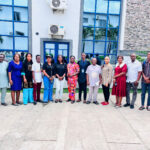
The ERCAAN delegation, including National General Secretary, Mr. Ibirogba and Conference 2025 Chairman Mr. Godwin Demech, also met with Special Adviser to the Governor on Housing, Barakat Odunuga Bakare to discuss the initiatives and modalities.