Follow Us on Google

•BCPG demands stricter building rules, accountability
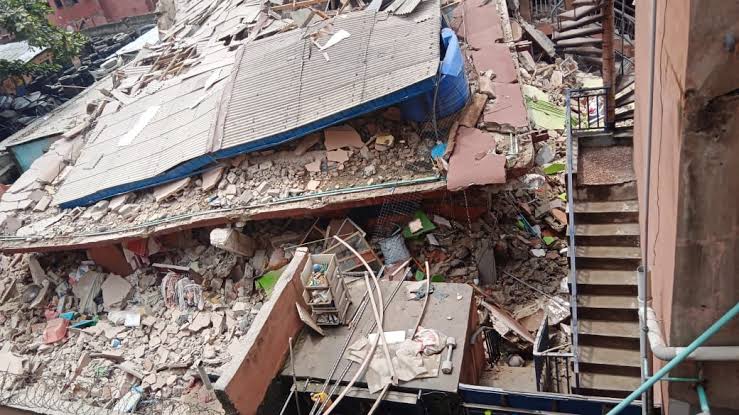
The Building Collapse Prevention Guild (BCPG) has disclosed that Lagos State accounted for 477 of the 843 building collapse incidents recorded across Nigeria between October 1971 and October 10, 2026, representing 56.6 per cent of the national total.
The Guild said the figures highlighted the urgent need for stronger enforcement of building regulations, improved professional accountability and stricter monitoring of construction activities to prevent further loss of lives and property.
It made the disclosure at its fifth annual memorial organised by the BCPG Ikoyi-Obalende Cell in Lagos to commemorate the November 1, 2021 collapse of a 21-storey building on Gerrard Road, Ikoyi, which claimed several lives.
The event, which brought together professionals in the built environment, legal practitioners and other stakeholders, focused on making the National Building Code enforceable as a means of improving safety in Nigeria’s built environment.
Participants examined the factors responsible for repeated building failures, identifying weaknesses in legislation, institutional coordination, site inspections, compliance with technical standards and professional accountability as major challenges. They also acknowledged ongoing government efforts, particularly the expanded Ministerial Task Team on Building Collapse and the National Building Code Advisory Committee under the Federal Ministry of Housing and Urban Development.
Speaking at the memorial, the Principal of Famas Global Consulting, Chartered Civil and Structural Engineer and member of the Council for the Regulation of Engineering in Nigeria (COREN) Lagos State Regional Investigation Panel, Elias Agbabiaka, said preventing building collapse required professionals to uphold high standards and resist practices that could compromise structural safety.
Citing the BCPG’s statistics, Agbabiaka said Nigeria recorded 843 building collapse incidents between October 1971 and October 10, 2026, with Lagos accounting for 477 cases.
He identified human errors, poor professional practices and failure to comply with established building standards among the issues contributing to the recurring incidents.
Agbabiaka called for verified professional competence, honest certification, transparent procurement procedures, approved substitutions of construction materials and proper documentation of activities on building sites. He urged professionals to resist pressure to compromise safety standards, stressing the need to verify questionable instructions, keep proper records, report violations and ensure corrective measures are taken before construction work continues.
He also emphasised the importance of using quality building materials, urging developers and contractors to subject materials to appropriate tests.
According to him, the Lagos State Building Material Testing Laboratory should be used to verify the quality of materials deployed for construction to guarantee the safety and durability of buildings and civil engineering projects across the state.
Earlier, in his welcome address, the General Secretary of BCPG Ikoyi-Obalende Cell, Bola Adeyera, called for a moment of silence in honour of victims of building collapses across the country, particularly those who died in the Ikoyi tragedy of November 1, 2021.
He said the annual memorial was an opportunity to reflect on the human cost of building failures and renew the commitment of professionals and regulators to preventing future occurrences.
Adeyera stressed the importance of effective enforcement, professional responsibility and a culture of compliance within the construction industry.
He also acknowledged the contributions of the cell’s past coordinators, Nnamdi Agbim and Tomi Ogundare, as well as its current Coordinator, Bola Arilesere, and members drawn from seven professional associations in the built environment.
In his presentation, Dr. Monday Ubani, former Nigerian Bar Association (NBA) Chairman, Vice President and NBA-SPIDEL Chairman, and Legal Adviser to the Senate President, called for stronger laws and regulatory structures to ensure that building safety requirements were not merely written rules but enforceable obligations.
Ubani advocated regular inspections at different stages of construction, professional accountability, digital records of regulatory compliance and closer monitoring of buildings considered to pose high safety risks.
He also called for independent regulatory oversight, mandatory completion certification, proper building maintenance and protection for members of the public who report unsafe construction practices.
Citing Ogun State’s adoption of the National Building Code, he urged other states and the Federal Capital Territory to follow suit.
He said wider implementation should be supported by adequate funding, clear timelines and independent monitoring to ensure that the provisions of the code were effectively enforced.
Also contributing, the Vice Chairman of NBA Lagos Branch and Chairman of its Human Rights Committee, James Sonde, called for clearly defined legal responsibilities for government agencies and professionals involved in building construction.
He said legislation should spell out inspection powers, penalties for violations and remedies available to victims, while ensuring that regulatory enforcement followed due process.
Sonde also advocated national minimum standards, appropriate implementation by state governments, continuous inspection of construction sites and clear identification of agencies and individuals responsible for enforcing building regulations.
He stressed that members of the public should have access to justice whenever negligence or regulatory failures resulted in building collapse.
The Third Vice President of the Nigerian Institute of Architects, David Majekodunmi, called for a system that would monitor buildings from the design stage through construction, completion and eventual use.
He proposed the introduction of a Digital Building Safety Passport, a National Digital Building Information Registry and a National Building Safety and Compliance Platform to improve access to building records and strengthen monitoring.
According to him, the proposed digital systems would help regulatory agencies, professionals and other stakeholders share information, coordinate design reviews and monitor compliance throughout the construction process.
He also advocated the use of emerging technologies to improve the detection of safety risks and ensure that building projects met approved standards.
Similarly, the President of the Nigerian Institution of Structural Engineers (NIStructE), Dr. Taiwo Elegba, identified proper soil investigations, competent structural designs, tested building materials, quality workmanship and documented site supervision as essential requirements for safe construction.
Elegba called for strict approval of changes to building designs, independent checks on high-risk structures and proper verification of the professionals responsible for construction projects.
He also advocated peer reviews, continuous professional training, a national database of building failures and regular assessments of buildings showing signs of structural distress.
He acknowledged the Lagos State Building Control Agency’s (LASBCA) Construction Stage Inspection Certification as an important step towards improving monitoring and compliance during construction.
The stakeholders maintained that preventing building collapse required more than investigations after disasters, insisting that effective laws, regular inspections, professional discipline and strict enforcement were necessary to protect lives and property.