Follow Us on Google
By Chinyere Anyanwu
Lagos and Ondo states have assured investors in agriculture of supportive policies, infrastructure and other incentives to make farming and agribusiness more profitable, as they seek to attract fresh capital into the sector.
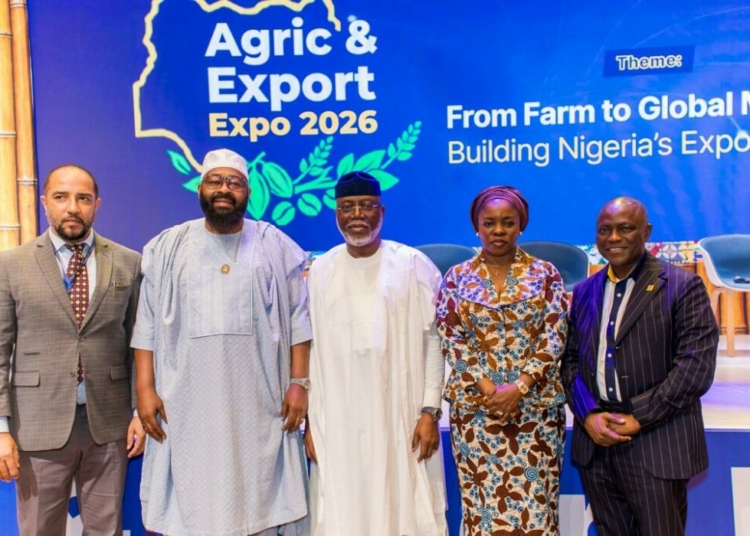
The assurances were given at a two-day FirstBank Agric Expo held recently in Lagos, where government officials and industry stakeholders highlighted opportunities in agriculture and the need for stronger public-private partnerships to unlock Nigeria’s agricultural potential.
The agro-expo themed: “From Farm to Global Markets: Building Nigeria’s Export Value Chain”, witnessed the convergence of agri-investors, state governors, members of the diplomatic corps, officials of the Nigeria Export Promotion Council, exporters, financiers, farmers of cash crops and food crops, as well as processors, agro-service providers, among other players in the agricultural and export ecosystem.
Speaking on behalf of the Lagos State Governor, Babajide Sanwo-Olu, the Commissioner for Agriculture and Food System, Abisola Olusanya, stated that though Lagos may be the smallest state in Nigeria in terms of landmass, it occupies a strategic position as the commercial nerve centre and critical gateway for the movement of goods, services, and capital into and out of the country.
Governor Sanwo-Olu said, “Lagos sits at a critical junction of Nigeria’s trade and logistics architecture. When we speak of moving from farm to global markets, Lagos is not merely a destination in that journey. Lagos is one of the critical bridges that connects Nigerian production to the world, and that responsibility informs the investments and policies of our administration.”
He further stated that the state is, “investing in the infrastructure that makes trade more efficient, which include the Lekki deep seaports and the road and rail connections supporting our expanding logistics ecosystem. We are strengthening agricultural productivity, supporting cooperatives and smallholder farmers, and advancing initiatives that improve access to inputs, markets, and opportunities. We are also paying greater attention to cold chain logistics, storage, and agro-industrial development because if we’re serious about exporting fruit, vegetables, and seafood, and other perishables, we must be able to preserve quality from the point of harvest to the point of shipment.”
According to him, “every link in the agricultural value chain, from aggregation, to processing, to packaging, to quality assurance, to certification, logistics, financing, and export documentation, presents an opportunity for enterprise and employment. And this is important for our young people and women who remain central to Nigeria’s agricultural economy. As a nation seeking to diversify our economy and strengthen our foreign exchange earnings, agricultural and non-oil exports provide one of the most viable pathways to sustainable economic growth.
“Our exporters must meet international standards of quality, safety, certification, and traceability. Our infrastructure must work. Our roads must connect farms to markets. Our power supply must support processing. Our storage and cold chain systems must reduce waste. Our ports and logistic systems must move goods efficiently, and our financing structures must recognise the realities of agriculture, including planting and harvest cycles, rather than imposing conventional short-term financing models on long-term agricultural businesses.”
The Lagos State governor noted that with the opportunities provided by the African Continental Free Trade Area, Nigerian businesses can look beyond the country’s traditional markets and compete across a continental market of more than 1.3 billion people.
He emphasised that, “farmers must produce, processors must add value, financiers must provide patient and appropriate capital, exporters must meet global standards, logistics operators must deliver efficiently, and government must create the enabling environment in which all these actors can thrive. That is how we move from farm to factory, from factory to port, and from port to global markets. And this is also how we turn our agricultural potential into economic power. This is how we build a Nigeria that does not merely participate in global trade, but competes, succeeds, and leads.”
Other News
Sanwo-Olu, therefore, said, “the Lagos State government remains committed to being a reliable and progressive partner in this journey. We will continue to invest in infrastructure, improve the business environment, strengthen agricultural and food systems, and support the partnerships required to make Lagos a more efficient gateway for trade and investment.”
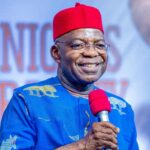
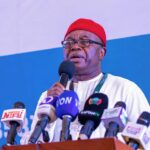
The Ondo State Governor, Lucky Aiyedatiwa, while giving an insight into some of the things his state, as an agrarian state, is doing to attract agri-investment, at the FirstBank Agric and Export Expo, said the state is richly endowed with strong comparative advantage in cocoa, oil palm, cassava, fisheries, aquaculture, livestock, among several other agricultural commodities.
He, however, said comparative advantage alone does not create prosperity, stating that, “our responsibility as government is to convert the comparative advantage into competitive advantage. That is why our focus has deliberately moved beyond primary production to the development of complete value chains from quality inputs and production to aggregation, processing, encouraging private investors who are already trading in our state into processing, storing logistic traceability and standards, financing and ultimately access to domestic and international markets. This value chain approach is central to the direction already articulated by our administration. For us, we recognise one fundamental fact that the government cannot do this alone.
“It is not possible for only the government to develop agri-connected business. It’s a partnership. Therefore, the role of the government is to create an enabling environment in which farmers can produce efficiently, entrepreneurs can innovate, national institutions can learn with confidence, processors can expand, and investors can deploy capital and generate returns on investment.”
Recognising the challenge posed by insecurity to the country’s agricultural production and sustainability, Aiyedatiwa said it is a major problem preventing “farmers from growing more, from going too far, from expanding their farmland for increased yield, increased productivity. So it’s a major issue we are battling with, and for us in Ondo State, we are dealing with that headlong by mobilising our security outfits, not just our local homegrown security outfits, but collaboration with other security agencies to ensure that our states are safe and our farmers are safe in their various farms.
“So that enabling environment is very important, and it is a major issue that we are dealing with currently. But God has been helping us in our state, and it’s getting better by the day. We are not only talking about that enabling environment, we are taking practical steps to create it.”
Another major aspect of creating an enabling environment for agribusiness growth in Ondo State, according to the governor,
is to ensure improved access to land. In this regard, Aiyedatiwa assured that, “our administration has taken deliberate steps to improve access to land for agricultural production and investment. We have also demonstrated that access to land can be structured in a way that protects communities while creating confidence for investors.”
He explained that the state government was at a time grappling with the issue of smallholder farmers encroaching into government-reserved areas that they don’t have the right to go into, saying, “by the time we begin to allocate lands to major investors, you find these smallholder farmers who have been operating illegally in some of those areas begin to create problems for some of our investors. So we have to devise the means of accommodating them to work side by side with the investors. So land is an issue, but we are trying to reform all of that in the industry to ensure that both of them can work side by side, because that is also a means of livelihood.
“So when we say that Ondo State is open for agribusiness, it is not just a slogan. We are really ready, so come.”