Follow Us on Google
By Doris Obinna
The Lagos State Government has intensified efforts to strengthen blood safety as 2,500 public and private blood bank personnel completed a two-day hands-on training on standardised testing, transfusion accuracy, and infection-prevention practices.
The programme, organised by the Lagos State Blood Transfusion Service (LSBTS) and held on 20–21 November at the MRC Laboratory, LASUTH, aimed at closing quality gaps and improving donor screening, blood collection and laboratory procedures across the state’s blood supply system.
Declaring the workshop open, Executive Secretary, LSBTS, Dr Bodunrin Osikomaiya, said the initiative reflects the state’s commitment to aligning with national and international safety standards.
She warned that bacterial contamination remains among the leading global causes of transfusion-related illness and death, noting that many facilities underestimate the danger while focusing largely on viral infections. She said adherence to sterile techniques, disinfection and avoidance of open-system manipulation are essential to reducing contamination.
Osikomaiya added that skills gained will shape performance in the 2026 External Quality Assurance Assessment, where facilities will be evaluated on tube grouping accuracy, cross-matching, documentation and infection-control compliance. She said regular monitoring visits would ensure full implementation of the protocols taught.
Other News
Also, a senior lecturer and consultant medical microbiologist, Dr Bamidele Mutiu, explained that over 72 infectious agents can be transmitted through blood, with bacteria causing most rapid, life-threatening reactions. He identified skin preparation lapses, improper collection, donor bacteraemia and processing errors as common contamination sources, stressing that platelets carry the greatest risk due to room-temperature storage.
He called for improved vigilance among clinicians and continuous capacity building, noting that while zero risk is impossible, strong systems and competent personnel drastically reduce dangers.
The Head of Monitoring and Enforcement at LSBTS, Dr Samuel Alori, said stricter inspections and new monitoring tools—including updated checklists, transfusion consent forms and HaemoCentral, the state’s digital haemovigilance platform—have reduced illegal blood banking practices.
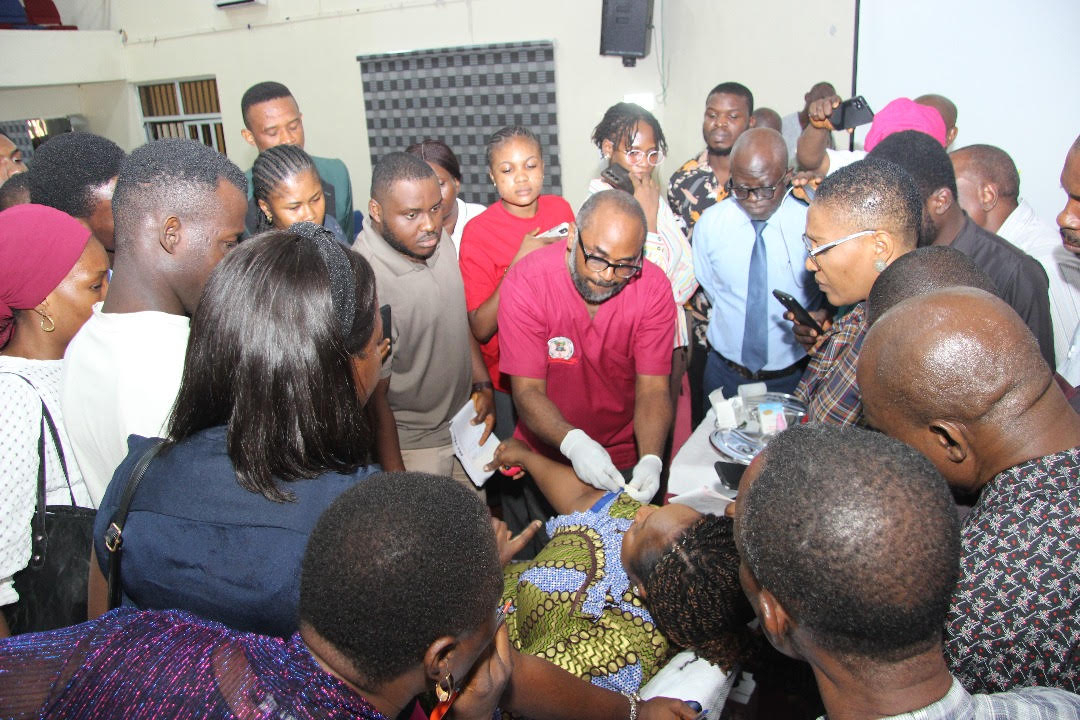
Head of Blood Bank and Component Production, Mrs Rasheedat Mecca, conducted a step-by-step demonstration on safe collection procedures and stressed that improper handling or deviation from SOPs endangers recipients.
Participants described the sessions as eye-opening, with many acknowledging gaps in routine practices and pledging to review internal procedures immediately. The workshop featured practical sessions on tube grouping, cross-matching, skin disinfection and contamination prevention, and concluded with renewed commitments to strengthening quality systems, reducing transfusion errors and ensuring that only safe, contamination-free blood reaches patients in Lagos State.