Follow Us on Google
By Doris Obinna
The Lagos State Government has intensified efforts to achieve universal health coverage through renewed enforcement of compulsory enrolment in the State Social Health Insurance Scheme, Ilera Eko.
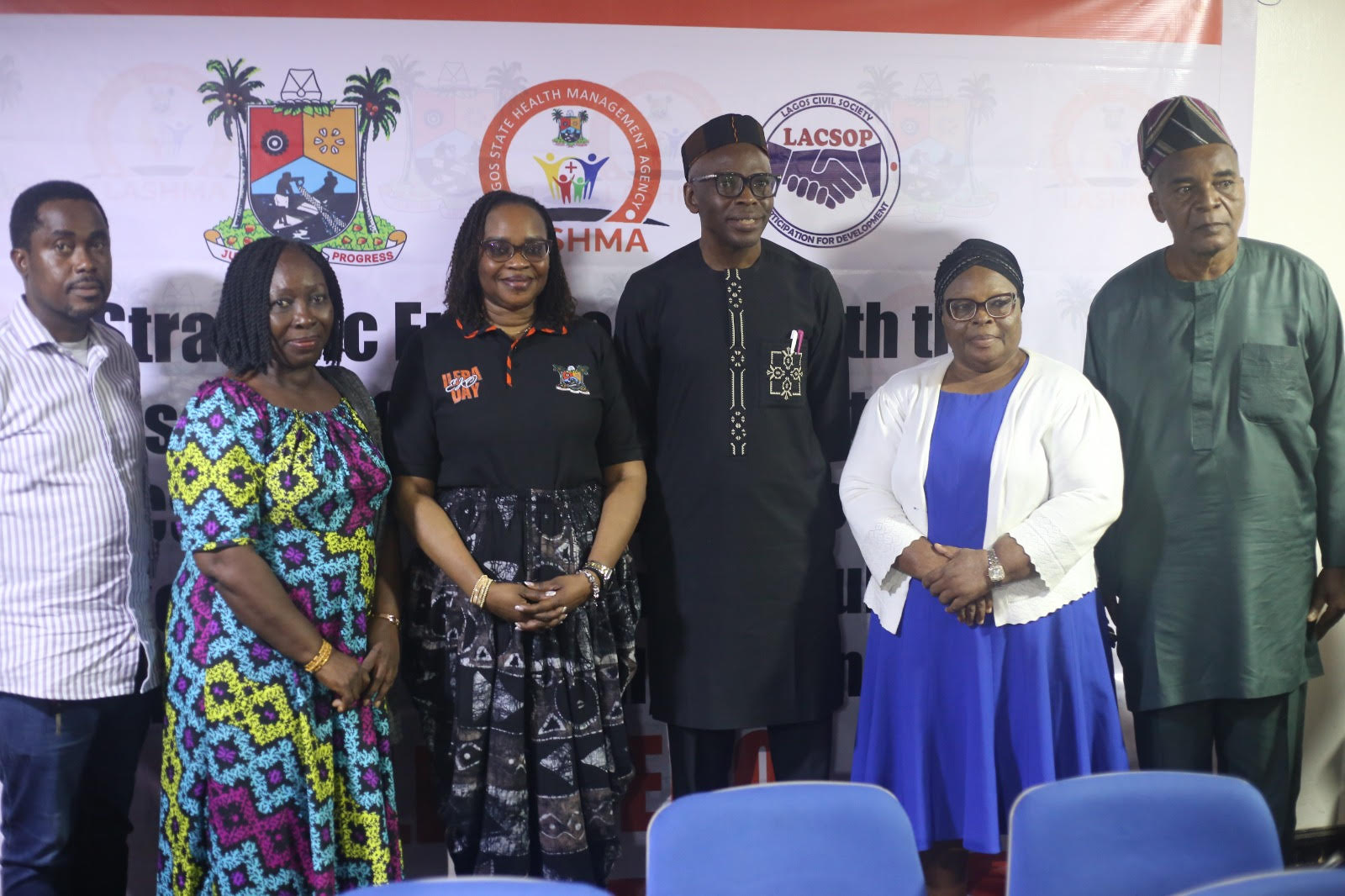
The push was reinforced on Thursday as the Lagos State Health Management Agency (LASHMA) engaged Civil Society Organisations (CSO) under the Lagos State Civil Society Partnership (LACSOP) at the Lagos Chamber of Commerce and Industry, Ikeja, to deepen awareness and strengthen support for the implementation of the Executive Order (EO) mandating social health insurance enrolment across the state.
The engagement brought together health stakeholders, policy advocates, civil society groups, and health insurance experts to promote access to affordable healthcare services and reduce the financial burden of medical expenses on residents.
Speaking, Permanent Secretary, LASHMA, Dr Emmanuella Zamba, described the EO as a major step towards achieving universal health coverage in Lagos State. She said the government remained committed to protecting residents from catastrophic health spending through the expansion of social health insurance coverage.
According to her, Lagos became the first state to begin implementation processes following the domestication of the National Health Insurance (NHI) Act, demonstrating its commitment to building an inclusive and sustainable healthcare system. Zamba explained that the engagement with civil society groups was aimed at educating stakeholders on the importance of mandatory health insurance enrolment and encouraging residents to take advantage of the benefits offered under the Ilera Eko Scheme.
She disclosed that enforcement activities had commenced earlier in the year following the inauguration of an enforcement team, adding that implementation had been structured into three phases to ensure widespread compliance. She said the first phase focused on Ministries, Departments and Agencies (MDAs) through compliance assessments, enrolment of contract staff and public servants, establishment of enrolment desks, and integration of compliance requirements into service delivery procedures.
The second phase, she said, targeted the informal sector through engagements with Local Government Chairmen and grassroots sensitisation campaigns across councils and Local Council Development Areas (LCDAs), aimed at mobilising artisans, market associations, community leaders, and influencers. She added that the third phase would focus on the organised private sector and employers to ensure wider employee enrolment and stronger private sector participation in healthcare financing.
Other News
Zamba described civil society organisations as critical partners in advocacy, awareness creation, and community mobilisation, stressing that health insurance should be seen as a social protection mechanism rather than merely a government programme. She noted that the government was also prioritising vulnerable groups, youths, persons living with disabilities, and survivors of domestic and sexual violence as part of efforts to build an inclusive healthcare system.
Chairman of the Lagos Civil Society Partnership, Barrister Ayo Adebusoye, said improvements recorded in the Lagos health sector over the years were driven by leadership continuity and institutional commitment. He urged residents to make use of official complaint and feedback channels instead of informal platforms, noting that structured reporting systems were essential for accountability and improved healthcare service delivery.
Adebusoye also advocated stronger digital feedback mechanisms and simplified administrative processes, while calling for increased public awareness of the importance of health insurance.
Head of Planning, Monitoring and Evaluation, LASHMA, Adetoro Tayo-Adetoro, revealed during a presentation that Lagos residents spent nearly N163 billion on healthcare in 2021, highlighting the need for stronger financial protection mechanisms. She said the Lagos State Health Scheme Law, enacted in 2015, established LASHMA to reduce healthcare-related financial burdens and improve access to quality healthcare services.
Also speaking, Head of Medical Operations at LASHMA, Dr Olugbenga Fadipe, said the agency operated a technology-driven authorisation process with an average response time of about 45 minutes to prevent treatment errors and inappropriate claims.
Head of Client Services, Mr Lanre Green, highlighted residents’ rights and responsibilities under the scheme, adding that complaints, recommendations, and commendations remained important tools for improving accountability and healthcare service delivery.
The meeting ended with calls for stronger collaboration among government institutions, civil society organisations, and residents to ensure broader enrolment and improved access to healthcare services across Lagos State.