Follow Us on Google
From Adanna Nnamani, Abuja and Henry Uche
For Nigerians who buy health insurance, the promise is golden. When illness strikes, the insurance card should open the door to treatment without the patient having to worry about the size of the hospital bill.
But inside Nigeria’s hospitals and clinics, that promise can sometimes become complicated.
A patient arrives with a valid health insurance plan and is told that a particular drug or test is not covered. Another is asked to pay for treatment that he believes should be covered. In another case, treatment is delayed while the hospital waits for an authorisation code from the Health Maintenance Organisation, HMO.
Sometimes, the disagreement is between the hospital and the HMO.
Sometimes, it is between the patient and the hospital. But whichever way it goes, the patient is often the person caught in the middle.
The problem is not merely anecdotal. Figures from the National Health Insurance Authority, NHIA, show how frequently disputes enter the system.
The authority’s 2024 complaints report released in 2025 showed that it handled 3,507 complaints during the year, with 2,273 lodged against healthcare facilities and 1,232 against HMOs.
Of the total, 2,929 complaints, representing 84 per cent, were resolved.
The complaints against healthcare facilities included unavailability of medicines, denial of services, demands for out-of-pocket payments for covered services and failure to provide payment explanations.
Complaints against HMOs included delays or denial of referral authorisation codes, delays in settling agreed reconciled payments and inadequate monitoring of quality assurance at healthcare facilities.
The NHIA subsequently sanctioned both healthcare facilities and HMOs.
Four healthcare facilities were suspended and six delisted following investigations, while 35 HMOs received warning letters and corrective-action directives. The authority also ordered refunds to affected enrollees.
In all, 54 enrollees received N4.38 million in refunds from 39 healthcare facilities, while 12 HMOs were directed to refund N748,200 to 15 enrollees.
The figures, health experts note, expose an uncomfortable reality that having health insurance does not automatically mean that every encounter with the healthcare system will be smooth.
Rather, health insurance is a relationship involving three major players; patients, healthcare providers and HMOs, with each operating under different responsibilities and expectations.
For the patient, insurance is primarily about access to healthcare and protection from crippling medical bills.
For the hospital, healthcare is also an operation that requires money to pay doctors, nurses and other workers, buy medicines and equipment, maintain facilities and keep the doors open.
For the HMO, the responsibility is to manage healthcare financing within the terms of the patient’s plan and the contracts it has with healthcare providers.
When those interests do not align, disputes emerge over what should be covered, how much should be paid, who should approve a treatment and when a hospital should receive its money.
One of the biggest sources of friction is coverage.
Health insurance packages are not necessarily unlimited. The NHIA says its programmes provide financial access to healthcare, while private plans and other schemes operate according to defined benefits and conditions.
Illuminating grey areas
A patient may reason that because a particular hospital accepts his HMO, every treatment offered by the hospital is automatically covered.
That is not necessarily the case.
An HMO may have a contract with a hospital covering specified services at agreed rates. Some procedures may require prior authorisation, while some drugs, investigations, specialist services or procedures may fall outside a patient’s particular benefit package.
This can produce a frustrating conversation at the point of care.
The patient asks: “But I have insurance.”
The hospital responds: “Your plan does not cover this.”
Or the hospital says: “We need authorisation from your HMO.”
The HMO may then explain that the service is outside the patient’s package or that the hospital has not followed the required procedure.
For the patient, however, the technical distinction may mean little, particularly when the person is sick and needs immediate attention.
According to the immediate past National President of the Healthcare Providers Association of Nigeria (HCPAN), Dr. Adeyeye Jimmy Arigbabuwo, disputes would always arise in businesses where different stakeholders and diverse interests are involved.
According to him, in the healthcare sector, particularly between healthcare providers and Health Maintenance Organisations (HMOs), disputes are bound to occur when rules are not clearly defined, stakeholders are not adequately educated, or the terms and conditions governing their relationships are not properly communicated.
He explained that even when all parties understand the rules, compliance often becomes the major challenge.
“Nobody does health insurance business without service level agreement. This service level agreement shows what benefits package, capitation, fee for service, terms of payment, dispute resolution and how to resolve disagreement, supposed average bill, procedure, claims.
“It also addresses issues when bills are sent, what is supposed to be paid, so when all these are set out from the Service Level Agreement (SLA), all the parties are supposed to comply, but where people break the service level agreement, disputes will come up,” he said.
He added that disputes could arise when the benefits package promised to enrollees does not correspond with what they eventually receive.
He identified other areas of disagreement to include situations where healthcare services are provided but payments are delayed or not made, poor quality of service, long waiting times and cases where enrollees become dissatisfied with the level of care they receive.
He also noted that many enrollees do not fully understand the limitations of their health insurance packages, particularly exclusions and exemptions.
“Most users don’t know that there are exemptions or exclusions to what he or she is expecting. They usually assume with a utopia feeling that everything is covered, as if they have gotten a 100 % scholarship.
“But when every terms and conditions are well communicated even on co-payment, there would be no issues. But there should be a dispute resolution panel of methodology,” he said.
Lucid communication vital
Communication has become one of the critical issues in health insurance.
Patients need to understand what their plans cover before they fall ill. They need to know the hospitals within their network, the services included, the exclusions, the conditions attached to specialist care and when an HMO’s approval is required.
Without that understanding, the first time a patient encounters the limitations of a policy may be at the hospital reception.
And that is often the worst time to discover them.
The NHIA’s complaints figures provide evidence of this disconnect, with some complaints involving demands for out-of-pocket payments for services enrollees believed should have been covered.
Authorisation
For some treatments and procedures, the hospital may be required to obtain approval from the HMO before proceeding.
From the HMO’s perspective, this is a control mechanism. It helps ensure that a proposed treatment falls within the patient’s entitlement and that claims are properly verified.
But for patients, particularly those waiting for treatment, delays can become a source of anxiety.
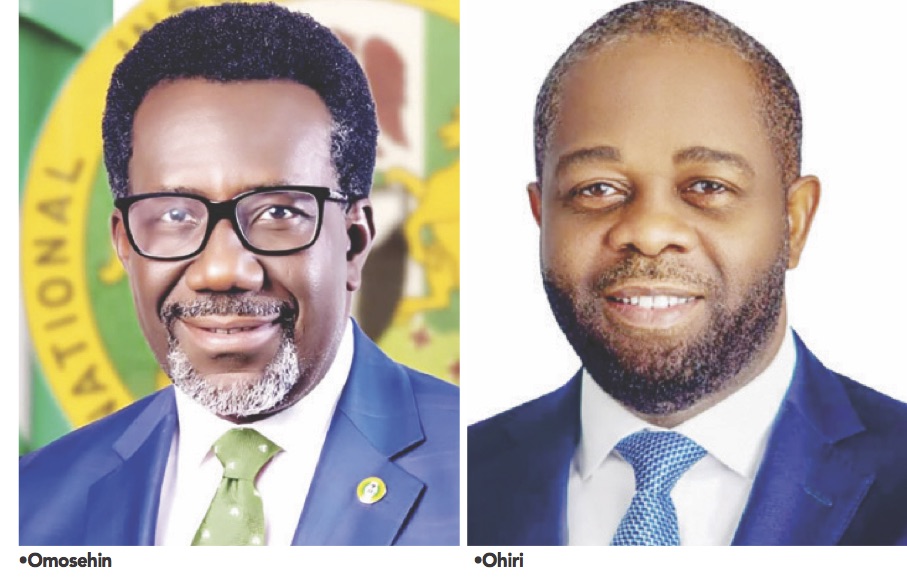
The Director General of the NHIA, Kelechi Ohiri, said his agency recognised this problem in 2025 when it directed HMOs to issue referral authorisation codes within one hour of a request. Healthcare facilities were also instructed to proceed with treatment in emergency situations while awaiting authorisation, subject to the applicable protocol.
The directive followed complaints about delays in obtaining approval.
For a patient waiting for care, even a relatively short delay can feel much longer.
For the hospital, however, providing treatment without clarity over approval and reimbursement can create another problem.
Who will pay?
That question sits at the centre of many health insurance disputes.
Hospitals need timely reimbursement to remain operational. HMOs need to verify claims before payment. Patients need treatment without being dragged into a financial dispute between the provider and the HMO.
NHIA Director-General, Dr Kelechi Ohiri, has stressed the importance of paying healthcare providers whose claims have been properly validated.
At a 2025 NHIA partnership involving healthcare facilities, Ohiri said: “We are insurance. We honour claims that are validated from inception.”
The word “validated” is important.
Health insurance administrators cannot simply approve every bill presented by a hospital without checking it. Claims have to be assessed against the services provided, the patient’s entitlement and the terms agreed with the healthcare provider.
Other News
Such checks are necessary to protect the system from waste, abuse and fraudulent claims.
But the same process can create tension if hospitals believe claims are taking too long to process or if there are disagreements about the services and amounts billed.
For healthcare providers, delayed reimbursement can affect cash flow.
A hospital still has to pay its workers and suppliers regardless of whether an HMO has settled a particular claim.
This is particularly significant at a time when Nigerian hospitals are dealing with rising costs of medicines, equipment, electricity, staffing and other operating expenses.
The pressure has brought the issue of tariffs into sharper focus.
If a hospital believes that the amount agreed with an HMO no longer reflects the cost of providing care, pressure can build between the provider and the HMO.
The HMO, meanwhile, must manage its obligations within the premiums or contributions available to it.
If the cost of healthcare rises faster than insurance funding, the entire system comes under pressure.
The NHIA has responded by reviewing payments to healthcare providers.
In February 2025, the authority announced a 93 per cent increase in capitation compared with December 2023 rates and a 378 per cent increase in fee-for-service payments. The revised rates followed an actuarial review and were intended to address outdated payments and rising medical costs.
The changes matter because the sustainability of health insurance depends partly on whether healthcare providers can continue to deliver quality services at the rates being paid.
But the issue cannot simply be reduced to whether HMOs pay hospitals enough.
The NHIA’s complaints data show that healthcare providers themselves were the subject of more complaints than HMOs in 2024. That is significant.
Public criticism of health insurance often focuses almost entirely on HMOs, with patients accusing them of avoiding claims or making access to treatment difficult.
But the regulator’s figures present a more complicated picture.
Healthcare facilities also have responsibilities.
They are expected to provide services within approved packages, follow agreed procedures and avoid wrongly charging patients for covered services.
HMOs also have obligations
They must provide timely authorisation, process valid claims and maintain appropriate oversight of healthcare providers within their networks.
Patients, too, have responsibilities.
They need to understand their plans, use approved healthcare providers, provide accurate information and ask questions when a service is denied.
At the centre of all these relationships is the NHIA, which was established under the NHIA Act 2022 to regulate, promote and coordinate health insurance and help drive the country towards universal health coverage.
Its complaints and enforcement system is therefore crucial.
When a patient believes an HMO or hospital has violated his rights, there must be a clear route for obtaining redress.
The NHIA’s record shows that complaints can result in refunds, corrective measures and sanctions.
That enforcement is important not simply because individual patients deserve redress, but because confidence is central to the future of health insurance.
Insurance is built on trust.
People make payments today because they expect protection tomorrow.
If an enrollee repeatedly hears stories about rejected services, unexpected hospital bills or delays in receiving care, confidence in the system can suffer.
And without confidence, expanding enrollment becomes more difficult.
Nigeria is nevertheless making progress on coverage.
The NHIA reported in July 2026 that health insurance enrollment had risen to 22.03 million Nigerians, representing 35 per cent year-on-year growth.
The authority said the increase was driven by stronger collaboration with state social health insurance agencies, government ministries, organised labour, employers and the private sector, as well as the gradual implementation of mandatory health insurance provisions.
The figure represents a significant expansion from previous years.
But more people carrying health insurance cards does not automatically mean that Nigeria has solved its healthcare financing problem.
The real test comes when those people become sick.
Can they walk into a hospital and receive the treatment promised under their plan?
Can hospitals obtain timely payment for services they provide?
Can HMOs approve legitimate treatment without unnecessary delays?
Can patients easily find out what their plans cover?
And when a dispute arises, can it be resolved quickly without leaving the patient to bear the cost?
These questions are becoming more important as the Federal Government seeks to bring more Nigerians under health insurance.
In February 2026, Coordinating Minister of Health and Social Welfare, Prof. Muhammad Ali Pate, said the government was targeting about 50 million Nigerians for health insurance coverage by 2030, as part of efforts to reduce the country’s heavy reliance on out-of-pocket healthcare payments.
That ambition will require more than enrollment drives.
It will require a health insurance system in which the patient understands the product, hospitals trust the payment system and HMOs can control costs without creating barriers to legitimate treatment.
The industry does not have to eliminate every dispute. Healthcare is too complex for that.
But disputes should not become a routine part of seeking treatment.
A patient who has paid for health insurance should not have to become an expert in insurance contracts before receiving care.
Hospitals should clearly explain when a treatment falls outside an enrollee’s package rather than leaving the patient to discover the limitation at the point of payment.
HMOs should make their benefit packages understandable, respond promptly to authorisation requests and settle validated claims within agreed timelines.
The regulator, on its part, must continue to enforce the rules fairly, against hospitals and HMOs alike.
The NHIA’s 2024 complaints figures are a warning, but they are also evidence that the system has mechanisms for correction.
The 3,507 complaints, 2,929 resolutions, refunds to affected enrollees and sanctions against non-compliant operators show that the problem is being confronted.
The bigger challenge is preventing disputes before they reach the regulator.
Ultimately, health insurance is not about cards, premiums, contracts or claims forms.
It is about what happens when a human being becomes sick.
For a patient standing at a hospital reception, the difference between an HMO, a healthcare provider and a regulator may be difficult to appreciate.
What matters is whether treatment is available, whether the bill is affordable and whether someone will pay.
That is the promise Nigeria’s health insurance system must deliver if the country is to move from simply expanding coverage to achieving meaningful universal health coverage.
The insurance card must become more than a promise of care.
It must become a reliable shield against the financial shock of illness.