Follow Us on Google

Fresh fire outbreaks in Lagos Island and Abuja have once again raised concerns about building safety, regulatory enforcement, and emergency preparedness across Nigeria’s built environment.
On Christmas Eve, 24 December 2025, a major fire tore through Great Nigeria Insurance House on Martins Street, Lagos Island, engulfing multiple floors of the high-rise commercial building and spreading to adjoining structures. Firefighters battled the inferno for several hours as residents and traders were evacuated, while authorities later confirmed extensive structural damage which prompted Lagos State Governor Babajide Sanwo-Olu to order the demolition of the building.
Barely days earlier, on 20 December 2025, another fire incident was recorded at the Federal Inland Revenue Service (FIRS) office complex at No. 15 Sokode Crescent, in Wuse Zone 5, Abuja, where flames affected offices on an upper floor. Although no casualties were reported, the incident disrupted operations and prompted renewed scrutiny of fire safety systems in public buildings.
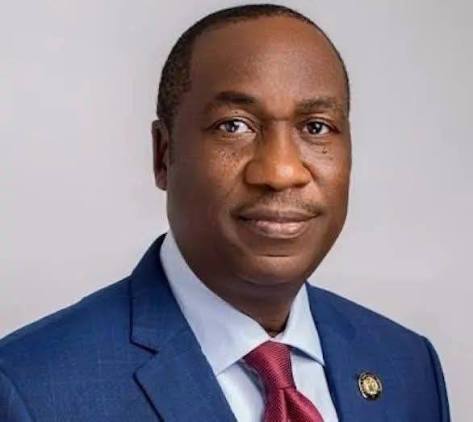
Reacting to the incidents, British-Nigerian built environment expert Abiola Aderibigbe said the recurring pattern of fires and collapses across the country points to deeper structural and regulatory weaknesses rather than isolated accidents.
“These events are not about blame,” Aderibigbe told The Sun. “They are reminders that Nigeria’s buildings are part of a system designed, constructed, operated and maintained over time. If any part of that lifecycle is weak, lives and livelihoods are placed at risk.”
Other News
Aderibigbe, who has led the national advocacy for a Nigerian Construction Act, argued that the country’s fragmented framework, spread across building codes, procurement rules and sector-specific regulations, leaves critical gaps in enforcement, accountability and lifecycle safety.
“Fire safety is not only an emergency-response issue,” he explained. “It begins at the design stage, continues through construction quality, and depends on ongoing inspection, maintenance and clear statutory responsibility. A unified Construction Act would bring these elements into one enforceable framework.”
Nigeria has recorded 679 documented building collapse incidents since the 1970s, alongside numerous fire incidents in commercial and residential buildings nationwide. Analysts say that while existing instruments such as the National Building Code provide guidance, inconsistent adoption and enforcement across states have limited their effectiveness.
Aderibigbe’s proposed Nigerian Construction Act is built around five co-equal pillars (the “Aderibigbe Pillars”): contractor registration and grading, enforceable health and safety standards, governance and anti-corruption safeguards, statutory payment timelines with adjudication, and skills transfer and local content. He believes such a framework would not only reduce safety incidents but also restore public trust and investor confidence in the sector.
Through 2025, Aderibigbe has led a sustained national campaign on building safety that has been covered by The Sun and other national outlets, arguing that Nigerians should not be exposed to preventable risks in the places they live and work, and that a unified Construction Act is the most effective way to restore trust in the built environment.
“Our responsibility is to ensure that the buildings Nigerians live and work in are safe, compliant and worthy of public trust.” Aderibigbe concluded.
As investigations continue into the Lagos and Abuja fires, industry watchers say the incidents may yet serve as another turning point in the growing national conversation on construction reform and public safety.