Follow Us on Google
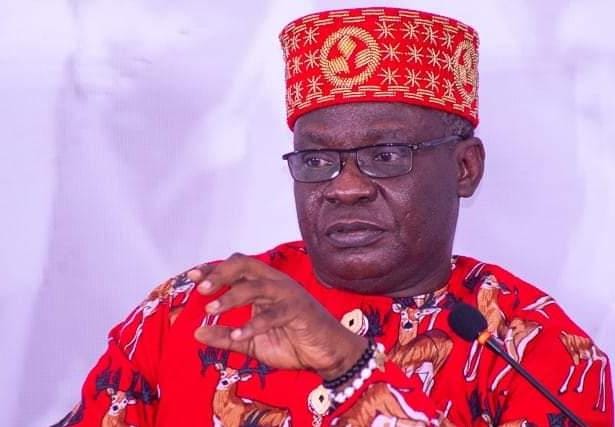
From Okwe Obi, Abuja
The Peering Advocacy and Advancement Centre in Africa (PAACA) has identified the lack of internal democracy of political parties as the cause of electoral malpractice.
PAACA Executive Director, Ezenwa Nwagwu, in a statement yesterday, linked imposition of candidates, absence of genuine contest, and lack of competition within parties, as the bane of electoral progress.
“Ninety percent of the challenges we have in our elections are due to lack of internal democracy – imposition of candidates, absence of genuine contest, and lack of competition within parties,” Nwagwu said.” Nwagwu said.
Ahead of the 2027 general polls, he urged the electorate to pay keen attention to the activities of politicians and political parties.
He spoke against the backdrop of the expected resumption of deliberations by the National Assembly on electoral reforms and possible amendments to the Electoral Act.
He said there was a need for Nigerians to focus on internal democracy of the political parties and how their confidence emerge from the primary elections
“Nigerians underestimate the role political parties play in the outcome of secondary elections. If the primary elections are bad, the outcome will reflect in the main elections.
The PAACA director called on citizens and stakeholders to closely monitor the wave of defections across political parties, and how it will impact on internal crisis within the parties.
He said, “Stakeholders must pay keen attention to what the political parties are doing. We cannot be described as meddlesome interlopers in the affairs of people who recruit leaders for us. The leaders selection process is a sacred assignment that the political parties are involved in.
“They are the ones who present candidates. INEC does not present candidates. Sometimes they even present unqualified candidates, and the matter ends up in court.”
He stressed that reforms must go beyond passing new laws every election season, arguing that politicians must embrace a change in their attitudes towards elections and democracy.
“We may have all the good laws, but at the end of the day, it comes down to the attitude of politicians.
“So, as we go for 2027, the reforms are not just going to be legalistic reforms. We must examine how much we have shifted from our subversive attitude to the laws that exist already. Because even when you make new laws, the politicians who make the laws go back to study how to subvert them,” Nwagwu stated further.
Other News
Nwagwu faulted what he described as the over-concentration on INEC, noting that election administrators often become scapegoats for crises orchestrated by political actors.
“The challenge is that all of us are fixated on the election administrator who job is simply to conduct elections. But politicians sometimes go behind to compromise the administrator and subvert the rules. About 60 per cent of electoral crises are orchestrated by political actors themselves,” he said.
He warned that as 2027 approaches, citizens must remain vigilant and resist attempts by politicians to dominate and divert public discourse.
“We will begin to see the heating up of the polity from February. Politicians have mastered the art of diverting attention from the real issues, and citizens must not allow them to control the narrative,” he cautioned.
Nwagwu predicted that in 2026, Nigerians would see an increase in self-promotion by politicians.
He said, “we will see increase in awards (governor of the years, politicians of the year). We will see increase in self-promotion. As citizens it is our duty to hold them accountable to ask that “how did you improve the lives of Nigerians, in health education and so on.”
He criticised lawmakers who, according to him, return home during holidays to distribute food items without engaging constituents meaningfully.
“Many lawmakers went home to share rice, but none held town hall meetings to explain how they have been representing their people in Abuja,” he said.
On reforms, the PAACA executive director identified result management as a key area requiring urgent attention.
“The real challenge is collation. What we need is a system that allows electronic collation of results from polling units to local governments. IReV is not collation,” he clarified.
He also called for the expansion of Nigeria’s democratic space through reforms such as reserved seats for women, diaspora voting, and early voting.
Nwagwu lamented what he described as the absence of ideological opposition in Nigeria’s political space, noting that the country has “opposition figures, not opposition parties.”
“These figures are largely incoherent in their policy perspectives. Many of them are not new actors, yet there is no imagination or alternative vision on how the economy should be run. What we see repeatedly is the same IMF-driven agenda of privatisation,” he said.
He added that a review of Nigeria’s economic outlook over the last four decades shows little deviation or innovation in policy direction, regardless of which party is in power.