Follow Us on Google
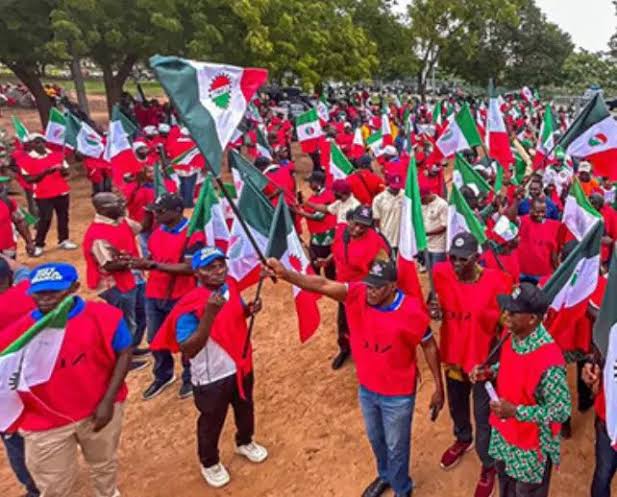
Organised labour has announced plans to formally engage the Federal Government on the review of Nigeria’s national minimum wage, insisting that workers deserve a “genuine living wage” that reflects the country’s current economic realities.
The Nigeria Labour Congress (NLC) and the Trade Union Congress (TUC) said soaring inflation, rising food prices, transportation costs, expensive housing and increasing healthcare expenses have significantly eroded workers’ purchasing power, making the current ₦70,000 minimum wage inadequate.
The labour unions disclosed their position in a joint address delivered at the 114th International Labour Conference in Geneva, Switzerland, where they also rejected any proposal to tax the minimum wage or impose additional fiscal burdens on low-income earners.
The current ₦70,000 minimum wage was signed into law on July 18, 2024, following negotiations between organised labour and the Federal Government. Although the original agreement provided for a three-year review cycle, the government later revised the framework in January 2025, reducing the review period to two years and effectively setting 2026 as the next review date.
Ahead of the July 2026 deadline, labour leaders said they would immediately write to the Federal Government to commence fresh negotiations to avoid the prolonged delays that characterised previous wage reviews.
“The current Act expires early next year, and we have announced that renegotiation will commence by July 2026 to avoid the painful delays of the past. As soon as we leave here, we shall write again to the government demanding the commencement of the process for renegotiating the national minimum wage,” the unions said.
Organised labour argued that the next wage review must go beyond a nominal increase and focus on protecting workers from the devastating effects of inflation and declining real incomes.
“We demand nothing less than a genuine living wage that reflects today’s harsh economic realities. We also demand immediate relief measures by governments at all levels until a new minimum wage is signed into law. We reject outright any attempt to tax the minimum wage or impose further burdens on the poor,” the unions stated.
The labour leaders warned that many Nigerian workers are already struggling under severe economic pressure, noting that official economic indicators do not accurately capture the daily realities faced by ordinary citizens.
They urged federal and state governments to introduce temporary relief measures pending the conclusion of negotiations, warning that further delays could heighten industrial tensions nationwide.
Beyond wage issues, organised labour used the Geneva conference to draw attention to the country’s worsening security challenges, unemployment crisis and rising poverty levels.
The unions lamented that insecurity has made commuting increasingly dangerous for workers, with killings, kidnappings and displacement disrupting livelihoods and economic activities in several parts of the country.
According to them, nearly 2,000 people were killed in the first quarter of the year, while millions of Nigerians have been displaced from their communities.
They cautioned that the deteriorating security situation could eventually force workers to stay away from their workplaces as a matter of survival if urgent action is not taken.
Labour leaders also expressed concern over rising poverty, stating that approximately 65 per cent of Nigerians, representing an estimated 150 million people, are currently living in multidimensional poverty due to inflation, job losses and declining purchasing power.
They argued that while ongoing economic reforms are intended to stabilise the economy, many Nigerians have yet to experience tangible improvements in their living conditions.
As preparations for the 2027 general elections gather momentum, the unions disclosed that they are developing a charter of demands that will guide their engagement with political actors.
According to them, only candidates who demonstrate clear commitments to improved security, quality public services, wage reforms and the protection of labour rights will receive organised labour’s support.
The unions also raised concerns about alleged interference in labour affairs by some state governments, accusing them of undermining democratically elected union leadership structures.
They stressed that organised labour would resist any attempt to weaken its independence or subject workers’ organisations to external control.
The NLC and TUC maintained that securing a living wage that reflects prevailing economic conditions remains their priority, adding that the outcome of the forthcoming negotiations will determine whether Nigerian workers enjoy meaningful economic relief or continue to bear the weight of worsening hardship.