Follow Us on Google

From Jude Chinedu, Enugu
Long before social media turned extraordinary feats into viral sensations, one Nigerian man travelled from school to school, marketplace to marketplace, displaying a kind of physical strength that left audiences amazed. His performances attracted crowds, inspired stories and earned him a nickname that would outlive him.
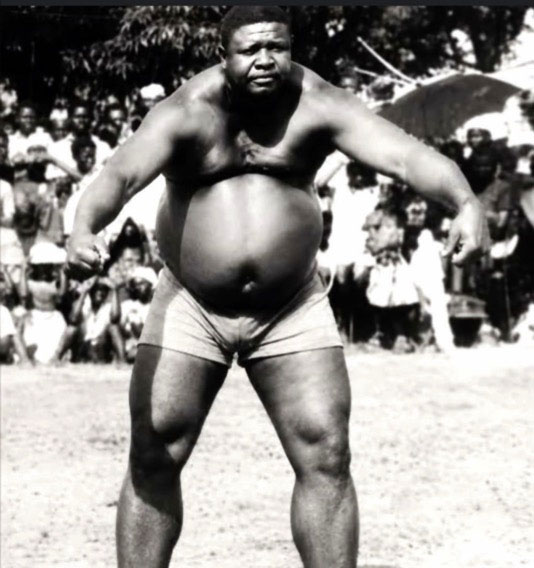
He was Killiwe Nwachukwu, popularly remembered as the Nigerian Superman.
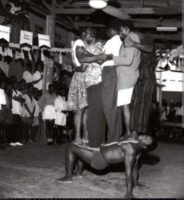
For many Nigerians who grew up in the 1970s, 1980s and early 1990s, the name evokes memories of a strongman who could reportedly pull vehicles with his teeth, lift heavy objects, carry people and perform stunts that appeared to defy the limits of the human body.
Unlike today’s entertainers, who can reach millions through television and social media, Killiwe built his reputation largely through live performances. He appeared before audiences in school compounds, village squares, marketplaces and community gatherings, allowing people to witness his displays of strength at close quarters.
Decades after his death, people who say they watched him perform are still sharing their memories. Their accounts offer a glimpse into the life of a man whose fame rested not only on stories about his strength but also on the experiences of those who gathered to watch him.
One such recollection came from an online contributor identified as Dombroski, who said he watched Killiwe perform at his primary school in 1985.
The contributor remembered a series of extraordinary displays, including pulling a bus with a rope attached to his neck, lifting an engine block with his teeth and allowing a bus to drive over his body. He also recalled Killiwe carrying six teachers from the school with his hands.
The account, posted during an online discussion about the strongman, offered a specific year and setting for the performance.
For a child watching such a display in a school compound, the experience would have been difficult to forget. The sight of a man apparently doing things that seemed impossible was enough to turn an ordinary school day into a spectacle.
Although the feats described in the recollection have not been independently verified, the contributor presented the account as a personal memory of a performance he attended.
Other people have also come forward with recollections of seeing Killiwe during their schooldays, suggesting that visits to educational institutions formed an important part of his career.
Another contributor, identified as Ngene, recalled watching Killiwe perform during his primary school years in the early 1990s.
According to the account, pupils paid a small amount to watch the strongman. The contributor remembered the fee as 50 kobo and suggested that Killiwe appeared older and less powerful than the stories surrounding him had led people to expect.
He recalled that the strongman could carry about 10 blocks, contrasting this with stories about much larger loads attributed to him during his earlier years.
The account offers a different perspective from the dramatic descriptions of Killiwe’s strength. It suggests that, by the early 1990s, some people who saw him were comparing his performances with the almost unbelievable feats that had become part of his reputation.
Another contributor recalled watching Killiwe at St Paul’s Primary School on Douglas Road. He remembered pupils paying 50 kobo to see him, although the exact year of the performance was not stated.
Other contributors similarly recalled paying to watch Killiwe at their schools. One said he remembered the strongman visiting his school when he was in Primary Two, while another described the excitement surrounding the arrival of performers who entertained pupils with displays of physical strength.
These recollections are not a substitute for independently documented records, and the identities of the contributors have not been established. However, their accounts share important details: Killiwe visited schools, pupils paid small sums to watch him, and his performances remained memorable to those who attended.
The memories also suggest that his fame was not confined to one community. His travelling performances took him before different audiences, many of them children who might otherwise have encountered him only through stories told by older people.
Stories about Killiwe’s strength have circulated for decades, with some accounts describing feats that sound almost impossible.
There are also accounts of him carrying bags of cement with his teeth, hammering nails with his bare hands and having heavy objects placed on his body during performances.
One widely repeated story says he could tow a Peugeot 504 with a rope attached to his teeth. Another describes him lying on the ground while a vehicle drove over his body.
Such accounts helped build the image of Killiwe as a man with extraordinary physical abilities. The recollections of those who say they watched him perform provide useful leads for further reporting. Former pupils, teachers and organisers who remember the events could help establish the schools he visited, the dates of his performances and the feats he actually demonstrated.
There are old photographs, newspaper reports and surviving video recordings also bearing the man.
Decades after the performances, people still remember the school compounds, the small admission fees and the spectacle of watching a man whose strength seemed beyond the ordinary.
Killiwe’s real name was Uzoma Nwaozuzu Nwachukwu. He is also referred to in some accounts as Godson Killiwe Nwachukwu.
He is associated with Ogwa in Mbaitolu Local Government Area of Imo State, although some biographical details about his early life remain uncertain. Accounts differ on his year of birth, variously placing it around 1929, 1930 or 1931.
One of the most frequently repeated stories about his life concerns how he acquired the nickname by which he became famous. According to the popular account, Nwachukwu worked as a porter, transporting goods for customers with a wooden, two-wheeled cart. In one version of the story, a customer known as “Tick Man” allegedly refused to pay him for goods he had delivered.
A quarrel reportedly followed. Nwachukwu was said to have confronted the customer and his wife, and the confrontation allegedly became so intense that the woman cried out, “Killi we o!”
The expression is popularly interpreted in the story as a plea meaning, in effect, “Nwachukwu, spare us” or “Nwachukwu, don’t kill us”.
The cry allegedly became associated with him, eventually giving rise to the nickname Killiwe.
The story has been repeated in different accounts of his life. Another source said that he beat up and they followed him about, “you must killi we today.”
Whatever the true origin, the nickname became inseparable from his identity. For many people who remember him, Killiwe was the name they knew, even if they had never heard his full name.
As his reputation grew, stories about Killiwe’s strength also generated speculation about how he acquired and sustained his physical abilities.
Some accounts attribute his feats to natural strength, physical conditioning and a particular diet. Akpụ (fufu), a traditional Igbo food prepared from cassava, and yam are sometimes mentioned in stories about what he ate.
Other versions surround his strength with supernatural explanations, reflecting the tendency to attribute extraordinary physical displays to mysterious powers.
There is, however, no reliable evidence establishing that supernatural forces were responsible for his abilities. Nor is there sufficient documentation to determine precisely how he trained, what he ate or the physical techniques he used during his performances.
His feats, as described by those who remember him, were central to his appeal. But the mystery surrounding them also helped stories about him grow.
Killiwe’s family and private life are less firmly established. Some accounts claim that he had several wives and concubines, including a Spanish woman whom he reportedly met during his travels. The story suggests that the relationship ended after she discovered that he had other wives. It was gathered that he had many children.
What is clearer from the accounts of his career is that Killiwe operated in a period when travelling performers could draw crowds without the support of modern entertainment infrastructure.
His audience came to see him in person. His reputation spread through word of mouth, through people who had watched him perform and through stories passed from one generation to another.
A pupil who saw him in a school compound could return home to tell the family what had happened. A trader who encountered him at a marketplace could recount the experience to customers. Such stories helped create the larger-than-life image that surrounded him.
In this sense, Killiwe’s fame was built through a network of personal encounters and retellings, rather than the instant reach of digital platforms.
Killiwe was widely reported to have died in October 1992, although accounts differ on the precise date and some other details surrounding his death.
One commonly repeated date is October 31, 1992. Some accounts also place his age at death at 61.
Stories about his final illness describe changes in his body, including unusual muscle movements and stiffness. Some versions say he sought traditional treatment before his death, while others claim he died in his sleep.
More than three decades after his reported death, Killiwe Nwachukwu remains a subject of fascination for Nigerians who remember the travelling strongmen of an earlier era.
Killiwe’s name continues to live in the memories of those who saw him lift, pull and carry objects that seemed beyond the strength of an ordinary man. Whether recalled through a childhood visit to a school or retold years later by someone who heard the story from a parent, his legend has proved remarkably durable.