Follow Us on Google
“Promises are like crying babies in a theatre, they should be carried out at once.”
—Norman Vincent Peale
By Cosmas Omegoh
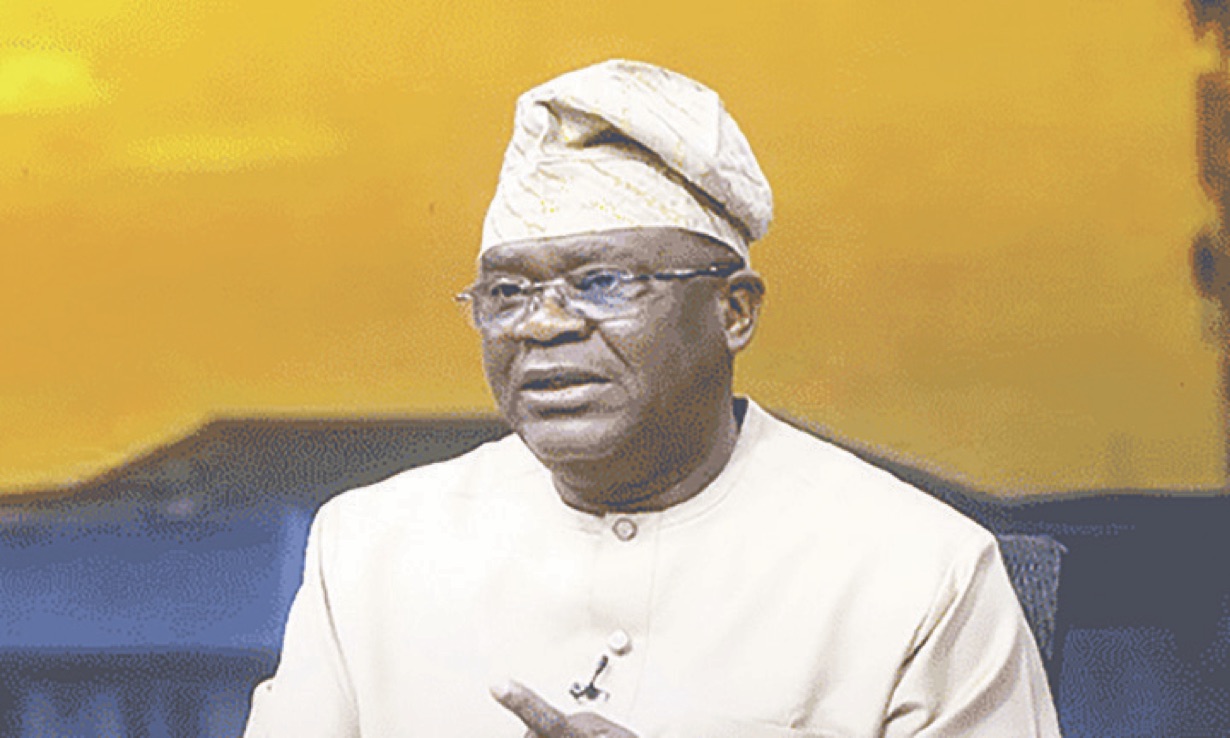
The Managing Director of the Nigerian Railway Corporation (NRC) Kayode Opeifa, is in the spotlight following last Tuesday’s train accident on the Abuja-Kaduna rail corridor.
Concerned Nigerians want to see the safety options under his belt to checkmate the rising train accidents in the country, the latest being the 188th between 2019 and 2025, according to the National Bureau of Statistics.
The NRC announced that its Abuja-Kaduna train dubbed AKTS with no fewer than 618 persons, including passengers and staff on board, derailed at km 49 between Kubwa station and Asham station at 11:09a.m.
Although no fatalities were recorded, six passengers were injured as the coaches fell off the $874m rail lines – the busiest in the country – which was commissioned in 2016.
NRC boss, Opiefa admitted in a television programme that the crash occurred at a “point,” apparently a rail junction where trains change directions, noting that investigations would focus on that axis.
He hinted that train services would be off the table for more than 30 days until reconstruction work is done.
“The first thing that will happen is that the Nigerian Safety Investigation Bureau (NSIB) will determine when the site is open for reconstruction. So, from the time they tell us that it’s ready for reconstruction, I don’t see us spending more than 30 days. So it depends on when they declare the site open for reconstruction.”
More importantly, Opeifa took full responsibility for the accident – and everyone is commending him for that act which is rare in Nigeria – promising that investigation would be thorough and transparent.
He said: “Beyond apologising to Nigerians, I want to state clearly – as the Managing Director and Chief Executive – I take full responsibility.
“When it comes to safety, there is no room for indifference. Once something like this happens, the chief executive must own it – and I do,” he said.
Opeifa also promised to follow up with the remaining 618 people on the train because of the post-traumatic experience they might have had, and one hopes his words don’t return to him void.
And very importantly, Opeifa emphasised that the Asham accident would not happen again.
“I want to assure Nigerians that an incident like this is not expected, is not prayed for, should not be happening,” adding, “But where it does, it is to bring out the best in us.”
Perhaps, part of his strategies to stave off a re-occurrence of what the nation experienced last Tuesday is to beef up security on the tracks.
“This particular track is being monitored by the military,” he said. “You can see that immediately it happened, within five, 10 minutes, the helicopter was there hovering.”
But a little before last week’s train derailment, NRC had reportedly confirmed that its Kaduna bound train experienced what it called a “hot axle” – understood to be a fault – near Rigasa Station in Kaduna. That in itself was said to have disrupted train services, leaving hints that a lot might not be right with those lines after all.
Now, the issue of vandalism and terrorism and their impact on that facility come to focus.
Other News
Everyone still recalls the March 2022 disaster during which terrorists brutally attacked and derailed an Abuja–Kaduna train, killing nine passengers before whisking dozens into the wild. The outrage that trailed that debacle still scandalises the nation till date.
Then in October 2023, there was a reported minor train derailment close to the same Asham Railway Station which left passengers stranded for hours before the problem was fixed.
And in May 2024, another derailment was said to have occurred close to Jere Station. It also disrupted train services.
In June 2024, another Abuja–Kaduna passenger train derailed, forcing three coaches to tumble.
This foregoing catalogue of accidents highlights a drop in passengers’ confidence, as some of them are said to be re-embracing the road transport alternative.
In all, safety concerns on account of vandalism and terrorism, state and fate of the rail lines, negligence and sustainability of the rail industry are mounting.
Former Vice President, Atiku Abubakar, last week for instance was among Nigerians who expressed worry over the AKTS.
In a release, Atiku said: “I am deeply concerned about the derailment of the Abuja-Kaduna train on Tuesday, which resulted in injuries to at least 14 passengers.
“It is a relief that there were no fatalities, but this incident underscores the urgent need for action.
“I demand an immediate and thorough investigation by the Nigerian Safety Investigation Bureau (NSIB) and the Nigerian Railway Corporation (NRC). We need transparent updates and a commitment to strengthening safety protocols that will restore public confidence in our rail infrastructure system.”
Now, calls for urgent action on the AKTS stick out for Opeifa to deal with.
This comes on the heels of NRC’s reported admission that track vandalism is one of its greatest headaches, headlining that with statistics that between 2022 and 2023 alone, more than 150,000 rail clips were stolen nationwide by vandals who resell them for profit. That alone is grave danger for the rail transport system.
In apparent response to this threat, it would be recalled, in August 2022, the Federal Executive Council approved over N1 billion to mount security, particularly on the Abuja–Kaduna rail axis.
Probably that huge sum ended up as “money for the boys,” as failure to sustain the deal would have left the rail lines still largely in the hands of felons.
In the thinking of those conversant with railways, the growing vandalism of the rail tracks in Nigeria is a sad commentary on who Nigerians generally are, given that in many other climes, rail lines are secured; no one dares to go there, let alone have access to them.
At some point, the issue of cattle crossing the tracks, getting killed and derailing the trains was in focus, allegedly prompting the NRC to embark on advocacy visits to the herders and even paying compensation for cows killed. The idea was to dissuade them from vandalising the tracks and bringing the trains to harm’s way.
But even when these concerns are out there, Opeifa’s insistence that “our tracks are safe from vandals and terrorists,” is troubling. He maintains that “the military, air force, police, civil defence, vigilantes and community security are all involved in protecting that (Abuja-Kaduna) corridor.”
In the light of that denial, perhaps Opeifa is admitting that other allegations of negligence, and rot in the agency are true. Or what accounts for growing derailment being experienced?
In addition to other ideas he has up his sleeves, he needs to heed calls to commit to technology – especially the deployment of drones in safeguarding the rail lines. Perhaps, a visit to other climes to see how their railways operate accident-free for years might be a good idea.
But what about the quality of staff in the NRC’s books, some people are asking. How trained are they to manage safety? How much are they motivated to conduct regular inspections and respond to wobbling tracks which passengers complain about?
In all, what must be emphasised to Opeifa now is that it isn’t enough to admit responsibility. His words that similar rail accidents in the country “should not be happening,” must never return to him void. Indeed, every Nigerian life matters!