Follow Us on Google
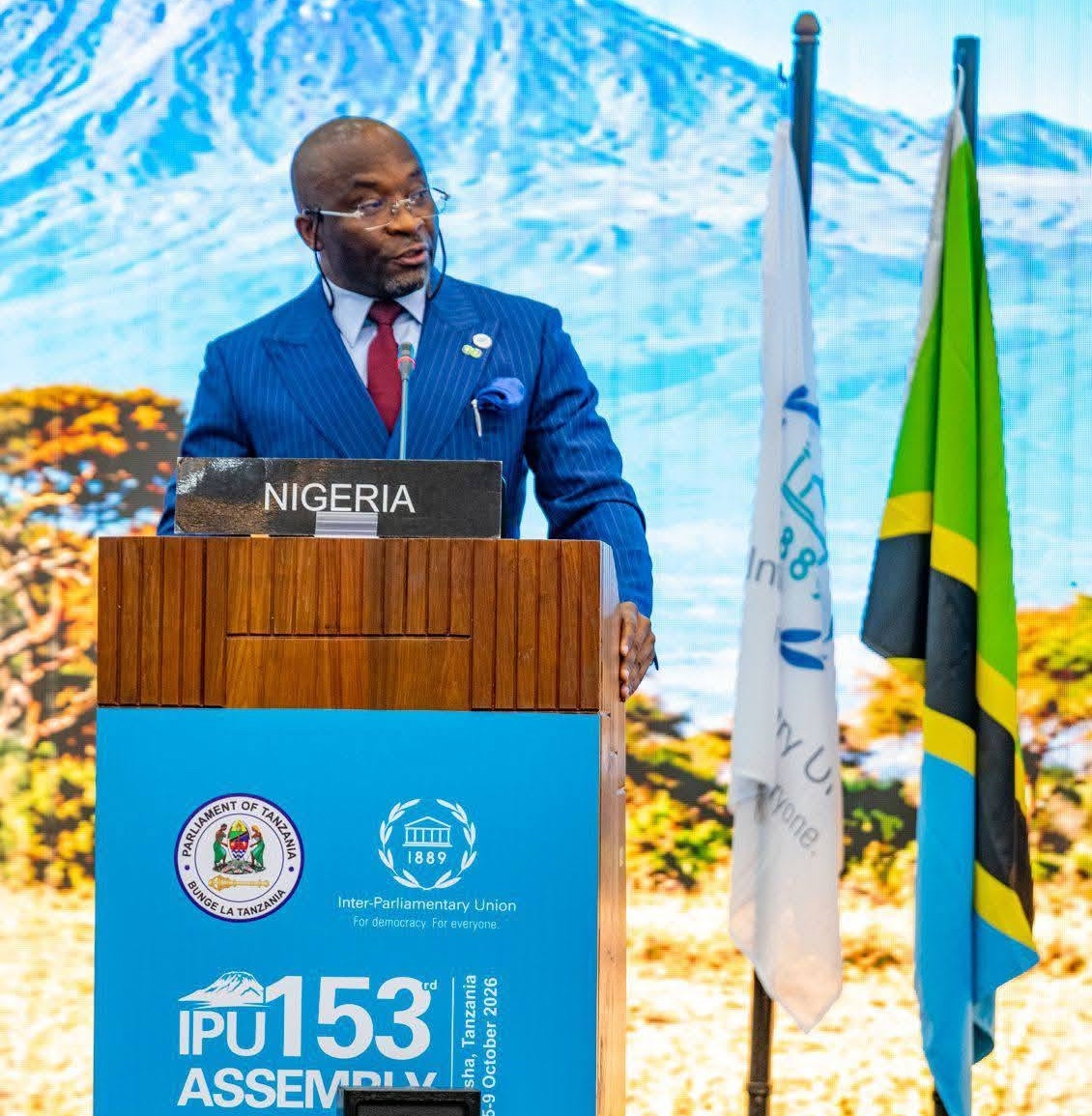
The Deputy Speaker of the House of Representatives, Benjamin Kalu, has proposed structured legislative interventions across the globe as an urgent parliamentary action to address climate-related disasters and strengthen resilience in vulnerable regions.
Kalu, according to a statement by his Chief Press Secretary, Levinus Nwabughiogu, made the proposal during a debate on “Urgent Parliamentary Action to Address Climate-related Disasters and Strengthen Resilience” at the ongoing 153rd Assembly of the Inter-Parliamentary Union (IPU) in Arusha, Tanzania on Thursday.
The Deputy Speaker, who noted that the debate must move beyond pledges to practical, bankable legislative actions that deliver for people and economies, stated that the structured global legislative intervention should however be built on two pillars of an investor-ready pipeline of priority projects across clean energy, transport, agriculture, resilient infrastructure and circular economy and a project-preparation and transaction-support platform that helps move viable projects from concept to bankability, financing and implementation.
According to him, “Across the globe farmers are confronting irregular rainfall and declining yields; coastal communities are facing erosion and rising waters; businesses are losing productive hours to unreliable energy; and cities are struggling with flooding that overwhelms drainage systems and infrastructure.
“Our people are already living with the consequences of extreme weather, flooding, land degradation, food insecurity and climate-related displacement. Climate finance must therefore support both emissions reduction and human resilience.
Other News
“As legislators we should understand that legislation must not remain a statement of intent. It must become an instrument of delivery. Lawmakers are not just observers of the climate crisis, but as architects of the legal certainty and public accountability required for a resilient, competitive and sustainable economy.
“Today, I propose that this debate should not end as another important conversation. It should become the beginning of a structured legislative intervention across the globe. First, it should support the development of an investor-ready pipeline of priority projects across clean energy, transport, agriculture, resilient infrastructure and the circular economy.
“Second, it should establish a project-preparation and transaction-support platform that helps move viable projects from concept to bankability, financing and implementation. This is how ambition becomes action. This is how policy becomes finance. And this is how finance becomes infrastructure, jobs, resilience and shared prosperity.”
He added that “for Nigeria, climate action is not an abstract environmental aspiration, but about whether a farmer can harvest despite changing rainfall patterns; whether a family can access affordable and reliable electricity; whether a young person can find dignified work in a modern economy; whether our cities can withstand floods; and whether Africa’s largest economy can industrialise without reproducing the environmental vulnerabilities of the past.”