Follow Us on Google

By Eberekpe Ogho
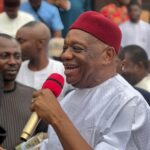
He was a governor, now in his country’s Senate and, like all men, he has aspirations. For the person without aspirations in whatever feild should be questioned.
But before all these, he has been a success, a property of himself, a property to which he alone has the absolute right.
But politics? Why not politics, as in any human endeavour, especially in Nigeria, where political thoughts, deeds and statements have their different and many shifts, which at times give goose pimples to many?
Nevertheless, one cannot run away from it; by choice or not, by reason or by deduction, we are all members of this phenomenon, whether we like it or not, by being absentees or participants.
Who then should be addressed or qualified to be addressed as a politician? All of us. Oh, I detest politics because it is dirty, because it is a game only for those who have enough riches to throw around to buy influence or it is fetish…whatever the complaints are, especially coming from this part, we are all participants, directly or indirectly.
Political scientists would go on to tell us and present a case for the definition of politics, but not for the thinkers, politics is nothing but a concept where man tries to understand and make a meal of it for that meal to go round to meet both the supply and demand of society and its entourage.
As long as it concerns the social framework of society, it is society itself, which must involve all.
Politics is everything conceptualized in society for its goodness and betterment; it concerns the state, a resolution of conflicts non-violently, it is conflict itself, the exercise of power, social and public activities and it is a concept that relies on the interpretation of who has it and in what direction it wants to be taken, among others.
Arendt argues: “Politics does not have an ‘essence,’ it does not have an intrinsic nature, or an indispensable element according to which we can definitively, and in all circumstances, identify something as political. Thus, there are no quintessentially political acts, subjects or places. Politics, rather, is the world that emerges between us – the world that emerges through our interactions with each other, or through the ways that our individual actions and perspectives are aggregated into collectivities.”
This means we all are into it, knowingly or unknowingly. Yet, we complain and nag when a person gets himself involved in what is naturally a normal thing to do by running to the mill to try to squeeze water out of that individual.
“Every man has a property in his own person. This nobody has a right to, but himself” (John Locke).
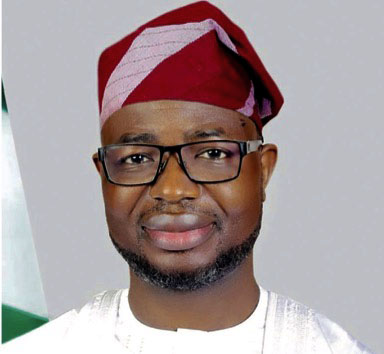
Sen. Orji Uzor Kalu is a property onto himself and he only has right to that property just as any other Nigerian, willing or not, to exercise that right. And Kalu, over the years, has continued to exercise that right at the failings of many whose only participation is in a vacuum subject to sit on the fence and nag and complain while the rot rises still, non-stop to the skies.
On April 21, Kalu would be 62, which means, according to the recent definition by the United Nations, he is still considered young and active, as a youth, and he can actively be so engaged in both public and societal affairs, unlike some Methuselahs who would never grow old.
Kalu has been so accused and called unprintable names, which are quite understandable, as they mirror the conflicting side of politics, depending on where and who is viewing it.
In Nigeria, political conflicts come in all and different forms and shades, and one of such forms was aptly captured by Edmund Burke: “No power so effectually robs the mind of all its powers of acting and reasoning as fear.”
Fear. The only one reason why there are conflicts in our individualities and collectivities, fear it is that would make gods become immortal while mortals are made immortals.
Fear it is that makes the public and social activities of all and many narrowed down only to a few and to a group, while the rest of us who are indirect and illusive participants in all of these activities can only wink.
However, “Nobody made a greater mistake than he who did nothing because he could do only a little.” Edmund Burke, once again.
And if that little is only to complain, grudge and moan, then, we have died before our funerals.
But many would ask, ‘Why would he continue to be in politics and what does he want?’ Rather, the question should be, instead, ‘Why are we here?’ ‘Why are we members of society and that society itself?’ And, ‘Why should or must we deprive ourselves from the public and social activities of society and, by extension, the state, for the simple reason that we are carried away by the false concept that we have it all or have nothing at all or that we are struggling, therefore, do not fit in or measure up to the classification of the concept of politics?’
Kalu, like every one of us, is a free property and he and he alone has the right to that property and the decision to navigate that property, while we must understand the conflict inherent in the concept without definition only to find meaning to suit our greed and selfishness.
That Irish-born British statesman, economist, philosopher and a wonderful and outstanding thinker, Edmund Burke said: “When bad men combine, the good must associate; else they will fall one by one, an unpitied sacrifice in a contemptible struggle.”
Who are the bad men and who are the good ones? They do not exist, instead, what exits and has existed since Burke thought out that great idea on how to better societies are the conflicts of evil against good, which in most cases in the area of politics remains unseen yet the damage it brings with it and does is always tsunamic.
And to stop this seemingly unseen conflicts, Governor Chukwuma Soludo of Anambra State would make Burke’s thought plain and simple: “No group has ever succeeded in any struggle in history by turning the sword against themselves.”
Nigeria is a country and a people of conflicts, unseen at some point, until their manifestations start raring up their heads, and to deal with such conflicts, it would require another conflict parallel to the existing conflicts to deal with them…the conflict of successes against the conflict of failures.