Follow Us on Google
By Noah Ebije, Kaduna
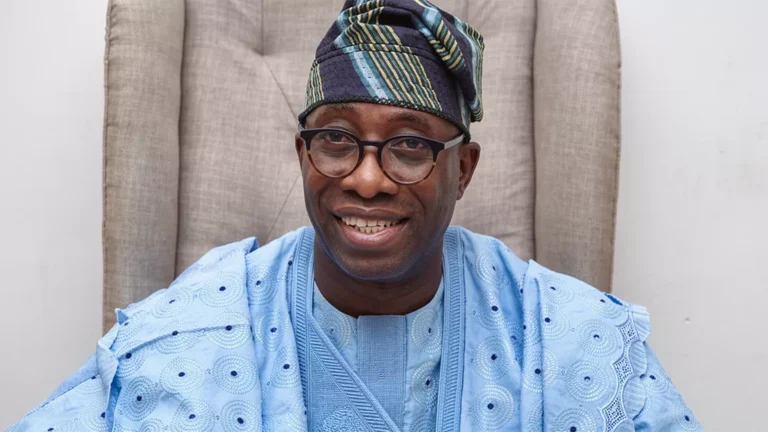
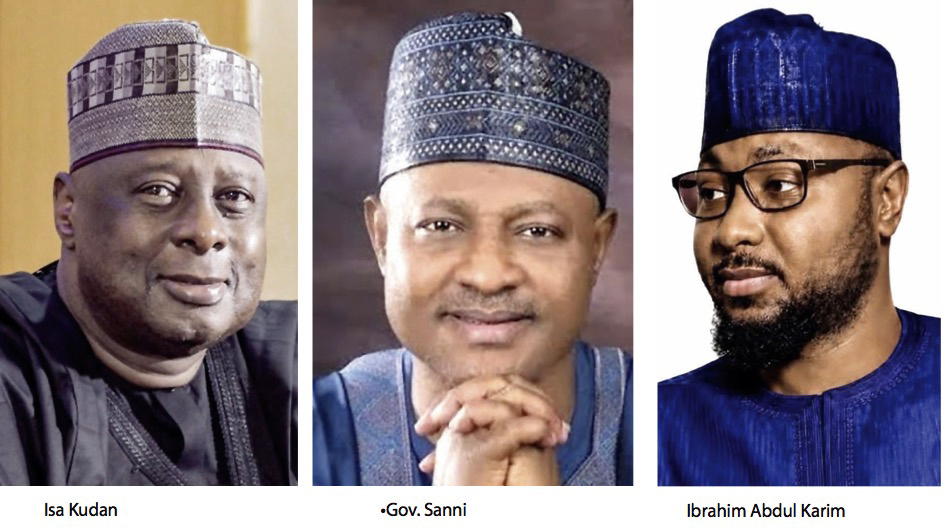
As political activities gradually gather momentum ahead the 2027 general elections, Kaduna State is already emerging as one of the major battlegrounds that could test the strength of the ruling All Progressives Congress (APC), the opposition African Democratic Congress (ADC) and the popularity of Governor Uba Sani, and the ADC candidate, Isa Ashiru.
Governor Uba Sani has officially emerged as the consensus flag bearer for the APC in Kaduna’s 2027 governorship election.
During the APC primaries, he was overwhelmingly affirmed by delegates as the sole aspirant, garnering 459,393 votes.
Governor Sani has vowed to keep his administration inclusive, emphasizing that Kaduna State’s diversity is a strength and rejecting any attempts to divide the electorate along religious or ethnic lines.
After ADC primaries, Ashiru had expressed gratitude to all members of the party for their support during the party’s Primaries, where he scored and won with 86,113 votes
He commended the leadership of the party for allowing true democratic process to take place before and during the primaries across the 255 electoral wards in the state.
Although the election is still months away, emerging political alignments, the growing influence of opposition forces, and the lingering divisions within the APC have combined to create a political atmosphere that may not guarantee an easy ride for the incumbent governor.
Among the factors that political observers believe could pose serious challenges to Governor Uba Sani’s re-election ambition are the political resurgence of Isa Ashiru, now associated with the African Democratic Congress (ADC), and the growing influence of politicians believed to be loyal to former Governor Nasir Ahmad El-Rufai.
For many analysts, the Kaduna governorship contest in 2027 may not merely be a battle between political parties. Rather, it could become a contest between competing political structures, personal loyalties, and unresolved political grievances dating back to the 2023 elections.
Few politicians in Kaduna State have demonstrated the resilience and consistency that Isa Ashiru has shown in recent electoral contests.
Ashiru remains one of the most recognisable opposition figures in the state. His political strength became particularly evident during the 2023 governorship election when he contested against APC candidate Uba Sani under the platform of the Peoples Democratic Party (PDP).
Although the Independent National Electoral Commission (INEC) declared Uba Sani winner of the election, many opposition supporters maintained that Ashiru performed strongly across several parts of the state and came close to upsetting the APC political machine.
The post-election legal battle further reinforced Ashiru’s profile as a formidable challenger.
The governorship election eventually became the subject of litigation that proceeded from the Election Petition Tribunal to the Court of Appeal before Uba Sani’s victory was finally affirmed by the appellate court.
The Appeal Court held that Ashiru and the PDP failed to sufficiently establish their allegations and consequently upheld Uba Sani’s election.
However, the legal outcome did little to erase the perception among many opposition supporters that the contest was one of the closest governorship elections in Kaduna’s recent history.
Political observers argue that the goodwill Ashiru generated in 2023 has not completely disappeared. Instead, it may have remained dormant and could be reactivated if he emerges as a major opposition candidate in 2027.
Unlike many politicians who disappear after electoral defeat, Ashiru has maintained political relevance. His ability to command support across parts of Southern Kaduna, sections of Kaduna Central and some urban voting blocs continues to make him a significant political factor.
Should he successfully consolidate opposition votes under a united platform, he could become the biggest electoral threat facing Governor Uba Sani.
The shadow of the 2023 governorship election continues to hover over Kaduna politics.
The election exposed deep political divisions and revealed that APC’s dominance in Kaduna could no longer be taken for granted.
Despite APC retaining power, the margin of victory was not overwhelming enough to completely discourage the opposition.
Indeed, many analysts believe the 2023 outcome created a perception that APC could be defeated if opposition parties succeed in building a broad coalition.
This perception alone is capable of energising opposition supporters and attracting politicians who may be searching for an alternative platform ahead of 2027.
For Ashiru, the narrative that he came close to victory remains politically useful. Whether accurate or not, it provides a mobilisation tool that could strengthen his appeal among voters who believe the state needs political change.
Beyond Ashiru, perhaps the most significant political challenge confronting Governor Uba Sani lies within the APC itself.
Former Governor Nasir El-Rufai remains one of the most influential political figures in Kaduna State despite leaving office.
For eight years, El-Rufai built an extensive political network that penetrated virtually every local government area in the state. Many elected officials, party leaders and grassroots mobilisers owe their political rise to his influence.
Although Uba Sani was widely seen as El-Rufai’s preferred successor in 2023, political relations between both camps have reportedly deteriorated over time.
This development has fuelled speculation that politicians loyal to El-Rufai may not fully support Uba Sani’s second-term ambition.
The situation becomes even more significant when viewed against the growing national political realignments involving the former governor.
Other News
Political strategists believe that if El-Rufai’s supporters decide to actively work against Uba Sani, the governor may face resistance from within constituencies that were once regarded as APC strongholds.
Particular attention has also focused on the political activities of Bello El-Rufai, who currently represents Kaduna North Federal Constituency in the House of Representatives.
As the son of the former governor, Bello commands visibility among younger political actors and enjoys access to parts of the political structure associated with his father’s administration.
While there is no official indication that Bello El-Rufai is opposed to Governor Uba Sani’s re-election, political observers argue that any perceived divergence between both camps could create complications for APC’s electoral calculations.
In politics, perception often matters as much as reality.
Should influential politicians aligned with the El-Rufai political family decide to support alternative political arrangements, APC may find itself fighting both external opposition and internal rebellion.
Such a scenario could fragment the party’s support base and weaken its electoral machinery.
Historically, governors seeking re-election often face stronger opposition from disgruntled party members than from external rivals. Kaduna may not be different.
There are indications that some political actors who felt marginalised after the transition from El-Rufai’s administration to Uba Sani’s government may seek political revenge through alternative alliances.
If these forces eventually align with opposition candidates, they could significantly alter the political equation.
Political analysts note that elections are rarely won by popularity alone.
Organisational strength, grassroots mobilisation and voter turnout remain critical factors.Any erosion of APC’s internal cohesion could therefore have serious electoral consequences.
Ironically, while Isa Ashiru’s association with ADC could strengthen the opposition’s profile, recent legal developments may create fresh uncertainties for the party.
A Federal High Court recently ordered the deregistration of ADC and several other political parties on grounds relating to constitutional electoral performance requirements. The party has rejected the judgment and indicated its intention to challenge the ruling through the appellate process.
If the judgment is eventually upheld, it could substantially weaken the opposition’s organisational preparations ahead of 2027.
Political parties serve as vehicles through which candidates mobilise supporters, raise funds and contest elections. Any uncertainty surrounding a party’s legal status can disrupt strategic planning and weaken momentum.
For Ashiru and other opposition figures, the litigation may therefore become an additional hurdle.
The possibility of prolonged legal battles could distract party leaders and create confusion among supporters regarding the platform under which they would eventually contest.
Despite these challenges, Governor Uba Sani enters the race with significant advantages.
As the incumbent governor, he controls the instruments of governance and enjoys the visibility that comes with public office.
Incumbency remains one of the strongest advantages in Nigerian politics.
The governor also benefits from APC’s established political structure, federal connections and extensive grassroots presence across Kaduna State.
Furthermore, if the ADC’s legal troubles persist, opposition efforts to build a credible alternative platform may suffer setbacks.
Many voters traditionally prefer stable and familiar political parties when uncertainty surrounds opposition platforms.
This reality could ultimately work in APC’s favour.
As Kaduna moves closer to another governorship election cycle, three major questions are likely to shape political calculations.
First, can Isa Ashiru convert the goodwill and sympathy generated from the 2023 contest into a winning coalition?
Second, will politicians associated with Nasir El-Rufai and his son remain within APC’s fold or chart an independent political course?
Third, will the legal uncertainties surrounding ADC weaken the opposition’s capacity to challenge the ruling party?
The answers to these questions may ultimately determine whether Governor Uba Sani secures a second term with relative ease or faces the toughest electoral battle of his political career.
For now, the governor remains the favourite. Yet, in a state where political loyalties can shift rapidly and alliances can change overnight, the road to Sir Kashim Ibrahim House in 2027 is unlikely to be without obstacles.