Follow Us on Google
By Jonathan Adaokugar
The introduction of the Kaduna Peace Model under Governor Uba Sani’s administration marked a turning point for Kaduna State in a region long plagued by insecurity. Since its implementation, incidents of banditry, kidnapping, and herders-farmers clashes have virtually disappeared, transforming Kaduna from a hotspot of violence into a beacon of stability in Nigeria’s North-West. This homegrown strategy, emphasizing inclusiveness, proactive engagement, intelligence-driven operations, and community ownership, has not only restored peace but also revitalized the state’s social and economic fabric. Governor Sani’s leadership has subsequently earned widespread acclaim, signaling a new era where dialogue triumphs over discord.
President Bola Tinubu has been very emphatic in his praise for the model’s success. During a visit to Kaduna in June 2025, he commended Governor Sani, stating, “I thank the Governor for leading the peace efforts. Peace is the hallmark of development. I am proud to say that Kaduna is rising again.” In another instance, President Tinubu highlighted how Governor Uba Sani has fostered peace and inclusiveness in a state once defined by deep ethnic and religious divisions, describing Kaduna as “now a model of unity.” These endorsements from the nation’s highest office underscore the model’s effectiveness and its alignment with national goals under the Renewed Hope Agenda.
Internationally, the United Kingdom’s Foreign, Commonwealth & Development Office (FCDO) reviewed and upgraded Kaduna’s security rating in September 2025, shifting it from ‘Red’ – advising against all travel due to high risks of banditry and insurgent attacks – to ‘Amber,’ which permits travel with caution. This change reflects sustained improvements in security, allowing British citizens to visit freely and signaling confidence in the state’s stability to global investors and tourists.
The gains from the Kaduna Peace Model extend far beyond security metrics, fueling a boom in commercial activities and economic resurgence. With zero violent conflicts recorded since 2023, over 300,000 out-of-school children have returned to classrooms, supported by a 40% reduction in tuition fees at state-owned tertiary institutions. Agriculture, a cornerstone of Kaduna’s economy, has seen unprecedented productivity. Farmers in areas like Birnin Gwari and Giwa, previously abandoned due to fear, are now back on their lands, harvesting crops without interruption. Cattle trading has revived dramatically, with 20 to 30 trucks plying routes that were sealed off for years. Markets such as Kara Livestock Market in Birnin Gwari and Kidandan in Giwa, shuttered for over a decade, have reopened, buzzing with traders selling grains, vegetables, and livestock. This revival has attracted $503 million in investments, positioning Kaduna as Nigeria’s agricultural and agribusiness hub.
Job creation initiatives, including skills programs for youth and enterprise financing for MSMEs, have reduced unemployment and social vulnerability, fostering inclusive development. These outcomes demonstrate how peace acts as a catalyst for prosperity, with enhanced infrastructure projects – like new roads and healthcare centers – further stimulating growth and social cohesion.
Yet, this remarkable progress has unsettled certain quarters. As Governor Sani’s political profile soared, fueled by these achievements, “conflict merchants and political opportunists” as he aptly described them during his visit to the affected area on Wednesday, grew increasingly jittery. Their vested interests in perpetuating division and instability clashed with the model’s unifying force. Fearing an irreversible downhill trajectory for their careers, they orchestrated a desperate bid to undermine the administration. Like a bolt from the blue, kidnappers last Sunday struck in Kurmin Wali, Kajuru Local Government Area (LGA), a predominantly Christian enclave chosen deliberately for maximum divisive impact.
The abduction, which occurred unexpectedly in a state enjoying relative calm, was initially met with skepticism and doubt across Kaduna. Reports trickled in, but many dismissed them as rumors, given the model’s track record. However, Governor Sani acted swiftly, convening an emergency State Security Council meeting for thorough deliberation and investigation. And upon confirming the incident’s veracity, he wasted no time in addressing it head-on.
Other News
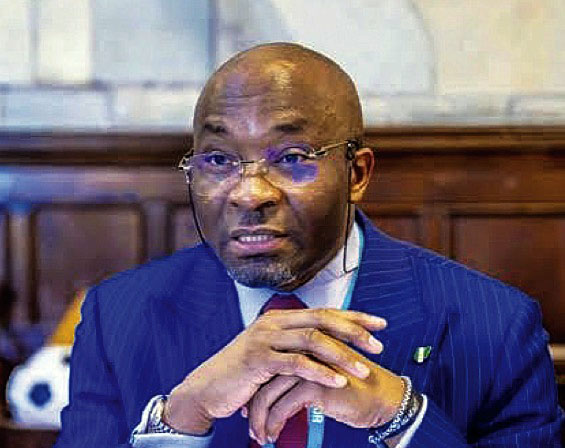
By Wednesday, January 21, 2026, the Governor was on the ground in Kurmin Wali, demonstrating his unyielding sense of responsibility. As detailed in his post, he visited “to properly identify and be in tune with the community, to listen with empathy, and to reaffirm that the Government of Kaduna State is resolute in its determination to secure the safe and dignified return of all those taken from their homes.” He received a comprehensive briefing from the traditional ruler, His Highness, the Agwam Kufana, Mr. Dauda Titus, alongside community representatives. Addressing the large gathering of residents, who assembled not just to welcome him but to share their collective grief, fear, and hope, Governor Uba Sani assured them of full medical care and continued support from the state government to injured victims.
In line with his constitutional duty, Governor Sani formally briefed President Bola Ahmed Tinubu, the National Security Adviser, Mallam Nuhu Ribadu, and the Minister of Defence General Christopher Musa (Rtd). He received firm assurances that all necessary measures were being deployed for the victims’ release and advocated for a permanent military base in Kurmin Wali to bolster long-term security. He used the opportunity to caution “conflict merchants and political opportunists to desist from exploiting the suffering of our people. Such actions undermine unity, weaken trust, and embolden criminality.” Importantly, he thanked the residents for their resilience, restraint, and confidence in the government, reaffirming that “Kaduna State remains one indivisible family, united beyond ethnic or religious lines.”
This incident, while tragic, does not signify a failure of the Kaduna Peace Model. Far from it – it exposes a politically motivated sabotage engineered by those whose relevance depends on chaos. These opportunists, facing a spiraling loss of influence amid the model’s successes, resorted to orchestrating violence to smear Governor Uba Sani’s high-flying administration and erode public trust. The targeted choice of Kajuru, a Christian-majority area, was calculated to reignite dormant ethnic and religious tensions, harking back to the painful divisions of the past that the model has diligently dismantled.
But as Governor Uba Sani noted in his January 19, 2026, Security Council meeting post, the model has produced “tangible and reassuring outcomes, strengthening stability and public confidence,” and is “increasingly being studied and adapted by other states.” The abduction is an anomaly, a desperate ploy by adversaries on an irreversible downhill path, not a systemic breakdown.
Now is not the time for Kaduna people to apportion blame or succumb to finger-pointing. Instead, it is a moment to stand united, recognizing the common enemies who seek to reinvent the already dismantled Muslim-Christian dichotomy and Kaduna North-South geopolitical divides for selfish, parochial ends. These forces thrive on fragmentation, exploiting suffering to cling to power. By rallying together, Kaduna residents can thwart such machinations, preserving the hard-won peace that has enabled schools to reopen, farms to flourish, and communities to heal. As Governor Uba Sani emphasized in his Security Council reflection, “Kaduna State has made an irreversible choice: unity over division, dialogue over discord, and development over exclusion. We will not return to the painful divisions of the past.”
The Kaduna Peace Model remains the unequivocal path forward. Grounded in inclusiveness and community ownership, it integrates security with development, as evidenced by ongoing infrastructure projects and economic initiatives set for 2026. Governor Uba Sani’s appreciation for President Tinubu’s steadfast support, alongside commendations for security agencies and traditional leaders, highlights the collaborative spirit driving this success. Other states are already eyeing its adaptation, proving its scalability. In the face of sabotage, Kaduna must double down on this model, ensuring every citizen can live, work, and thrive in safety. Unity, empathy, and resolve will prevail, turning this calculated plot into yet another testament to the model’s resilience.
• Adaokugar, a peace and conflict resolution expert, writes from Abuja, FCT