Follow Us on Google
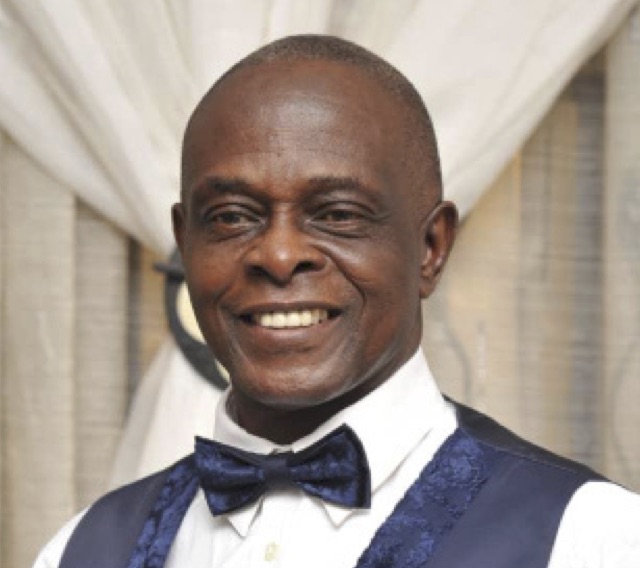
Retired Maj. Gen. Rogers Ibe Nicholas is the former commander of Operation Safe Haven in Jos, which is now Operation Enduring Peace. He was equally the former commander of Operation Lafiya Dole in the North-East. In this interview with JUDE OWUAMANAN, he spoke about the crises on the Plateau and other issues of interest.
You have just submitted a report of a Herculean task that was given to you by the state government, which is to investigate the crises on the Plateau; in summary, what were the basic findings of your committee?
Well, to be very sincere, you know that this committee was set up by the state government. And the findings and the recommendations are still secret documents, which have been handed over to the state government. So, it’s not yet in public domain and it will not be fair for me to start revealing the findings and recommendations until after the government must have issued a white paper on it, then it can be made public. But for now, it’s a state government paper, so it’s a domiciled with them.
You were once the commander of the Special Task Force (Operation Safe Haven), now Operation Enduring Peace, and have been involved in peace-keeping efforts on the Plateau, what are those things you found now that you could have done when you were in charge?
When I was in charge, the situation was slightly different from now. For now, I think what can be done now is to improve the level of intelligence gathering and then maintain effective surveillance across the bordering areas between Plateau, Nasarawa, Taraba, and Bauchi states so that if you can maintain a good surveillance around those areas, you can be able to checkmate the incursion of people into those communities. And then also, we’ve been talking to the state government, right from when I was a STF commander to see how they can review the criminal justice administration of the state. It’s very, very weak. A situation where somebody is arrested with a weapon, an AK-47 rifle, for instance and you charge him to court. And then the court will grant him a fine of less than 10,000 naira or two years’ imprisonment. So, the man will quickly pay the 10,000 and get away. The next day, you see him in the street and start threatening the people who gave us information and things like that. So, there’s a need for the state to sit down and look at those laws. The state assembly can do better to review those laws. They have to strengthen it and give it a strong bite. When somebody is convicted and given a stronger term, it will set a good example.
Why did you think that the governor chose you, a former commander of OPSH and Operation Lafiya Dole, to do this work?
You see, I respect His Excellency. He needed to get people from outside Plateau State who don’t have any sentiment or any affiliation to what is happening, to give him the correct report of the situation. And what he did was to go outside Plateau State. And I got nine of us, myself, as the chairman. I have a justice from Kaduna State. We have another retired Director- General of the DSS, deputy Director- General of the DSS from Kaduna State. We have another director of the DSS from Katsina State. We have another barrister from Katsina State. We have a journalist from, I think, Ogun State or Osun State. These are members of the committee. And then there’s somebody from the NGO who is from Benue State. So, the only person that is from Plateau State is the secretary. And the reason is for him to help us have access to documents and things like that. So, the governor made a very wise decision to select these people with proven integrity to help him come up with unbiased report devoid of any ethnic sentiment and that’s how I expect other state governors that have these kinds of challenges to also do. It will go a long way to help people in telling you the truth, the blunt truth.
Since 1994, these crises have been raging and have increased in intensity and dimension. In your findings, who were the triggers of these crises?
You know, like I told you, the findings are still government property. But having said that, we all know, of course, anybody in Plateau knows that there are certain elements that are fermenting trouble in Plateau. We know the issue of cattle rustling. We all know the issue of farm destruction. We all know the issue of land grabbing. We all know the issue of illegal mining and so forth. We all know these. So, they are just there, out there for people to know these are the problems. And then this issue of lack of tolerance, you know, lack of also respect for the traditional institutions, indigenous traditional institutions. It’s part of the report, but we all know that this is there. The incursion of people into Plateau because of the good vegetation and terrain; we know the problems. Everybody knows what is happening in Plateau. People don’t want to come out and say, look, these are the problems. Well, the findings, like I said, the recommendations are still coming. When it’s made public, people will see the recommendations and the findings we have made.
We read some snippets when you were handing over the report to the government. Some of the aspects said you identified influx of aliens from some neighbouring states. These aliens, where are they from?
Well, you know, I also went to gather information based on what we are told by the various communities we visited. We are told that some of the people that came in came from Chad, Egypt, completely different from our local Fulanis here. You know, by their tradition and custom, because of the way they moved, they sound very aggressive. That’s what we are told. We were told they crossed through the desert and come and pass through six states to get to Plateau and beyond. You understand? So, and some of them also are people that have been displaced by anti-banditry, anti-kidnapping operations in other states, like Katsina, Zamfara. We also find those taking refuge in the Plateau, Nasarawa, Taraba areas. So, these are just some of the causes of the crises
Having identified these areas, who are the people inhabiting these areas because there was a report that said that you identified that most of these are people are Fulani.
I think people need to be corrected based on the statement that Fulani are the one causing problem. The report did not say that. While we are clear, everybody, all the ethnic groups in Plateau are one way or the other involved in a crisis in the Plateau. All the ethnic groups. But I know in some places, certain fingers have been pointed to a particular ethnic group. But in our report, we never said Fulani. We made it clear that all the ethnic groups have an issue to do with the crises in the Plateau. So, it doesn’t domicile with any particular tribe, so to say because there are Fulani who are indigenes of Plateau State somehow, go to Wase local government area of Plateau State, where they have commissioners, permanent secretaries in the government from Wase, who are also Fulani by tribe. So, you cannot deny that they are not from Plateau State.
By next year, soldiers would have been on the Plateau for 25 years on peace-keeping operations. I remember that the first commander was Brigadier Ben Akpunonu, if I am correct, and since then we have been having commanders, soldiers coming and going. Why haven’t the soldiers been able to nip this problem in the bud?
You know, most of these problems that happen in Nigeria, in terms of insecurity, sincerely speaking, are generated by politicians; a political problem requires a political solution. So, the soldiers have limitation to what they can do. The best they can do is using kinetic efforts you know but there’s more of non-kinetic effort to be played by the civil components; having good governance for instance, you know having inclusive participation, listening to people’s complaints, taking decisive actions, developing political will to take certain actions. But what happens is that in Nigeria, everything is turned to the military and security agencies to do. But how do you have to do such things because some of them are crises that emanate from political discussions across, that requires political solution. Not military or kinetic effort to solve them. These are two solutions. So, our political leaders have a lot to do. You know, when you go about preaching that you are a Christian, you are a Muslim, what are you talking about? You are indigenous, you are non-indigenous, what are you talking about? You understand what I’m talking about? If you go to a country like Rwanda, everybody sees themselves as a Rwandese. These are people that had genocide in their country. Millions of people were killed. And the government come over and say, ‘look, the issue of ethnicity, tribalism has to go. The issue of religion has to go. Everybody in Rwanda is a Rwandese. There is nothing like Hutu or Tutsi.’ If you go and ask them now, where are you from? They say, no, I’m a Rwandese. I’m not a Hutu; I’m not a Tutsi. We don’t have anything like that. So, we should develop such in our own country. We have to see ourselves as Nigerians. I’m not Igbo, I’m not Hausa, I’m not Fulani. I’m not Yoruba, I’m not Berom. But I’m a Nigerian. When you come to Plateau, you say, no, I’m from Plateau State. You know, until you develop that concept of understanding yourself and believing in yourself, then, you cannot really play it out very well.
Other News
In the kinetic approach in your operations, one of the major problems is that the soldiers were not given direct orders to shoot or to use maximum force to quench some of these crises. If the soldiers are not given such directives and a soldier sees somebody, for instance, shooting, is it not normally right for that soldier to neutralise that person so that he doesn’t cause more harm?
Do you believe that? Do you believe that kind of statement? That soldiers were told not to shoot? The mandate of every command or every mission, for instance, Enduring Peace, is simple to bring peace, protect lives and property. The CDS has always said it, that if you see anybody with arms trying to shoot, bring them down. There’s no military commander or GOC that will come and start telling every soldier, you must kill this person or don’t kill this person, No! As a soldier, you are supposed to know your responsibilities. You are given a task. When you are given a task, you execute the task. How many people would the GOC go down and start talking to? Or your commander will see you going down to start telling you to do this? Once instructions are given, if you are going for a clearance operation, from the name, it’s clearance operation. What are they supposed to do? You are not going there to romance anybody. So, this story is spread around that nobody gives them orders. Who will give you orders? Before you go out for any operation, orders are given to you. What you are supposed to do is clearly spelt out to you. Your directives have been spelt out to you by your higher commander. So, you ought to know what you are supposed to do. So, when you get there, nobody is supposed to tell you what to do.
I’ve had instances where it was reported that a governor or security chief gave a shoot-aside order and that generated a lot of problems. So, if such order could generate a problem, don’t do think that, it would be a deterrence to a soldier to be more careful?
No, Like I said, the rules of engagement are clear. For instance, when you are dealing with maybe a communal crisis where people are rioting, you won’t go there and kill everybody. The police are supposed to lead. When it’s more than the police, the military takes over. And when the military takes over, it tells you that the mission has taken another further step. It becomes more dangerous for whoever is trying to do whatever he’s doing there. You understand? That’s how it’s done. So, if it gets to a level where life and properties are no longer guaranteed, and you get shoot-at-sight orders. You know, in certain situations, there will be shoot-at-sight instructions. You cannot sit down and allow people to come and kill the whole community. You see them, they are armed. So, if somebody tries to disarm, what do you do to him? If he doesn’t disarm, you disarm him. By any means you can. So that’s how it’s supposed to be.
There have been various reports of commissions of inquiries on plateau crisis. We have the Niki Tobi, Justice Fibresima, Ajiboye, and all that. Were you able to distil from some of these reports and to what extent did these reports guide you in arriving at some of your conclusions?
Yes, I read through all the reports. The government white paper, particularly. I read all of them. But the successive governments that have set up those committees did not implement the recommendations of those committees. So, it means the problems have continued to pile and pile and pile until now. So, it’s good that His Excellency, Governor Mutfwang, has taken a step to put this committee together. So let us see how far he can go in implementing the recommendations. Although he told me and the committee and the general public that he is going to work on the recommendations made to him.
One community leader in Plateau had said that there are three types of soldiers in this operation. There are those who are neutral, those who are Christians taking side with Christians, and those who are Muslims taking side with Muslims. In your findings, did you in any way find the soldiers culpable in any way?
The soldiers are Nigerians, quite all right, and they have their own gaps. It’s not that they are taking sides, per se. You know, when soldiers are deployed and certain instruments that should help them carry out operations are not adequately given to them, then you see issues happening, and then you can now see that they don’t have enough logistics to deal with the situation, and then people now say they are taking sides. If soldiers are deployed and maybe their vehicles break down, and looking at the terrain, the topography of the Plateau is difficult. In some locations, for you to get a distance of maybe three or five kilometres, it takes more than four or five hours, because of the rugged nature of the terrain. So, it is wrong to say that soldiers are taking sides. Well, if any soldier is taking sides, and is identified, and investigation is carried out, the military has a way of dealing with those soldiers. You know, there are a lot of court-martials that happen in the front line. Even here, there have been court-martials organised by 3 Div. And if you are caught doing such a thing, you will be dealt with by the court-martial.
There has also been clamour that the army should go and allow the police to handle the situation. Since for the past 25 years they’ve been here, they’ve not been able to do anything. And some of this is related to what police can solve. Do you think that police can solve this problem?
Well, it is very unfortunate that some people are talking about the army leaving and police taking over. If the police were effective right from the beginning, the military wouldn’t have been involved. I’m not saying that the police cannot do it, but how trained and how equipped are the police? The job that the military cannot do, they expect police to do it. What is the level of respect Nigerians have for the police? And you can see, without mincing words, you know how corrupt our police can be. I’m sorry to say. The corruption cut across all services, but that of police is visible. You arrest somebody, you take him to the police, the next day, he’s released. Those are systemic problems. The police can do very well if the police is well-equipped and well-trained to undertake such tasks. But for now, the Nigerian police, we all know, they are not trained, they are not equipped, and not prepared to do these things we are seeing. Because if they are, they should have been doing it.
So, if the police can do the job, why are they not properly trained and properly maintained?
Well, those are government policies. You know, there are many politicians that have not been in government before, but I tell you that the government has to rethink positively on how to reorganise the Nigerian police in terms of training, of equipping them, in terms of making Nigerians believe in Nigerian police. These same policemen in Nigeria, if you see them in U.N. operations, you’ll be surprised. We get positive reports about Nigerian police, but the Nigerian system just destroyed everything. So, you don’t blame the police. It’s a systemic problem. It’s a national issue.
Do you think that there will come a day when they will say the soldiers are no longer on the Plateau?
Why not? You see, this is what I’m talking about. It’s all about leadership, political will. Everything has to do with political will. From the presidency to the local government and for us Nigerians to decide that, look, enough is enough. What is happening can be handled. We’ve seen countries that have done better than what we’re doing. So, this can be handled properly. I’m telling you the truth. We need to sit down and look at ourselves and say, look, what are the problems? Let’s take decisions, critical decisions, to deal with certain things and put them in a positive perspective without playing politics with it. But here in Nigeria, we play politics with everything and it’s not fair.