Follow Us on Google
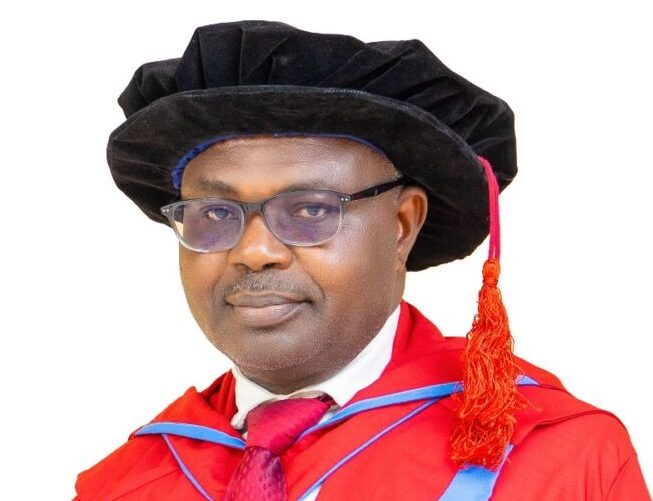
Lagos State University (LASU) lecturer, Prof. Sylvester Odion Akhaine, has challenged Rotarians and other public-spirited Nigerians to venture into politics and help enthrone good governance, warning that philanthropy, no matter how extensive, cannot substitute for an effective and responsible state.
Akhaine said Nigeria’s mounting social and economic challenges require more than charitable interventions, arguing that only government possesses the resources, authority and institutional capacity to tackle poverty, insecurity and deficiencies in education, healthcare and other basic services on the scale required.
The Professor of Political Science made the call while delivering a lecture, “Rotary, Community Transformation and Good Governance,” at the investiture of Sir Philip Ebosele as the 42nd President of the Rotary Club of Agbara, District 9111, in Agbara, Ogun State.
He said the commitment of Rotarians to humanitarian service and the organisation’s philosophy of “Service Above Self” should encourage its members to take their values beyond philanthropy into the political arena.
“Implicit in the motto is that Rotarians are men and women of goodwill and should be encouraged to venture into the state sphere, in other words, join politics to help change society through governance,” Akhaine said.
According to him, humanitarian organisations such as Rotary have made significant contributions to improving lives across the world, but the enormity of society’s problems means such interventions can only complement, rather than replace, the responsibilities of government.
Akhaine said the situation was particularly troubling in Nigeria, where citizens increasingly provide for themselves services that ordinarily fall within the responsibilities of government.
He noted that Nigerians build their own houses, provide electricity and water for themselves, pay heavily for education and transportation and, in some cases, make private arrangements for their security.
“We live in a country where the welfare of the citizens does not matter to those running the affairs of the country,” he said, adding that the situation makes the demand for good governance increasingly urgent.
The political scientist, however, cautioned against expecting Rotary and other non-state actors to solve problems created by failures in governance.
He acknowledged Rotary International’s interventions in healthcare, education, water and sanitation, disease prevention and community development across the world, including Nigeria.
Akhaine cited Rotary’s involvement in polio eradication and immunisation, maternal and child healthcare, Water, Sanitation and Hygiene projects, educational support and provision of medical equipment.
At the local level, he noted that the Rotary Club of Agbara has undertaken humanitarian projects, including construction and rehabilitation of classrooms, educational support and the construction of a lodge for National Youth Service Corps members.
Other News
The club has a record of interventions in education, water and healthcare in Agbara and neighbouring communities, while a Corps members’ lodge was previously constructed as part of its community service activities.
Akhaine nevertheless maintained that the scale of poverty and underdevelopment makes reliance on philanthropy inadequate.
“Philanthropic organisations, a bracket that Rotary belongs to, may try; they cannot muster state-capacity leverage to solve social problems,” he said.
He argued that despite the weaknesses of the state in Africa, including corruption and poor management of resources, government remains the institution capable of mobilising resources on the scale required to provide social welfare and drive development.
According to him, the solution is therefore not to abandon the state but to make it work through good governance.
Akhaine defined good governance as a system founded on democratic principles, rule of law, an independent judiciary, accountability and respect for citizens’ rights, including freedom of expression, association and movement.
He said such a system must regard the people as the central purpose of development and deploy public resources in their interest.
The don also lamented the paradox of widespread poverty in Africa despite the continent’s enormous natural resources, blaming part of the crisis on mismanagement and embezzlement by state actors.
He maintained that governments must return to their responsibility of improving citizens’ welfare through adequate investment in education, healthcare, pensions, support for vulnerable people and other essential social services.
Akhaine said Rotary’s humanitarian activities demonstrate what committed citizens can accomplish, but stressed that lasting transformation would require translating the same spirit of service into governance.
His lecture formed part of the investiture of Ebosele as the Rotary Club of Agbara’s 42nd president on September 5. The investiture had earlier been announced as marking a new leadership chapter for the District 9111 club, with emphasis on service, continuity and sustainable community impact.
This angle gives the story a national relevance beyond the Rotary ceremony: philanthropy cannot replace government, and service-minded Nigerians should enter politics.