Follow Us on Google
From Mohammed Abubakar, Dutse
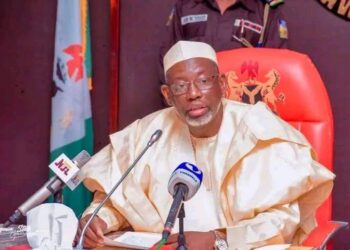
The Jigawa State Government has approved about N3.45 billion for road, drainage, education and human capital development projects across the state, as Governor Umar Namadi moved to strengthen administration at the grassroots, warning local government chairmen against absenteeism.
The approvals were made at the state Executive Council’s weekly meeting presided over by Namadi, while the governor separately expressed displeasure over the absence of council chairmen and senior officials from their offices during surprise visits to six local government secretariats.
Commissioner for Information, Sagir Musa Ahmed, disclosed the council approvals while briefing journalists on Tuesday.
The council approved N1.096 billion for the construction of access road culverts and drainage infrastructure along the Sansani–Ganau–Samai Road in Miga Local Government Area and the Limintani–Kagadama Road in Babura Local Government Area.
Ahmed said N346.99 million was approved for the Sansani–Ganau–Samai project, with a completion period of 16 weeks, while N748.73 million was approved for the Limintani–Kagadama project.
He said the projects were designed to mitigate flooding, improve drainage and rainwater evacuation, protect roads and properties and enhance connectivity and mobility in the benefiting communities.
The council also approved N891.66 million for tuition and other academic and welfare expenses for 193 Jigawa students studying Medical and Applied Medical Sciences at Near East University, Cyprus, for the 2026/2027 academic session.
According to Ahmed, the approval covered tuition, administrative fees, Value Added Tax, accommodation, living allowances, resident permits and health insurance.
He said 99 of the 193 students had completed their mandatory 500-level courses and commenced internship, while another 55 were expected to complete their outstanding courses before commencing internship.
The council also commended Abu-Ubaida Abubakar, a Jigawa indigene who recorded the highest Cumulative Grade Point Average in the Civil Engineering Department since the establishment of the university.
Ahmed said the continued sponsorship of students in medical and applied medical sciences was part of the administration’s human capital development programme aimed at strengthening the state’s healthcare workforce.
The council further approved N1.056 billion to settle outstanding 2026 national examination registration charges for 40,210 students across the state.
The commissioner said the amount would cover registration fees for 32,663 students writing the National Examinations Council (NECO) examinations, 685 students under the National Business and Technical Examinations Board (NABTEB), and 6,862 students sitting for examinations conducted by the National Board for Arabic and Islamic Studies (NBAIS).
He said the intervention was aimed at ensuring that no eligible student was denied the opportunity to sit for national examinations because of inability to pay registration fees.
Other News
The council also approved N405.16 million for the renovation of dilapidated classroom blocks across the state under the 2026 Capital Development Programme.
Ahmed said the intervention would rehabilitate deteriorating classrooms and provide safer and more conducive learning environments for pupils and students.
While the state government announced the development projects, Namadi expressed concern over what he described as unnecessary absenteeism by local government chairmen, warning that councils could not be administered remotely.
The governor spoke after carrying out surprise visits to the secretariats of Kiyawa, Jahun, Miga, Kafin Hausa, Auyo and Hadejia local government areas, where he said he found the chairmen and senior council officials absent.
He also expressed dismay over the poor sanitary condition of some of the council secretariats visited.
Namadi said local government chairmen were elected to serve the people and must remain physically present in their respective councils to discharge their responsibilities.
“Local government councils are the closest government to the grassroots. The chairmen must remain on ground and listen to the demands of the people for necessary action. From there, we expect to know challenges that are beyond the councils’ capacity,” he said.
“So, if chairmen are always absent, how can they discharge the responsibilities placed on their shoulders by the teeming electorates? We will not tolerate this undemocratic behaviour and will take necessary action to tackle it.”
The governor said he would summon all the council chairmen for a meeting and issue a firm directive against unnecessary travel outside their local government areas.
He described the chairmen as the drivers of council administration, stressing that effective governance could not be achieved when those responsible for running the councils were routinely absent.
The governor’s latest warning followed a similar surprise inspection of the state secretariat in Dutse about two weeks ago, when he reportedly found many senior government officials absent from their offices.
Namadi had also warned the 27 local government chairmen against absenteeism during their swearing-in in 2025, directing them not to administer their councils from outside their secretariats.
He said the government would take necessary action against any chairman who continued to disregard the directive.
The governor’s position comes as the administration steps up spending on infrastructure, education and human capital development, with the latest Executive Council approvals targeting roads, flood control, examination access and the rehabilitation of schools across the state.