Follow Us on Google
By Seyi Babalola
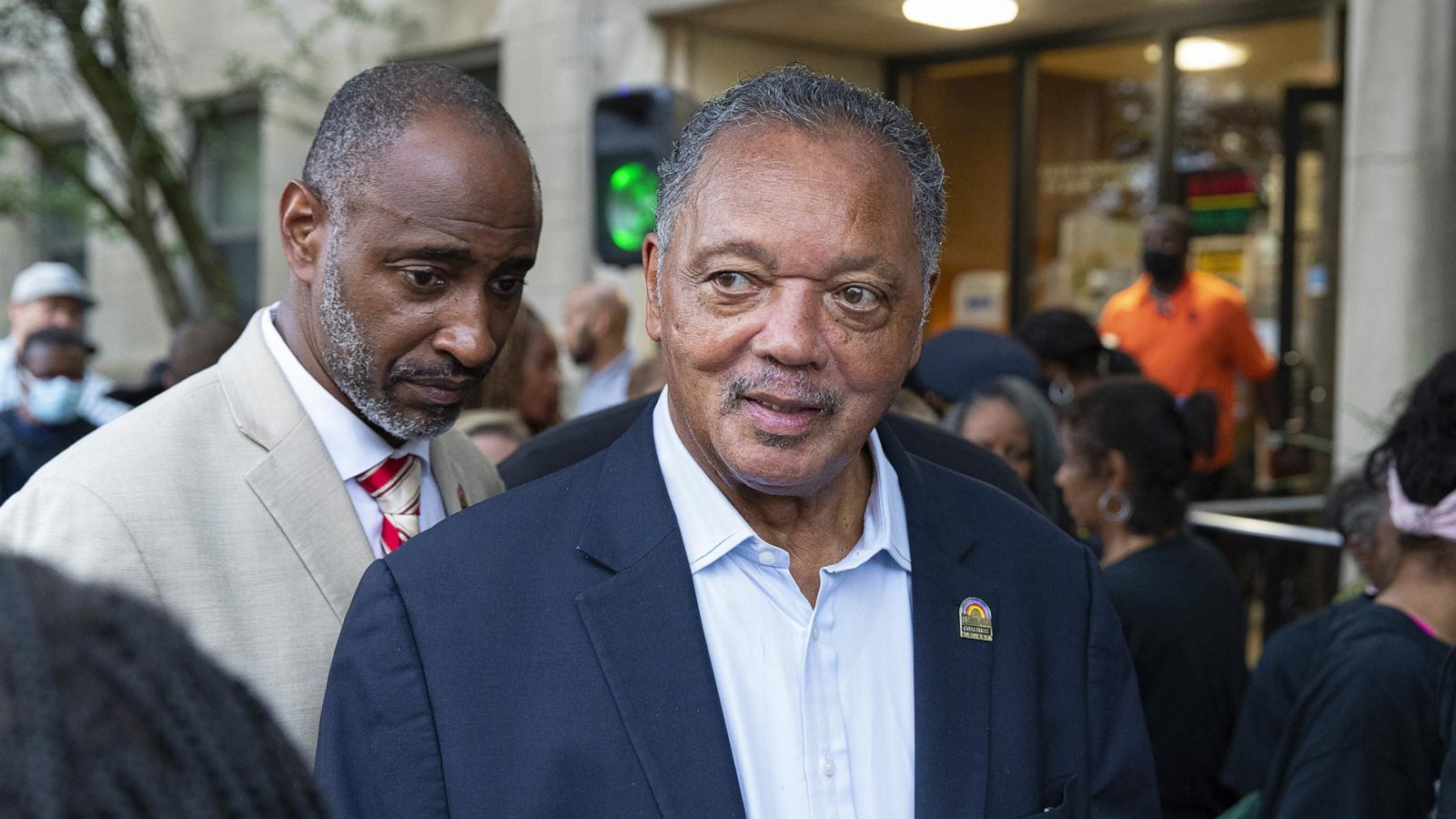
Jesse Jackson, a Baptist clergyman and civil rights activist in the United States, died on Tuesday at the age of 84, his family announced in a statement.
The family praised “his unwavering belief in justice, equality, and love” and described him as a servant leader for the poor, voiceless, and overlooked around the world.
Jackson fought for civil rights alongside Martin Luther King Jr in the 1960s and was twice a candidate for the Democratic Party’s presidential nomination in 1984 and 1988.
Daily Sun brings to you 5 things you may not know about Rev. Jesse Jackson, the legendary civil rights activist, orator, and political trailblazer who passed away on February 17, 2026, at age 84.
1. His birth name was Jesse Louis Burns
Born on October 8, 1941, in Greenville, South Carolina, to a teenage mother, Helen Burns, and a married neighbour, Noah Robinson, Jackson faced taunts about his illegitimacy as a child under Jim Crow segregation.
His stepfather, Charles Henry Jackson, formally adopted him in 1957, leading to the name change.
These early experiences of poverty and discrimination fueled his drive for equality and self-worth, themes he later championed in speeches like his famous recitation of “I Am Somebody.”
2. Turned down a Pro Baseball offer
After graduating from high school in 1959 as a star athlete and class president, Jackson received a contract offer from the Chicago White Sox for minor-league baseball.
He declined to accept a football scholarship at the University of Illinois, but soon transferred to North Carolina A&T State University, where he became deeply involved in civil rights sit-ins and protests while earning his sociology degree.
This early choice set the stage for his lifelong commitment to civil rights activism.
3. Protégé of Martin Luther King Jr.
Jackson emerged as a key figure in the civil rights movement in the 1960s.
Other News
He participated in sit-ins as a student, marched in Selma, Alabama, in 1965 after “Bloody Sunday,” and joined the Southern Christian Leadership Conference (SCLC).
Martin Luther King Jr. appointed him to lead Operation Breadbasket in Chicago (focused on economic empowerment for Black communities), and Jackson was present at the Lorraine Motel when King was assassinated in 1968.
4. Negotiated high-profile hostage releases across the globe
Beyond domestic activism, Jackson became an unofficial international diplomat.
In 1983–1984, he secured the freedom of U.S. Navy pilot Robert Goodman from Syria and dozens of Cuban and Cuban-American prisoners from Cuba.
He later freed Americans held as “human shields” in Iraq/Kuwait (1990–1991), U.S. POWs in Yugoslavia (1999), and others in places like Gambia, Colombia, and Liberia.
These efforts showcased his global peacemaking role, earning praise even from critics.
5. His 1988 Campaign changed Democratic Party rules
While his 1984 and 1988 presidential runs (the latter earning millions of votes and wins in multiple states) are well-known, a lesser-discussed impact was his push to reform the Democratic nomination process.
Jackson’s strong showing pressured the party to shift from winner-take-all primaries to proportional representation, giving underrepresented groups (including people of colour, women, and progressives) more influence in delegate allocation.
This change helped pave the way for diverse candidacies in future elections.
Jackson’s life bridged the era of Martin Luther King Jr. to contemporary movements for equity, leaving an enduring impact on American civil rights and politics.
These lesser-known facts highlight Jackson’s multifaceted life, from personal resilience and athletic promise to global diplomacy and lasting structural change, beyond his iconic marches with Dr King and “Keep hope alive” mantra.
His legacy endures in the fight for justice.