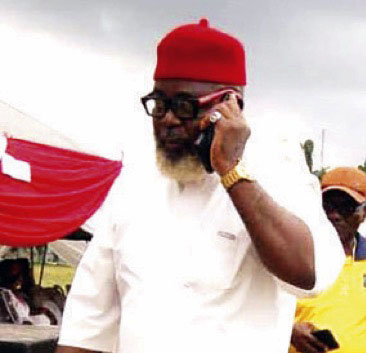
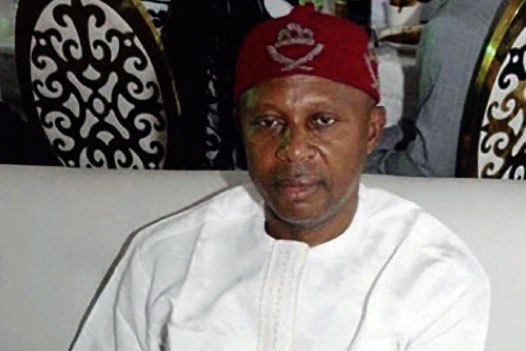
Follow Us on Google
“It is not he who gains the exact point in dispute who scores most in controversy – but he who has shown the better temper.”
—Samuel Butler
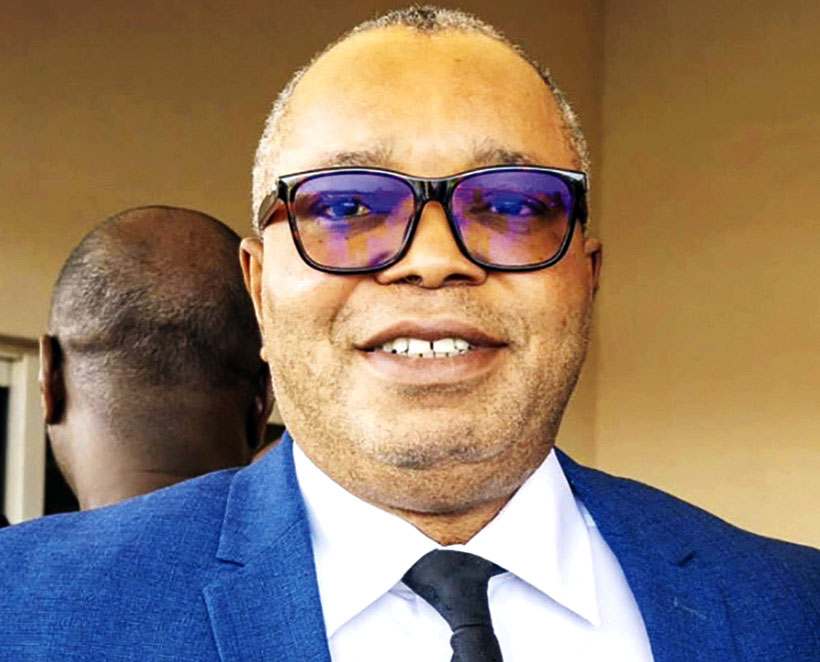
By Beifoh Osewele
Jarrett Tenebe, chairman of the All Progressives Congress (APC) in Edo State, has acquired the reputation of a stormy petrel. He seems to wear controversy like a badge of honour, with his fierce defence of his party and combative public statements repeatedly drawing him into disputes.
His latest intervention has prompted demands for investigation after he invoked “AK-47 fire” against those he accused of seeking to frustrate the party’s promise of 2.5 million votes for President Bola Tinubu in 2027.
In a video reported on October 2, he told supporters: “Those who do not wish us well, who want to create an obstacle for us, I have a prayer for you.” Days earlier, in a September 29 television interview, he had vowed he would cut off his hand or head if either obstructed that pledge.
Like Wilson Tagbo, the secondary-school pupil in Anezi Okoro’s One Week, One Trouble, published in 1972, Tenebe seems never far from storm after storm. His is controversy back-to-back, with scarcely one dispute subsiding before another public declaration sets off the next. With a little political licence, Okoro’s title becomes one week, one controversy. Tenebe, the party defender’s intervention becomes the controversy and the defender himself the story.
Some Mothers Do ’Ave ’Em recalls Frank Spencer, played by Michael Crawford, whose everyday endeavours repeatedly produce mishaps. The echo lies in the expectation of another complication. Fiercely committed and outspoken, Tenebe leaves little room for the middle ground, drawing attention to his loyalty while generating questions about his restraint.
During a July 2025 television interview, he declared: “I don’t stay in the middle. I’m an extremist. I stay at the extreme.” He also maintained: “I hate Peter Obi.”
Challenged over the language, he reaffirmed it as evidence of personal conviction.
An indigene of Ikabigbo in Etsako West, Tenebe has longstanding roots in Edo North politics and was active in the Peoples Democratic Party (PDP) during the 2016 governorship contest.
His working life extends into oil and maritime business. Reports identified him as chairman of Fenix Impex Limited in 2012 and managing director in 2014, describing its work as evacuating petroleum products from a seized vessel and handling contaminated crude.
A 2018 court report identified Toyin Tenebe as his wife, while he spoke in a December 2023 interview about attending an American event with his then eight-year-old daughter.
In that interview, he said he was studying law at Baze University to better equip himself and contribute to legal reform.
He was unveiled as Bendel Insurance chairman in June 2025, declaring an ambition for regular continental football. Tinubu also appointed him board chairman of the Federal College of Agriculture, Akure, in March 2025.
His confrontational manner was evident in a December 2023 interview: “I am not peaceful; I don’t look for trouble, but anyone who brings trouble to me will always meet difficulty.”
In November 2019, he jointly signed a communiqué by the PDP Integrity Group announcing the suspension of prominent members, including Tom Ikimi, Mike Oghiadomhe and Raymond Dokpesi. The party leadership rejected the group’s authority. He subsequently left the PDP and aligned with Oshiomhole’s APC.
Tenebe rose to deputy state chairman and assumed the acting chairmanship after Dr. David Imuse resigned in January 2024 to pursue the governorship ticket. He led the party organisation through the election that brought Monday Okpebholo to power.
Following the contentious 2024 governorship primaries, APC lawmaker Billy Osawaru petitioned the police over alleged threats against himself and his family, naming Tenebe and party spokesman Peter Uwadiae-Igbinigie. The spokesman dismissed the petition and said he had not been invited by the police. These were unproven allegations.
Delegates from Edo’s 192 wards returned his executive unopposed at the March 2026 congress, where he endorsed President Bola Tinubu, Okpebholo and Senator Adams Oshiomhole for further terms.
During the 2024 campaign, Tenebe defended Okpebholo’s absence from television interviews by citing residents’ economic circumstances. Appearing on ARISE News on August 29, Tenebe said Edo residents were too poor to buy data to watch television online, arguing that direct engagement would reach more voters.
Other News
In December 2024, after Okpebholo struggled to read the budget figure before the House of Assembly, Tenebe attributed the difficulty to the governor’s supposed unfamiliarity with stealing public money.
“Monday (Okpebholo) is not a thief, so, he is not familiar with figures,” he said.
He accused former governor Godwin Obaseki and PDP candidate Asue Ighodalo of financial wrongdoing, while telling those who disliked Okpebholo to “go to hell and burn to ashes”.
In the controversy over Obi’s visits, Tenebe defended advance notification as necessary for protection, but his professed hostility overtook the security argument.
His combative approach has also shaped internal party relations. In October 2025, amid reported moves to replace him, Tenebe accused Minister of Regional Development Abubakar Momoh of working with a “dangerous clique”. Momoh declined to join issues.
In April 2026, the APC Diaspora Media Group sought national intervention over what it described as a worsening leadership crisis. It interpreted his reference to denying tickets to “serial losers” as an attack on former governorship candidate Pastor Osagie Ize-Iyamu, alleged candidate imposition and inadequate consultation, and described his approach as “draconian, exclusionary, and counterproductive”.
“Leadership demands restraint, wisdom, inclusiveness, and the ability to unify,” it stated.
Tenebe dismissed the group as faceless and rejected its interpretation, saying he had identified no individual.
In August, SaharaReporters published threatening Facebook comments attributed to him after a post alleging that Okpebholo had protested his exclusion from an APC campaign council.
The 2.5 million-vote pledge also faces an arithmetic test. Okpebholo won the September 2024 governorship election with 291,667 votes. The promised 2.5 million would be approximately 8.57 times that total.
INEC recorded 2,629,025 registered voters ahead of that election, with 2,249,780 having collected their Permanent Voter Cards. The pledge exceeds that collected-PVC figure by 250,220 and represents approximately 95.1 per cent of the entire register.
Tinubu received 144,471 Edo votes in 2023, when total votes cast were 600,395. The pledge is approximately 17.3 times his previous result and more than four times the state’s entire presidential turnout.
Registration and turnout can change before 2027; these historical figures establish the scale of the explanation required.
Okpebholo has defended the target as achievable, citing growing support. Tenebe has cited the APC’s claimed 2,158,600 votes in the recent council election. That attributed figure is separate from INEC’s governorship result and cannot establish presidential voting intentions.
Kenneth Imansuangbon challenged the promise at an enlarged African Democratic Congress (ADC) meeting in Ewohimi, where he represented former governor Professor Oserheimen Osunbor.
“We want President Tinubu to know that Okpebholo is deceiving him. The 2.5 million votes promised Tinubu is not feasible,” he said.
Edo ADC chairman Tony Alile urged supporters to rely on their PVCs, describing the ballot as the party’s response to the firearms reference: “That weapon is called the PVC.”
The ADC presidential campaign council demanded that the police, DSS and INEC invite Tenebe for questioning. The Human Rights Writers Association of Nigeria (HURIWA) also sought an investigation into the remarks’ context, intention and possible legal implications.
There are other dimensions to Tenebe. Farming organisations installed him as patron of Edo farmers in September, when he linked his support for Okpebholo to their shared agricultural background.
“I am a farmer, the governor is a farmer as well,” he said.
At the March congress, he acknowledged strained relationships: “In the course of discharging my responsibilities, I may have stepped on toes.” He apologised to offended colleagues and called for cohesion.
That conciliatory voice belongs beside his declaration that he occupies the extreme. For Edo’s stormy petrel, the question is whether his conviction can accommodate the restraint, persuasion and scrutiny that leadership requires.