Follow Us on Google
• Distrust of govt killing residency training in Nigeria
• Burnout causing depression among doctors
By Enyeribe Ejiogu, Lucky Ighomuaye (Benin), Abel Leonard (Lafia), Scholastic Hir (Makurdi). Okey Sampson (Umuahia)
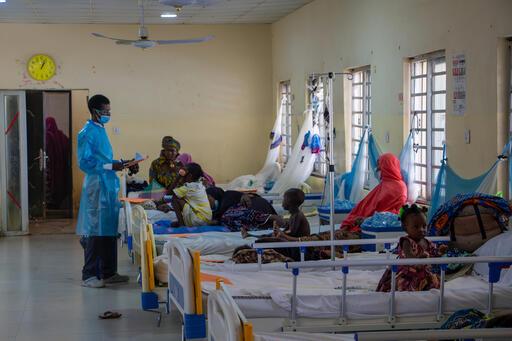
Like blood flowing out from the arteries, veins and capillaries of a battered part of the body, the Nigerian health sector is bleeding profusely as doctors trained at great costs and equipped with post-graduation experiences gained from field practice are daily withdrawing from secondary and tertiary health facilities in the country and relocating overseas.

Investigations have revealed that their skills are now in great demands in Canada, Britain, Saudi Arabia, United Arab Emirates, Australia and other European countries.
In some instances, these doctors strive to secure places for further training while working in British hospitals in order to gain more experience, as well as obtain higher qualification in a chosen specialty.

But after three years or so, the itch to move again to better paying opportunities in the United States, where they are required by law to sit for certification exams conducted by individual state boards will begin.
Given their brilliance and experience they easily pass such board certification exams.
Meanwhile, the political leadership, personally unaffected by the exodus of doctors as they have the financial capability to access high quality healthcare services overseas at the slightest sign of any health challenge, has continued to play the ostrich with the worsening situation in the country’s healthcare system, which is now neck-deep in rot.
Sunday Sun in this report looks at the exodus of doctors and other healthcare professionals from Nigeria.
Edo: Doctors shun vacancies in UBTH
Just like the tertiary health facilities in other states, hospitals in Edo State are equally beset by the malady of exodus of health professionals.
The immediate past President of the Association of Resident Doctors, University of Benin Teaching Hospital (ARD UBTH) branch, Dr David Orhewere, said that federal hospitals are the worst hit by the seeming “cancer” of brain drain.
He noted that the management can hardly find doctors to run shifts in the hospital.
“Federal teaching hospitals and medical centres are the worst hit by the impact of the Japa syndrome or brain drain as we know it. Staff shortage is glaring and even with contingency arrangements you cannot find people available to cover shifts, we are in dire straits’, Orhewere said.
On the sticky issue of remuneration of health workers, he lamented that the situation hasn’t changed considerably although the Medical Residency Training Fund (MRTF) for 2023 has been paid not with attendant issues, which are still being resolved.
Regarding salary, Dr Orhewere said that the CONMESS review of 35 per cent across cadres for which a circular for approval was released in June 2023 has not been implemented up till now while the COVID-19 allowances and upgraded hazard allowances are still being owed to doctors. He stressed that the special palliative of N35,000 to be paid monthly was paid only once.
So, effectively, he said, remuneration issues have not been resolved holistically.
Going by the look of things, another strike seems inevitable if the current trajectory continues.
The Nigerian Association of Resident Doctors (NARD) had earnestly campaigned for a one-for-one replacement to curb brain drain.
“We are still far from that reality because even in the face of current advertisements for residents by some hospitals, people are not submitting applications. This speaks to a total lack of trust in the system especially related to residency training in Nigeria,” Orhewere said.
The comatose state of federal health institutions is one issue that should always be at the top of files with memos sent to President Tinubu for his attention and approval.
In the opinion of the healthcare professionals, the Tinubu Administration said that the US$150 million Abacha loot returned by France to the Federal Government should be invested in the healthcare sector, to equip about 20 tertiary hospitals with modern digital diagnostic equipment.
This number should comprise three tertiary health facilities in each geopolitical zone and one each in Lagos and Abuja.
Moreover, Orhewere and his colleagues posit the abysmally low eight per cent allocated to the health sector by the erstwhile Buhari administration in the 2023 budget was in total violation of the 2001 Abuja Declaration that committed signatories to allocate at least 15 per cent of their annual budget to healthcare.
Beyond telling the government to channel the loot to revive the healthcare sector as emergency funding to tackle manpower, remuneration and infrastructure issues, there must be the will and commitment of the government to make the sector work, to keep the political leaders from going abroad for treatment.
Nasarawa: FMC Keffi adapts strategies to tackle the exodus of doctor
In Nasarawa State, the Federal Medical Centre, FMC, Keffi, is making the best of a bad situation. It has adopted strategies to ensure uninterrupted delivery of healthcare services.
Sunday Sun learnt about some of the measures adopted by the health facility from the Chief Medical Director (CMD) of FMC-Keffi, Dr Yahaya Baba Adams, who was represented by the acting CMD, Dr Usman A. Kana Pulm.
Dr Pulm said: “We have witnessed doctors leaving due to the challenges we face, but we are striving to maintain quality healthcare services. We’ve applied to the Federal Ministry of Health for replacements and are awaiting approval to recruit new doctors.
“We have multiple applications on hand, awaiting the ministry’s waiver.”
He stressed the importance of retaining local medical talent, saying, “not all doctors will leave Nigeria; some will remain committed to addressing the challenges within our medical sector.
“Despite being federal staff doctors, some of us are grappling with daily life expenses, unable to afford fuel for our cars due to the current economic situation.
“Regarding strikes by doctors, one recognises that the government is making efforts, though the situation remains challenging. While increased salaries and other demands are necessary, the current economic climate poses significant limitations.”
BENUE: Few remaining doctors have multiple roles
The remaining doctors still working in the healthcare sector in Benue State have been compelled by the continuing attrition caused by the exodus of their colleagues to greener pastures, to adjust to handling three different roles, to keep the system running, even it is not operating at optimal level.
Troubled by the situation, the Chairman, Nigeria Medical Association, Dr Ushakuma Anenga, wants the Federal Government to prioritize the healthcare sector and take care of its health workers for better healthcare delivery.
Despite the fact that tens of thousands of doctors have left the service, Anenga noted that they still have the same number of patients that need healthcare services.
“So many doctors have left, we have to take up the burden of working extra hours and as is permitted in order to meet up. So, you see the same doctor who is on call is the same doctor in the clinic and the same one who is probably going to do ward rounds. So, it’s very tough.
“In medical teams, you are supposed to have resident doctors, house officers and consultants, but sometimes there is no house officer at all or the resident doctors are few. So, this has led to burnout of workers leading to depression among doctors for those that are still around,” he said.
Anenga also flayed the government’s handling of the remuneration, particularly agreements that were made, the percentage increases that were published in a circular, but were not implemented.
He recalled that the government agreed to a 25 per cent increment for certain cadre of doctors and 35 per cent for some others, but lamented that as the time of filing this report, the government had not implemented the agreement.
His words: “That was circularized on June 1st and yet it’s not implemented and even if it’s implemented, the money that we will receive is way less than what is obtainable. If you are collecting salaries out there like 10 times what you are collecting in your country, every human being wants to live a better life and that has forced doctors to go to where they feel more cared for and where they will get more pay.”
Like his colleagues, Anenga’s expectation from the Tinubu administration is improved funding of the health sector.
The 2024 budget presented by the president has just a paltry five or seven per cent allocation to health care.
“That falls short of the recommendation by African Heads of State in 2001 that 15 per cent of budgetary allocation should be dedicated to health care. So, already by this, healthcare will not be funded, remuneration issues will continue, poor infrastructure among others will remain the same. It already portends doom.
“But next year, we hope that things will get better. We haven’t seen that from the budget, but I must commend the Benue State governor, Rev. Fr. Hyacinth Alia because if you look at healthcare budget, it’s 15.02 per cent which is the first of its kind and with that you can be assured that health will be given adequate attention as far as funding is concerned. It will be given the necessary attention it deserves,” he said.
He encouraged the Federal Government to learn from it and fund healthcare, saying that “health care is a right. It should be funded properly so that health workers can enjoy working and so that we can retain the health workforce that we have, infrastructure can be improved and consumables would be available for health workers. Those are our expectations of President Bola Ahmed Tinubu administration.”
Speaking on the presidential clinic equipped with billions of naira, Anenga said: “If any clinic at all in Nigeria is equipped with billions of naira, provided that clinic offers services to Nigerians, it is a welcome development.
“It’s just for the Federal Government to replicate such gestures to other parts of the country which also need health infrastructure.
“However, it will be important to remind them that healthcare should be given priority, education and other critical aspects of the economy that need revamping should be looked into. But healthcare should be given a top priority.”
The Chairman of the Association of Resident Doctors, Dr Omale Omale, warned that there would be serious industrial action in the coming year if the government continues to treat the health sector and it’s workers with levity.
Omale lamented that the skilled manpower services have reduced to a significant level with residents doctors doing far more work than they should do.
“For this reason, many are collapsing because of increasing workload. Many more are leaving the facility to places with better welfare services.
“We still have a lot of pending issues of remuneration. For instance, BSUTH still pays one of the lowest wages to doctors in the country. Although the Benue State governor, Dr Hyacinth Alia, has commenced the payment of hazard allowance to doctors, but still owes 21 months arrears of the allowance.
“The hazard allowance has balanced at least 50 per cent of the pay disparity between BSUTH and other federal health institutions in the country. Secondly the doctors in the state are still being paid Consolidated Medical Salary Scale of 2014 as against 2019 currently being paid to other tertiary health institutions in the country.
“Furthermore, there is still a new salary scale approved by the Federal Government effective from June 2023 which is yet to be implemented by the state government.
“Mostly the health sector will witness another hiccup because most of the issues bordering on remuneration, infrastructure and security of healthcare workers is yet to be appreciably addressed,” he said.
Abia: By world standards doctors are being cheated in Nigeria
Healthcare service delivery at the Federal Medical Centre, FMC, is being affected by severe staffing shortage.
Although the Chief Medical Director (CMD), MD, FMC, Umuahia, Prof Azubuike Onyebuchi was not around when Sunday Sun visited to get an overview of the situation, as he was said to have travelled outside the state on official duty, a senior medical personnel who wouldn’t want his name in print as he was not authorised to do so on behalf of the health facility, admitted that the hospital facility was having some challenges as a result of the growing resignation of doctors, who are relocating overseas.
“The medical flight has affected healthcare delivery in Nigeria and that of FMC, Umuahia is no different.
“I must tell you, there’s a shortage of manpower in this hospital as a result of the medical flight, and this needs to be addressed. In some areas where some consultants left for greener pasture overseas, it created vacuums in those areas and they have been very difficult to fill up,” he said.
The medic said that it was painful that most often, when people travel abroad from Nigeria for medical treatment, they end up in the hands of Nigerian medical personnel who left the country out of frustration for greener pastures.
“I can tell you that about 90 per cent of Nigerians who went for medical treatment overseas, ended up being treated or handled by Nigerians and this is painful,” he said.
A medical laboratory scientist, Mazi Innocent Ojike, attributed the reason for personnel fleeing the country to availability of proper and attractive welfare packages for them.
“Doctors are leaving the country in their numbers for overseas because they are being better paid there. Another reason is the poor exchange rate of the country that has drastically reduced the strength of the Naira, that if you have N100,000, you cannot pay for anything meaningful with it. So, the major thing is better condition of service.”
Ojike said that Nigeria has excellent doctors, “but there are no facilities to work with. Take ABSUTH, for instance, they lost their accreditation some years ago, it was just restored a few weeks back. They lost the accreditation as a result of poor facilities and shortage of manpower because many doctors had left.”
He said that it is in Nigeria that a medical doctor cannot afford a decent home, have a nice car and give his children quality education, adding that when things are like that, there is every tendency that those who have the slightest opportunity, will leave the country.
A radiographer, Mr Kanu, agreed with Ojike. He said that medical personnel are not well paid in Nigeria, stressing that going by the inflationary trend in the country today, an average medical doctor could hardly afford a good car, not to mention a decent home.
“Doctors in Nigeria are supposed to be duly and adequately paid. In some states, they even pay them less than what is being paid at the Federal level.
“Apart from the issue of salary, doctors should be sent on refresher courses and be exposed to best practices. The medical field should not have any limitations in terms of research, training and what have you. When these things are ideal, definitely, they will remain in the country and perform.
“A situation whereby a doctor will work for one year and you don’t pay him as was the recent case in Abia, what the hell do you think he will remain in the country to do? The person will definitely have to leave and that is why we have this medical flight,” he said.
There have been instances where doctors were said to be greedy in their demand, but another medical doctor from FMC Umuahia countered this, saying: “Doctors cannot be said to be greedy if they ask for an enhanced salary. In Nigeria, salaries are being graded, there is a salary structure for health personnel, which going by the Nigerian indices is fatter than others in the administrative and other sectors.
“Other professionals have their own salaries, but going by what is in the world today, every worker, including the doctors, are being cheated in Nigeria.”
When reminded that doctors’ work should be humanitarian in nature, rather than seeking for wealth, he said: “The truth remains that no medical doctor or health personnel under normal circumstances will like to leave his or her country for another. If the person is leaving, will he go with all his relatives? If a medical doctor travels out of the country and one of his relatives fell sick and died and perhaps the person’s life would have been saved if the medical doctor were around, I don’t think he will be happy with such development.”
On this same issue, Ojike said: “ I don’t think that medical workers are demanding much because they go to the same market with politicians and the government is not funding the health sector, even when it does, corruption in the land will not allow the impact to be felt.”
He said that the way out is to make the salaries of doctors and their work environment conducive, adding that with such on ground, even the doctors that have gone out will return because, according to him, there is no place like home.
Meanwhile, the Abia State governor, Alex Otti has decried the negative impact of doctors’ emigration commonly known as “Japa” on the state’s healthcare system.
Speaking at an event in Umuahia, Otti said: “The ‘Japa’ syndrome has indeed taken its toll on the health sector; however, this administration is not leaving any stone unturned in addressing this challenge. To this end, the government has resolved to motivate our healthcare workers through prompt payment of their wages and improvement of welfare packages that we will introduce from 2024.
“We are in the process of recruiting new skilled birth attendants to improve healthcare service delivery in the state. Furthermore, our ongoing digitalisation of the Abia State Civil Service has uncovered some staff that have left their duty post for greener pastures, yet still receive remuneration from the government.
“While the criminality involved in this is going to be addressed by the relevant agencies of government, the important thing here is that we do not have the number of hands that were hitherto reported. We are working hard to fill these gaps,” he said.
Otti said that it was painful that such doctors were still collecting salaries from the state despite having left state employment and are now working abroad.