Follow Us on Google
From Aloysius Attah, Onitsha
Centre for Gender Studies, Chukwuemeka Odumegwu Ojukwu University (COOU), Anambra State, has restated its commitment to amplifying the voices of not only the Igbo women, but all who, in today’s contemporary society, continue to face marginalisation driven by patriarchal structures and restrictive societal expectations often disguised as culture, norms or belief systems.
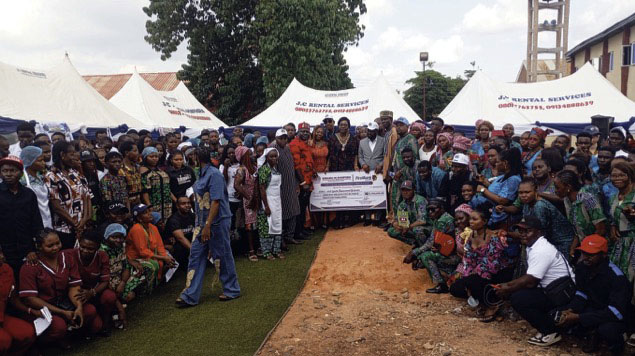
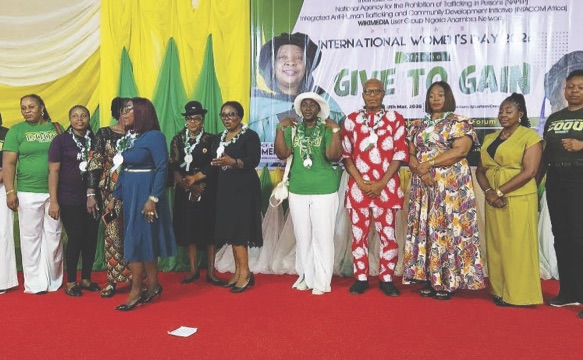
At the ETF Auditorium of the Igbariam campus of the university, last Tuesday, to commemorate International Women’s Day (IWD), various speakers shared views, opinions, experiences and solutions on women’s emancipation.
Declaring the event open, Vice Chancellor, COOU, Prof. Kate Azuka Omenugha, represented by the Deputy Vice Chancellor (Academics), Prof. Obiorah Ejiofor, emphasised the enduring importance of recognising the invaluable contributions of women in society.
He noted that the leadership of the university, under the VC, stands as a strong testament to the capacity of women to excel in positions of authority.
He said that Prof. Omenugha’s eight-year tenure as Commissioner for Education and her impactful three-year stewardship as VC clearly demonstrates that women, when given opportunities to lead, deliver outstanding results. He, therefore, posed a thought-provoking question: “If women continually prove their competence, why should they be denied equal opportunities?’
Director, Centre for Gender Studies, COOU, Dr. Njideka Ebisi, in an address, said the event was a remarkable day to celebrate women, mothers, sisters and colleagues, and also a day to celebrate the special cheer leaders, the men who promote the advancement of women.
“The event serves as a reminder of the importance of valuing and empowering women in society; it calls for concerted actions to unlock equal rights, power and opportunities for everyone in society. It is a day to commemorate women’s socio-political, economic and cultural achievements while raising awareness about issues such as gender equality and gender-based violence.
Prof. Ebisi remarked that the International Women’s Day celebration has been on for over 100 years, yet, each year’s celebration reminds us of the many challenges faced by the female gender in the pursuit to create a better world for not just herself, but many people around her.
She said the struggle was about human rights, a push for fairness and to drive equity, noting that women and girls are disproportionately impacted by poverty, discrimination, inequality, and abuse.
Other News
“Investing in women improves economic development and health of families. Gender equality is not about competition with men, or fight for superiority, it’s about pursuit for human dignity. It is about the need to challenge obstacles to progress such as sexism. It is time for Nigeria and Africa to move beyond rhetoric to concrete actions and accountability. Recognising that women’s empowerment is not just a matter of social justice, but a necessity for sustainable development which is paramount for a better future.
“This year’s theme aptly defines the moment, the need to ‘Give in order to Gain’, which emphasises the power of reciprocity and support for one another. “Quid Pro Quo”: A term that describes a favour or advantage granted with the expectation of something in return.
“We need to unite to pursue our course, to drive change, to create opportunities, not wait for them. We can all give our support to gain advancement for women and girls. As individuals, we give our support, skills, mentorship, lending our voices, sharing in each other’s pain. We must be bold to call out stereotypes wherever it manifests challenging discrimination, questioning bias, celebrating women’s success, a win is our win, we cannot continue the blame game, we must act now. Women, it’s time to rise. The time is now” she concluded.
Addressing the audience, Commissioner for Special Duties, Anambra State, Hon. Beverly Nkemdiche, made a candid and thought-provoking observation regarding the realities many women face today. She noted that some opportunities given to women often appear symbolic rather than truly transformative. Referencing the Igbo adage “Ka ana achu aja, ka ikpe na ama ndị mmụọ,” she explained that such gestures, sometimes, create the impression of inclusion without genuinely addressing the deeper structures of marginalisidß66w⁶ation.
In other words, certain roles or recognition offered to women can be used to project an illusion of fairness to the wider world, while the broader system that limits women’s opportunities remains largely unchanged.
To further illustrate her point, she raised several reflective questions: Would a woman freely contest for political office without the approval of her husband? Can a woman earn more than her spouse without society interpreting it as a sign of disrespect? Can a woman purchase luxuries such as cars for herself without being labeled extravagant?
She said that these questions reveal the persistent social pressures and expectations placed on women and, therefore, urged the society to move beyond such restrictive mindsets, in order to achieve genuine gender equity.
The celebration featured the COOU Women Forum, and alliance with strategic partners viz; Alliances for Africa (AFA); the International Federation of Women Lawyers (FIDA); International Agency for the Prohibition of Trafficking in Persons (NAPTIP), Integrated Anti-Human Trafficking and Community Development (INTACOM, Africa) who all made presentations on their areas of specialisation and focus.
Speaking further, the representative from NAPTIP stressed that although human trafficking affects both men and women, women and girls remain disproportionately vulnerable. She advised female students and young women to remain vigilant about their movements and to be wary of deceptive schemes designed to lure individuals to unfamiliar places under false promises.
Various resource persons and partners for the event were presented with awards of recognition during the celebration