Follow Us on Google
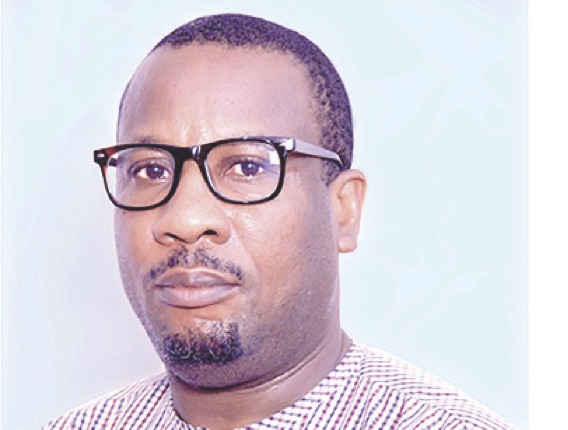
An Associate Dean of Humanities at the University of Port Harcourt, Dr. Obari Gomba, who teaches Literature and Creative Writing, is on the shortlist of three this year for the Nigeria Prize for Literature. He is the recipient of the Rivers ANA Distinguished Writer Award, Halogen Award for Poetry, and Kangaroo Poetry Festival Poet of 2018, two-time winner of the Best Literary Artiste Award and the First Prize for Drama of the English Association of the University of Nigeria, Nsukka. His works include Guerrilla Post, For Every Homeland, Thunder Protocol, Length of Eyes, Grit, and Pearls of the Mangrove, among others.
In this interview with Damiete Braide, he speaks on the NPL, how a knowledge-based society is crucial to development in the 21st century, and his writings.
How do you feel about making the shortlist of three in this year’s edition of the Nigerian Liquified Natural Gas (NLNG) Nigerian Prize for Literature?
Yes, I am excited about the outcome so far. It is always a big deal to make the list of three. I pray that the book, Grit, goes in to win the prize.
Are you optimistic that you will eventually win the prize and what will you do with the money?
I will say cautious optimism, because none of the playwrights has the power to determine what the final outcome will be. It is the prerogative of the jury to determine who the winner is, and they will do their job. I am hopeful that I will win. For the prize money, it is a bit premature to talk about the prize money – how are you going to spend the money that you have not won? If I win the prize –I pray that I do– I am going to set a portion of that money for the promotion of the book that has won the prize then every other thing can happen after that.
What’s your view about the Nigeria Prize for Literature?
I am a fan of the NPL and it is the prize that has the biggest reward for creative writing. The NPL is a game changer and I guess it is so significant, because some organisations are finding it difficult to equal what they have done. NLNG has done very well over the years, and it is my prayer that they should continue to administer this prize. I pray that in the next 100 years, we can look back and tell ourselves that this prize has continued to be in existence. I also pray that other Nigerians, individuals and institutions will learn from what NLNG is doing and establish prizes that can serve the literary space. There are a lot of organisations in Nigeria that can do what the NLNG is doing, they can adopt their own models but we need more organisations and individuals to get involved, establish and institute their own prizes, it will make the literary space a lot more rewarding than it is now.
You have won a couple of literary prizes, do you write to win awards?
No serious writer writes to win awards. Writers write because they are writers, but it is a fantastic thing to win awards. This is how it goes: you do your work to ensure that you have done a work that is good enough with due diligence for the quality of work that you have done. If you have done that and there is an opening for a prize, you enter your work for the prize.
It is not every year that I get to compete for the prize. For instance, this year, I did not enter Grit for the Association of Nigerian Author’s (ANA) prize; I just focused on the NPL this year. In the next few years, if I am able to produce a book that I think is good enough for the prize, I will not hesitate to enter in for the competition, whether it is this one or any other competition. I think that it will be a shame if Nigerians do not take advantage of the investment that the NLNG has made. It will be a shame if writers are not rising to the occasion and entering works of excellence for the competition. It is a good thing that we are doing and as often as I am able to produce literature, I will be willing to enter in for the competition.
In what areas do you think the NLNG NPL can be improved upon to affect Nigerian writers?
In a way, I am actually overwhelmed by what NLNG has done so far. There is no organisation, government or private in Nigeria today that is making even half of the investments that the NLNG is making in the Nigerian literary space.
Sometimes, I feel that to ask for more is to play Oliver Twist and I try to recall from doing that. I think that what we need to do is to encourage them as much as possible. They should keep it going and also encourage writers to be perceptive enough, not just to create works to enter for the competition, but they should also pay attention to the promotion of their works particularly those who win the prize, they must learn to leverage on it and promote the works that have won.
How is knowledge-based society crucial to development in the 21st century?
Nothing happens in any society outside the knowledge that is at work in that society. If you look at every level of development in that society, it is tied directly to the level of knowledge that works in that space. Every progress that people make is based on the level of knowledge at work in that society.
Luckily for us, we live in a global knowledge system where there is a gap in knowledge in one place, people can leverage on knowledge in one place and use it to augment the shortfall in their own area.
As much as possible, we have to pay attention to the propagation of knowledge because the more positive transformative knowledge we propagate the more we are going to run a society that is better for all of us.
Some writers after winning the NLNG NPL, tend to fizzle out in the literary space?
If you look at my track record, you can tell that I am not the kind of writer that will fizzle out. I have been longlisted for this prize four times, and this is the first time that I have been shortlisted, making it five times I have been on this list, and I keep doing this work. I have won other prizes and continental literary prizes, etcetera, and I am still writing. What else am I going to do if I am not writing? People who are making music keep making music, those who are making films keep making films. And those of us who are making literature will keep making literature if we understand the importance of what we are doing. I am going to keep producing literature any day any time, with or without the award.
Tell us what your forthcoming book, Free Troubles: A Writer’s Eyes on the World, is all about?
It is a collection of essays and I can’t wait for it to come in November. What I have done on Free Troubles: Writer’s eyes on the world is to make social commentaries on a number of issues in the world like transgender, global politics, migration, the place of Africa in the world, Russian war in Ukraine, essay on the French involvement in Africa and Haiti and other places around the world. I didn’t know that the issue of French involvement is going to become topical in the world with the race of coup’d’tares.
It is a collection of essays on a number of issues in the world. For some of them, I made direct comments and some of them are satirical, and it will be a very interesting book for people that want to see the way my mind works.
Length of Eyes is my first collection of poetry that was listed for NPL, it made the longlist of 11 in 2013. This is the 10th year that I was first listed for the NPL prize, and, in these 10 years, I have been here five times and that speaks a bit of what I have been doing over the years. There are a lot of poems in the book, there is a section that is focused on issues surrounding writers and writing, my perception of Nigeria, the crises in the Middle East from country to country, European and American politics.
It is actually a collection of poetry that has a global outlook and that is how I like to see my writing. I don’t like to produce a kind of literature that can fit into the pigeon hole of a specific national space. I believe that even when a work is set within a particular setting, that work should have the capacity to resonate outside that setting, it should have a global appeal so that people can engage that work and appreciate the artistic merit in the work.
What motivated you to write Pearls of the Mangrove in 2011?
The third edition of Pearls in the Mangrove was produced in 2011, and it is my oldest work. I published the first edition in 1999 in my final year at the University of Nigeria, Nsukka. Much more later, I published the second edition of the book and in 2011, I published the third edition of the book. It is the third edition that many people are familiar with because it had better distribution. The Niger Delta is the subject matter that runs predominantly in the book. You cannot come from the Niger Delta and not be impacted by the daily politics of that region and it is historical as a site of exploitation across centuries. From the 15th century till date, people have constantly extracted resources from that environment without really paying attention to the developmental needs of the environment. There is also a sense of hope in the book.