Follow Us on Google
..Says communities may be aiding kidnappers
By Olakunle Olafioye
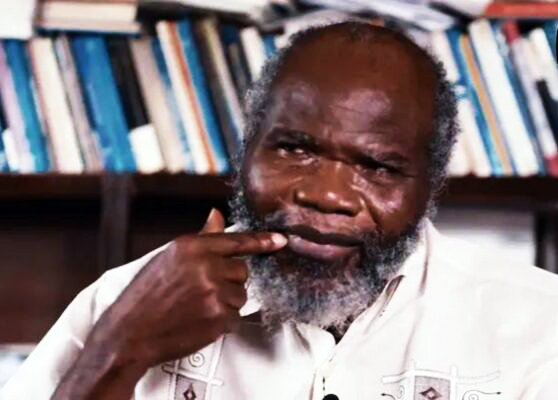
Retired Major General Ishola Williams has thrown his weight behind Oyo State Governor Seyi Makinde’s call for an independent international investigation into the abduction of pupils and teachers in Oriire Local Government Area, and their eventual rescue.
Williams described the governor’s request as consistent with international precedents set during previous national security crises.
The retired general made the remarks in response to Governor Makinde’s appeal for a United Nations-backed inquiry into the circumstances surrounding the school abduction and the military operation that led to the release of the victims after 56 days in captivity.
Speaking on Friday during Frontline, a current affairs programme on Eagle 102.5 FM, Ilese-Ijebu, Ogun State, the retired military officer argued that Makinde’s position was neither unprecedented nor inappropriate. He recalled that during the abduction of the Chibok schoolgirls under former President Goodluck Jonathan, international organisations were widely invited to scrutinise the incident.
According to him, the criticisms levelled against the Jonathan administration at the time—including calls by members of the then opposition for international involvement—have established a precedent that validates Makinde’s current demand.
“Makinde is right in making that call,” Williams said. “During former President Goodluck Jonathan’s administration, when the Chibok girls were kidnapped, there were widespread calls for international organisations to intervene. Those who criticised Jonathan then cannot now fault Makinde for making a similar request. What goes around comes around.”
He maintained that the governor was merely following an established pattern.
“In that regard, Makinde is not doing anything new. He is simply following a precedent,” he added.
However, Williams noted that under Nigeria’s constitutional and diplomatic framework, a state governor lacks the authority to formally invite the United Nations to investigate a security matter.
“Makinde, as the head of a subnational government, cannot directly invite the UN. Only the President, through the Ministry of Foreign Affairs, can officially request such assistance,” he said.
He suggested instead that internationally recognised independent organisations, such as Amnesty International, could undertake a credible and impartial investigation into the incident.
“What I expected Makinde to do, even though he mentioned it, was to invite organisations like Amnesty International, which is globally respected for conducting thorough and independent investigations into situations like this,” Williams said.
Beyond endorsing the governor’s call, the retired general questioned what he described as serious intelligence failures that enabled armed kidnappers to abduct dozens of schoolchildren without being detected or intercepted.
He argued that the incident exposed glaring weaknesses in Oyo State’s internal security architecture, particularly at the grassroots level.
Williams said the Ministry of Home Affairs, the Amotekun Corps, local intelligence networks and traditional institutions all have questions to answer over how such a large-scale operation went unnoticed.
“Is the Ministry of Home Affairs in Oyo State functioning effectively? Is the commissioner competent? Is the intelligence unit of Amotekun doing its job?” he queried.
Other News
He added that accountability should extend beyond the kidnappers to security officials and community leaders who failed to prevent the attack.
“In a serious country, the governor’s Senior Special Assistant on Security could have been dismissed. Grassroots intelligence clearly failed. How could kidnappers enter a community, abduct so many children and disappear into the bush without Amotekun or even the village head knowing?” he asked.
Williams insisted that the abductors could not have carried out the operation without receiving support from some members of the host community.
“These are ordinary kidnappers with a few weapons, but they cannot operate successfully without assistance from people within the community,” he stated.
He also expressed scepticism over official accounts of the rescue operation, saying more details should be made public to enable security experts assess the operation and draw lessons that could strengthen future responses.
“The story being told is that it was a highly successful intelligence-led operation. I remain sceptical. More details should be released for proper evaluation,” he said.
Williams further urged security agencies to prioritise the fight against insurgency in the North-East rather than committing extensive resources to isolated kidnapping cases.
“They should concentrate on the North-East. If the same level of intelligence and operational effort is consistently deployed there, the insurgency can be tackled more effectively,” he said.
Reiterating his long-standing advocacy for security sector reforms, Williams renewed his call for the establishment of state police and a decentralised policing structure, arguing that Nigeria’s highly centralised security architecture has become ineffective.
He dismissed concerns that governors could abuse state police, insisting that abuse of power is possible at every level of government.
According to him, governors, who are constitutionally recognised as chief security officers of their states, should have greater operational control over internal security while receiving intelligence and investigative support from federal agencies.
“I have always maintained that the military should withdraw from routine internal security operations and concentrate on the North-East. We do not need a centralised Nigerian Police Force as it currently exists. What we need at the federal level is a strong criminal investigation and crime intelligence agency that can support state security outfits such as Amotekun,” he said.
Williams also questioned the scale of manpower and resources reportedly deployed to secure the release of the Oriire victims, arguing that if similar intelligence capabilities were consistently applied in insurgency-ravaged areas, Nigeria could record greater success against terrorism.
“If this much effort was deployed for the rescue operation, imagine what could be achieved in the North-East if the same intelligence system were consistently applied. If the DSS has the capacity it claims, why not deploy it with equal effectiveness against insurgents?” he asked.
The retired general further argued that traditional rulers and community leaders should be held accountable whenever criminal groups repeatedly operate within their communities.
“Community heads must be put on notice that if such incidents continue to occur in their domains, they will be held responsible. Some communities and villages are benefiting financially from these criminal activities, especially in places like Katsina State. There should be no more excuses,” he said.