Follow Us on Google
• Lawyers, others differ on operation, legal implications
By Olakunle Olafioye
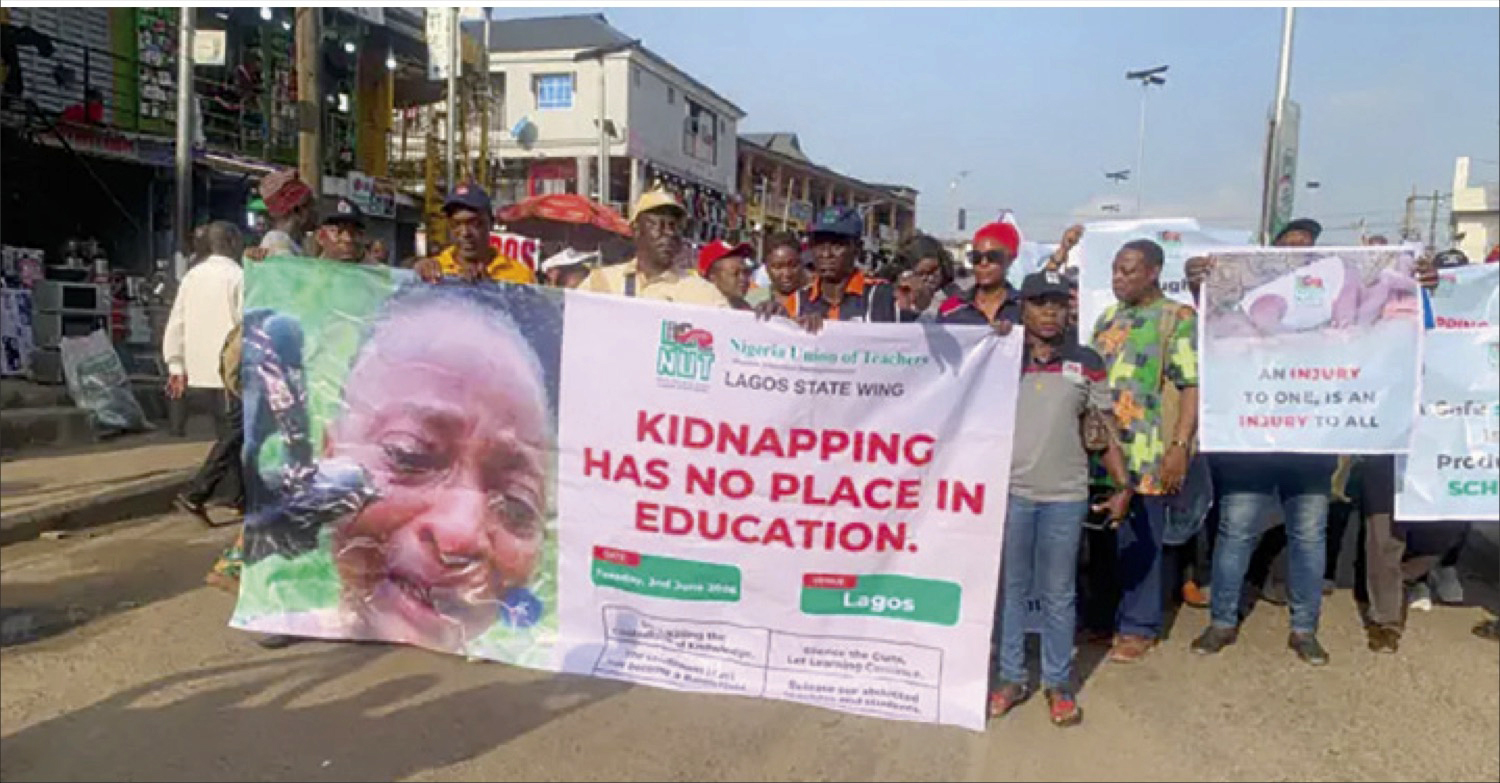
The season of silence is over for the Yoruba nation separatist agitator, Sunday Adeyemo, popularly known as Igboho. Since his return from self-exile, his once strident and vociferous voice against growing security concerns in the South-West has understandably paled almost to soundless decibels. But the recent affront signalled by the highly reprehensible abductions in Oyo schools appears to have suddenly reignited Igboho’s indignation over the mistreatment of his people.

Recently, Igboho announced the floating of a new security outfit, ‘Iru Ekun Security Network,’ with an appeal to the Federal Government for approval. The initiative, according to him, is part of efforts targeted at flushing out criminal elements occupying the forest in the Southwest and terrorising the people of the zone.

Analysts have described the Yoruba nation agitator’s latest approach as an indication that he had taken the lessons from his past misadventures in their stride. Igboho fled Nigeria in 2021 after a violent midnight raid on his Ibadan residence by the Department of State Services (DSS) and military personnel. The Buhari administration declared him wanted and accused him of stockpiling illegal weapons to destabilise the country—an allegation he consistently denied.

During the Buhari administration, Adeyemo launched a campaign to forcefully evict killer herdsmen and kidnappers from Oyo State and the broader South-West region, positioning himself as a defender of Yoruba communities. This stance, alongside his vocal calls for an independent Yoruba Nation, led to a direct collision with the federal government.
Consequently, security forces raided his home, during which two of his aides were killed while several others were arrested. Fearing for his safety, Igboho escaped Nigeria and fled to the neighbouring Benin Republic. He was apprehended by international authorities in July 2021 at the Cardinal Bernardin International Airport in Cotonou while attempting to travel to Germany.
While he was in detention in the Republic of Benin, Igboho was subjected to an extended legal trial and imprisonment in Benin Republic, preventing his return to Nigeria.
But after five years of trial and detention in the Benin Republic, Igboho was officially freed by the Beninese authorities and cleared to return home. He left for Germany. He has since returned to Nigeria following the intervention of prominent traditional rulers and politicians.
Against the backdrop of the recent events in Oyo State that the ex-Yoruba nation crusader applied to seek the approval of the President for the new security outfit.
In a statement issued in Ibadan, Oyo State capital, Adeyemo expressed his readiness to comply with the executive order recently issued by the Oyo State Government to regulate the activities of private security firms in the state. The state governor, Seyi Makinde, had on Wednesday, May 20, 2026, signed into law Executive Order 001 of 2026 on the Regulation of Associations, Groups and Organisations Offering Security and Allied Services in the state.
The move, according to the governor, was necessary to ensure that all groups and associations involved in security-related activities, such as vigilantes and other community-based security groups, operate within a clear legal and operational framework that supports peace, order, and the rule of law in the state.
While announcing his intention to float the new security outfit, Igboho revealed that he had submitted all documents required for the registration of the new security firm, adding that he was only awaiting the Federal Government’s approval. “We are absolutely ready to collaborate with the police, the Department of State Service, the Nigerian Army, the Nigerian Security and Civil Defence Corps, and other relevant stakeholders in the security sector to flush out terrorists, kidnappers, bandits, and other hoodlums who are threatening the peace and safety of our people, especially in the rural communities,” the statement read.
But legal and security experts are, however, calling for caution over the proposal. Although Igboho’s Iru Ekun Security Network is seen by many as another statement confirming the level of deterioration of the nation’s security, the idea, coming from an individual who once championed a secessionist cause, analysts observe, daunts optimism in no small measure. A prominent legal practitioner and public affairs commentator, Barrister Malachy Ugwumadu deplored the idea of outsourcing the nation’s security to non-state actors. This, according to him, defeats the essence of the nation’s sovereignty. “It speaks to the vulnerability of this country and emphasises the failure of the government. Security and the control of the cohesive apparatus of the country remain the cardinal indicator of a viable sovereign nation. But where the asset or any part of it is outsourced, we are beginning to question, without mentioning it expressly, the capacity of the state as a sovereign nation.
Ugwumadu frowned at the proliferation of security outfits in the country, saying it has huge implications for the survival of the country. His words: “How many security outfits are we going to have in this country, and what is the implication of that for the survival of this country?” If individuals, warlords, rebels, and ex-agitators who bore arms and engaged the state in the past with loyalty that may be diverse or contrary to the interest of the state begin to show interest in the cohesive apparatuses that should be in the possession of the state, that should be a reason for worry. The constitution gives the state the monopoly of the cohesive forces of the country,” he stated.
On the approval being sought for the establishment of the new security outfit, Ugwumadu is of the view that Igboho only needs the permission of the state government in this regard. “Even in this case, Igboho does not need the approval of the president. He only needs the approval of the government of the component state that he is concerned about. This will come from the legislative house. In other words, such an outfit will be the creation of the law, that is, if it will be legitimized. Now if you achieve that, it will be integrated into the security system of the state.
“If this is a response to the overwhelming state of security in the country, which is creeping into the South-West, Igboho’s idea should be a component of the exercise that should be integrated into the reform of the entire security architecture, starting with community policing and fitting it into the idea of state police. Once you politicise security it becomes more dangerous. Amotekun may soon begin to see the new outfit as a rival and competitor. What is Igboho going to do differently from what Amotekun is doing?” Ugwumadu queried.
In his opinion, Alhaji Mogaji Ibrahim Olaniyan, National Chairman, Police Community Relations Committee, PCRC, views the issue with cautious optimism. He hinged his support for the initiative on the condition that it should be allowed to exist under the supervision of the Nigeria Police. The PCRC boss said his major concern is the fear that the proposed outfit could be turned into a weapon for pursuing ethnic or sectional agendas.
His words: “We need to guard against a situation where the outfit will be turned into a tribal or sectional army. The objective is to dislodge criminals from the region. But these days, when we talk about criminals, it is very convenient to place tribal or ethnic tags on the issue. As the national chairman of the Police Community Relations Committee (PCRC), I have a lot of intelligence that we have a lot of Yoruba masquerading as Fulani in perpetrating all sorts of criminal acts. Besides, we have a lot of Yoruba that supply these criminals with information about their own people. We also have a lot of Igbo people who join hands with criminal elements to carry out all manners of atrocities, including kidnappings. When I was the national vice chairman of PCRC in charge of South-West, one of the CPs in the zone paraded some Igbo guys, who killed Fulani herdsmen and took their dresses and used them to kidnap people. We kept referring to the perpetrators as Fulani herdsmen until they were arrested.
“This is why Igboho and his group will need police guidance and supervision. Igboho is a Yoruba nation agitator. The new security outfit should not be turned into a Yoruba nation secessionist army. But where we are convinced that the outfit is borne out of genuine patriotism to complement the efforts of the Nigeria Police and other security agencies, where the outfit will not operate its own cell to detain suspected criminals, we will be willing to support. They must be ready and willing to work hand-in-hand with Nigeria police, which is the leading security agency as far as internal policing is concerned,” he stated.
Olaniyan said the new security outfit must seek and get the approval of the Inspector-General of Police. “The President is willing to give the go-ahead to any group that promises to help his government in securing the country. But in order to remove ethnic coloration from its activity or hatred against any tribe, the Nigeria Police must be involved right from inception in the floating of any local security outfit in the country. The new security outfit must not be used against any law-abiding Fulani that is rearing his cows. The outfit should only target real criminals,” the PCRC national chair admonished.
Another security expert, Jackson Lekan-Ojo, expressed doubt in the ability of the ex-agitator to float a security outfit capable of flushing out the criminal elements terrorising Yoruba land. Ojo said Igboho lacks both the training and the maturity to coordinate such a security network, saying, “It is not going to work because of the way Igboho has come about it.” Seeking the president’s approval is not enough without presenting it before the National Assembly or without the input of the Ministry of Defence. Igboho is talking about 500,000 soldiers. What type of arms are they going to bear? 500,000 soldiers with dane guns cannot confront 200 bandits that bear AK-47s and other sophisticated weapons. Who is going to train them? Are people not going to sabotage the effort? Will they not see it or use it as a regional arrangement for the re-election of Mr. President?
“I think the best thing for Mr. President is to rejig the nation’s security architecture so that the arrangement can spread around the country. Igboho is an agitator for the Republic of Oduduwa, and he is too loquacious, so people are not going to take him seriously. But whether he is taken seriously or not, a local security outfit coming from him cannot work. Igboho lacks the security training and maturity to coordinate a security network of the magnitude he is advocating. Floating regional security outfits to tackle security challenges in any region requires the expertise of people who are knowledgeable in security matters. An ex-agitator is not the ideal person to moot the idea of a regional security network because he is more likely to be concerned about the region whose independence he once championed.”
More lawyers react
But a former Chairman of the Nigerian Bar Association (NBA), Ikeja branch, Dave Ajetomobi, defended the establishment of a security outfit linked to Yoruba nation agitator, Sunday Adeyemo, popularly known as Sunday Igboho, insisting that the initiative is not illegal if properly registered and supervised by government authorities.
Ajetomobi, while reacting to concerns over the legality and possible implications of the group, said community-based security collaborations were not new in Nigeria, citing the Civilian Joint Task Force (CJTF) operating in Northern Nigeria as a precedent.
According to him, the worsening security situation across parts of the country has made it necessary for citizens familiar with local terrains to support conventional security agencies in combating criminal activities.
“A desperate situation requires desperate solutions. What Sunday Igboho is trying to do is not entirely different from the Civilian Joint Task Force in the North, where civilians work with the military to fight bandits and terrorists,” he said.
The legal practitioner argued that local support groups could strengthen intelligence gathering and improve security operations, especially in areas where conventional forces face operational challenges.
“It is obvious that the military needs support from people who understand the environment and are committed to defending their communities. In the South-West, groups like Igboho’s team can complement the efforts of existing security agencies,” he added.
Ajetomobi noted that Oyo State Governor, Seyi Makinde, had already stated that any such security outfit must be registered with the state government, adding that Sunday Igboho had reportedly complied with that directive.
Other News
“If the group has been duly registered with the appropriate state authorities, then the issue of legality does not arise,” he stated.
He further maintained that the Federal Government’s constitutional responsibility to protect lives and property allows room for community-based support structures that operate within the law and in collaboration with official security agencies.
Ajetomobi dismissed fears that the outfit could be abused or lead to chaos, saying adequate checks and balances already exist.
“I do not see the group causing chaos because they are expected to work with recognised security agencies. Besides, the Federal Government or state governments retain the power to outlaw the organisation if it begins to operate outside the ambit of the law,” he said.
He, however, acknowledged that critics and opponents of the initiative would continue to raise concerns, particularly over the possibility of misuse, ethnic profiling or the proliferation of armed groups.
Despite the controversy, Ajetomobi insisted that the CJTF model in the North had shown that civilian participation could play a significant role in tackling insecurity when properly coordinated and regulated.
A Lagos-based legal practitioner, Greg Anumenechi, also defended Igboho’s proposed security outfit, describing it as a response to the government’s failure to adequately protect lives and property.
Speaking on the growing debate surrounding the legality of the outfit and the reported recruitment of fighters, Anumenechi argued that citizens often resort to self-help when constitutional structures fail to guarantee security and justice.
According to him, the inability of the Nigerian state to effectively tackle criminality and insecurity has weakened public confidence in the constitution and other state institutions.
“Where legality is unable to tame illegality, as should be the primary function of government which is the protection of life and property, illegality becomes the necessary recourse to address the failures of government and the resultant effect is anarchy,” he stated.
The lawyer further lamented that constitutional provisions and democratic institutions appear increasingly ineffective in safeguarding ordinary citizens, claiming that the rule of law has been overshadowed by the interests of politicians and powerful individuals.
“The constitution and all its creations have failed to protect life and property and therefore seem worthless and reduced to the unwritten decree of politicians and influential people in the nation,” he added.
Anumenechi maintained that if the security initiative being promoted by Sunday Igboho is aimed at protecting vulnerable communities from attacks by criminal elements and armed militias, it may be viewed as a “child of necessity.”
“If the child of necessity by Sunday Igboho recruits fighters to save his people from tragic extinction by criminal militias, then so be it,” he said.
Legal practitioner and public affairs analyst, Sonayon Hunjo, warned that while the growing support for Sunday Igboho’s proposed security outfit reflects deep public frustration over insecurity in Nigeria, any civilian security formation operating outside established legal frameworks could pose serious constitutional and security risks.
Speaking on the controversy surrounding the emerging group, Hunjo said worsening kidnappings, killings and attacks on communities had left many Nigerians feeling abandoned and vulnerable.
According to him, the recent abduction of teachers and schoolchildren in Oyo State further intensified public fear and strengthened calls for stronger grassroots security responses.
“The emergence of the group reflects a real and growing frustration over insecurity in Nigeria. Many communities feel exposed and abandoned in the face of kidnappings, killings and attacks on farms and highways,” he said.
He noted, however, that reports and videos allegedly showing recruits dressed in military-style uniforms and carrying weapons were troubling and capable of heightening public anxiety.
“Once a civilian group begins to resemble an armed force, it blurs the line between lawful community security and a private militia,” Hunjo stated.
On the legality of the outfit, he explained that Nigerian law does not permit civilians to establish independent armed groups outside state authority.
He maintained that while community vigilance structures may operate legally if properly registered and regulated, any organisation recruiting “fighters,” displaying weapons, or operating without formal legal backing could face allegations of unlawful paramilitary activity.
“The legality depends heavily on structure, approval and operational limits. Government oversight is therefore critical,” he added.
Hunjo further argued that the 1999 Constitution places policing, defence and national security under federal control, citing Section 214, which establishes the Nigeria Police Force as the nation’s official policing institution.
While acknowledging that some states had created local security networks such as Amotekun through legislation, he stressed that such outfits were expected to function within clearly defined legal frameworks and under state supervision.
“The Constitution does not expressly authorise private ethnic or regional armed formations operating independently,” he said.
On whether the Federal Government should approve the initiative, Hunjo said local security responses could no longer be ignored given the country’s worsening security situation.
He argued, however, that any approval must come with strict legal and operational safeguards, including formal registration, legislative backing, proper vetting and training, accountability mechanisms, and direct collaboration with recognised security agencies.
He also cautioned against ethnic profiling and warned that public displays of weapons and military-style uniforms could worsen tensions in an already fragile security environment.
Addressing reports that recruitment had already begun, Hunjo said such moves raised serious questions about authorisation, command structure, training standards, and the legal framework guiding the group’s operations.
“In a fragile security climate, unofficial armed mobilisation can create confusion and potentially provoke confrontation with state security agencies,” he warned.
Despite these concerns, he acknowledged that public sympathy for such initiatives was rooted in the growing sense of insecurity among ordinary Nigerians.
“The fear generated by incidents like the Oyo kidnapping is what gives such initiatives support in some quarters,” he added.
Hunjo further warned that unregulated armed groups could eventually become instruments of intimidation, political violence, ethnic conflict or criminality if left unchecked.
“The danger increases when recruits publicly display weapons, uniforms resemble military attire, command structures are unclear, or loyalty centres around individuals instead of institutions,” he said.
He concluded by stressing that any community-based security response must be firmly rooted in law, transparency and institutional control to avoid worsening Nigeria’s already complex security challenges.